Door Closers in San Diego
Professional door closer service for businesses across San Diego. We install, adjust, repair, and replace commercial door closers, and we know the code requirements most contractors skip over.
 Call (619) 768-2745
 Text for Quote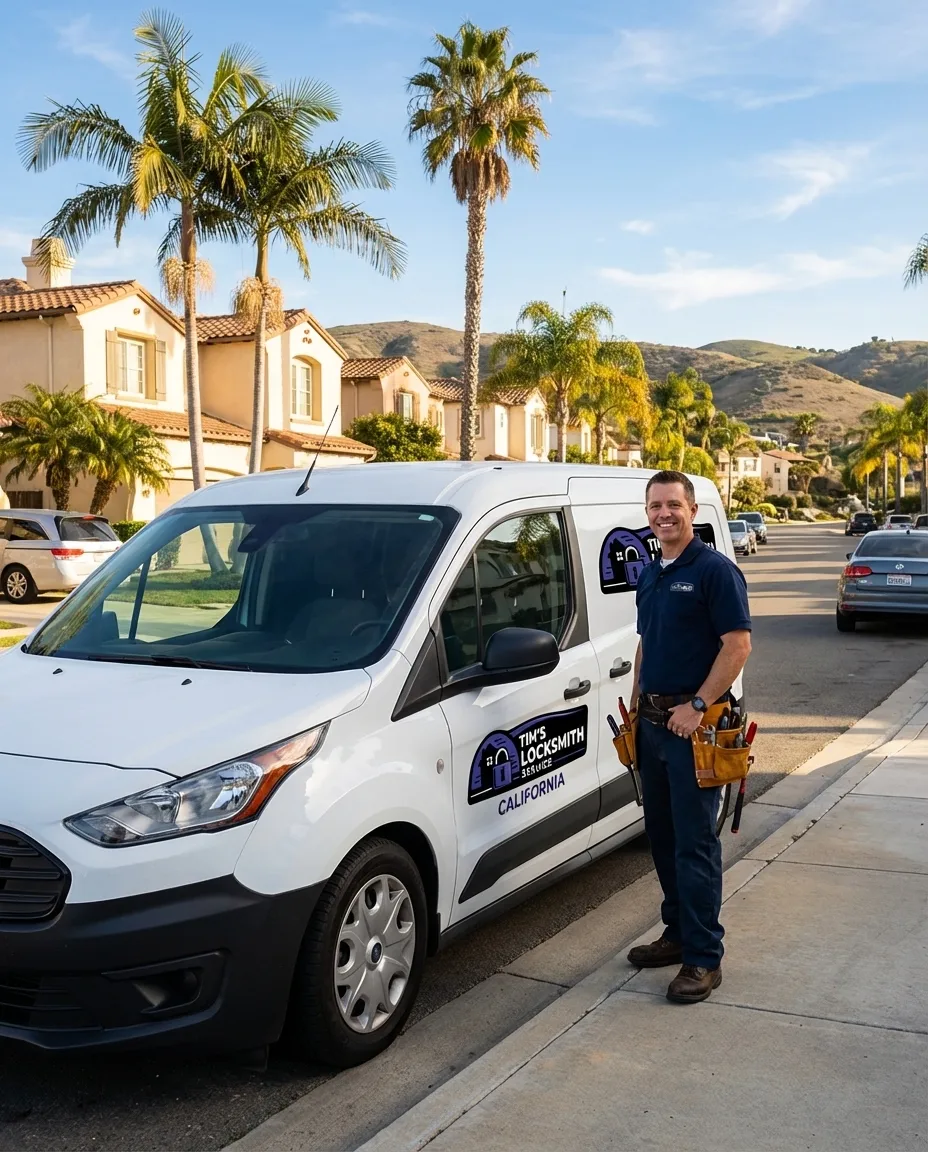
Professional Door Closer Service
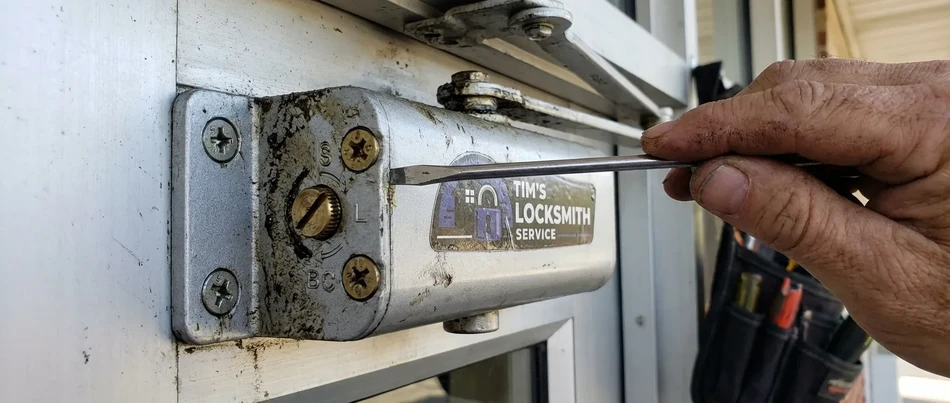
Door closers do more than pull a door shut. They control closing speed, latching speed, backcheck force, and delayed action timing.
When a closer is set correctly, the door closes smoothly and latches every time without slamming or drifting open. When it is not, you get doors that slam hard enough to crack frames, drift open and waste HVAC, fail to latch and compromise security, or close too fast for ADA compliance. We adjust and replace closers to fix all of these problems.
Trusted Brands, Upfront Pricing
We work with LCN, Norton, Dormakaba, Sargent, Yale, and Hager closers. Surface-mounted, concealed overhead, and floor-spring types. Every closer job starts with a door assessment and an upfront price. No hourly billing, no surprise parts charges. We tell you what it costs before we start, and the price includes the closer, installation, adjustment, and testing.
What's Included
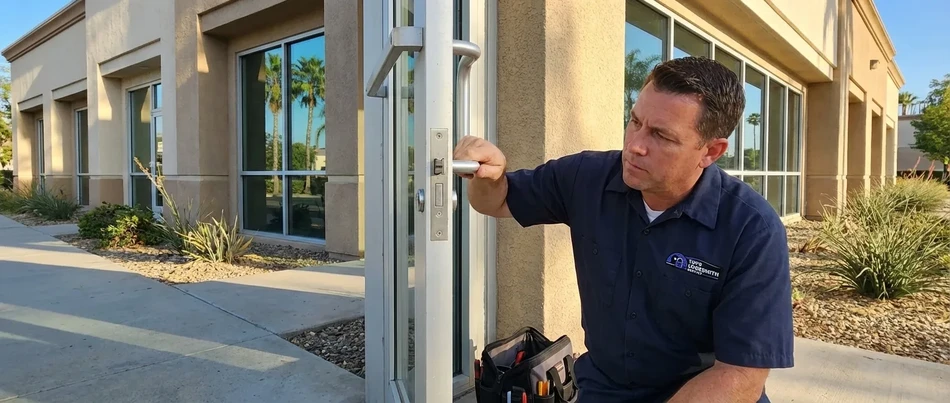
Every door closers visit in San Diego covers door and frame assessment before any work begins, closer installation, and closing speed; the full checklist is below.
 Door and frame assessment before any work begins
- Closer installation, repair, or replacement
- Closing speed, latching speed, and backcheck adjustment
- ADA compliance verification (opening force and sweep time)
- Fire code compliance check on fire-rated doors
- Post-install testing and walkthrough with the customer
How It Works
Getting door closers done in San Diego takes three steps: call or text us, we come to you, and install.

Call or Text Us
Reach out at (619) 768-2745 by phone or text. Describe the door, the closer, and the problem. We give you an upfront quote before we roll.

We Come to You
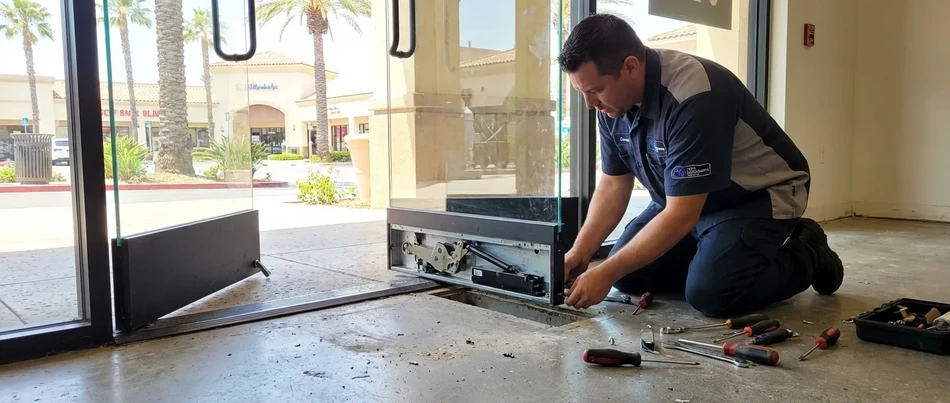
Our mobile van arrives at your commercial property anywhere in San Diego with closers, arms, brackets, and the tools to handle any door closer job on the spot.

Install, Adjust, and Test
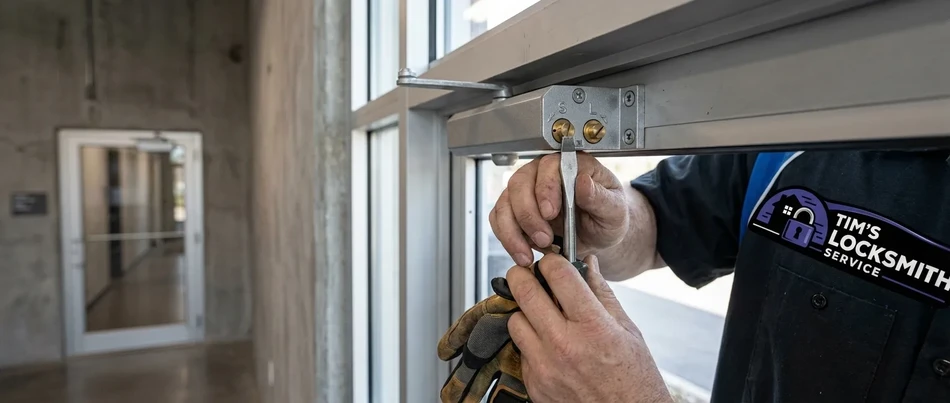
We install or repair the closer, set the closing speed, latching speed, and backcheck to spec, verify ADA and fire code compliance, and test the door multiple times before we leave.
Types of Door Closers
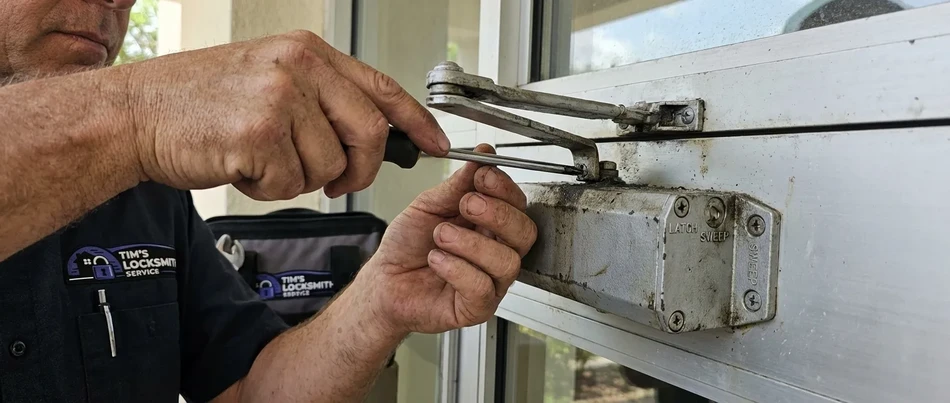
Work on door closers in San Diego usually falls into a few categories, including surface-mounted door closers, concealed overhead door closers, and floor-spring door closers.
-
 Surface-Mounted Door Closers
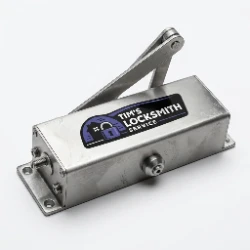
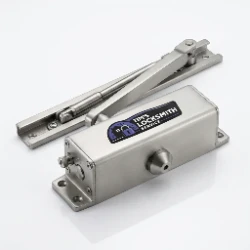
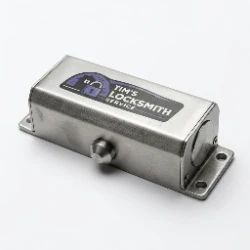
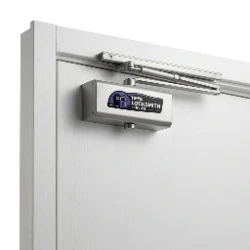
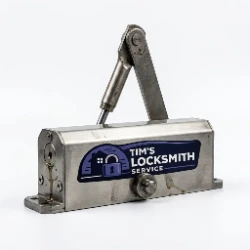
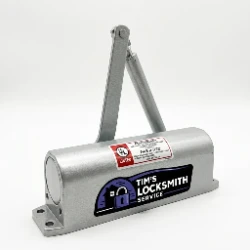
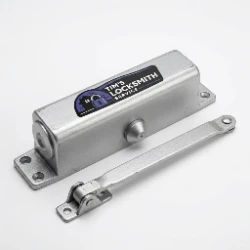
The most common type. The closer body mounts on the door or frame surface with a visible arm connecting the two. Surface-mounted closers are the easiest to install, adjust, and replace. They are available in every size and force rating for doors from lightweight interior offices to heavy exterior steel doors. Most commercial buildings in San Diego have surface-mounted closers on the majority of their doors.
Best for: standard commercial doors, office suites, retail storefronts, restaurant entries, and any application where appearance is secondary to function and ease of maintenance.
-
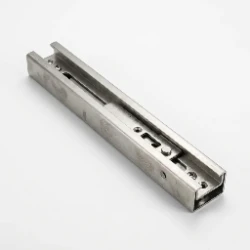
 Concealed Overhead Door Closers
The closer mechanism is hidden inside the door or the frame header, with only a small arm track visible. Concealed closers are specified in high-end office buildings, hotels, and upscale retail where a clean door appearance matters. They require specific door preparation (a mortise pocket in the top rail or header) and are more expensive to install and service because accessing the mechanism means pulling the door or opening the header.
Best for: lobbies, hotel corridors, executive offices, and any opening where visible hardware is undesirable. Common brands: LCN 2010/2030 series, Dormakaba RTS series.
-
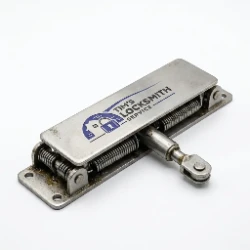
 Floor-Spring Door Closers
The closer mechanism is embedded in the floor beneath the door pivot point. Floor springs are used on frameless glass doors, heavy entrance doors, and doors that swing in both directions. The door is top-pivoted and bottom-pivoted instead of hung on hinges. Floor springs can handle very heavy doors and provide a clean look because the entire mechanism is below the floor surface.
Best for: glass entrance doors, heavy storefront entries, double-acting doors, and high-end architectural applications. Common brands: Dormakaba BTS series, GEZE TS 500.
-
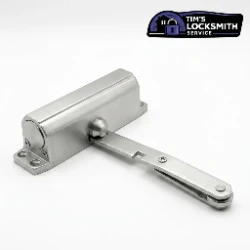
 Hold-Open Door Closers
A hold-open closer keeps the door locked in the open position until released manually or by a signal from the fire alarm system. Hold-open closers are used on doors that need to stay open during business hours for traffic flow but must close automatically when the fire alarm activates. Fire-rated doors with hold-open closers must be tied to the building fire alarm system, a magnetic hold-open device alone does not meet code unless it releases on alarm.
Best for: corridor fire doors, stairwell doors, lobby doors that stay open during business hours. All hold-open devices on fire-rated doors must release when the fire alarm activates.
-
 Delayed-Action Door Closers
A delayed-action closer holds the door open for a set period (typically 10 to 60 seconds) before the closing cycle begins. This gives people with mobility aids, carts, or heavy loads time to pass through without fighting the closer. Delayed-action is an adjustment feature available on many surface-mounted and concealed closers, not a separate closer type. We can add delayed-action to most existing closers by adjusting the delay valve or upgrading to a closer model that includes delay.
Best for: ADA-accessible entrances, hospital corridors, loading docks, mail rooms, and any door where people regularly pass through with carts, wheelchairs, or bulky items.
Common Problems and When to Replace
Door closers are mechanical devices with hydraulic fluid, springs, and pivot points. They wear out. Here are the problems we see most often and how to tell whether your closer needs adjustment, repair, or replacement.
 Problems We See Every Week
-
 Slamming
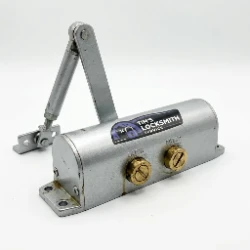
The door hits the frame hard enough to shake the wall or crack the stop. This is usually a closing speed or backcheck adjustment issue. If adjusting the valves does not fix it, the hydraulic fluid has leaked or broken down and the closer needs replacement.
-
 Won't Latch
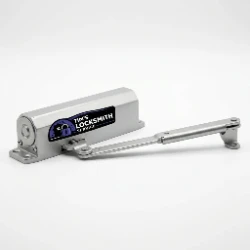
The door almost closes but stops an inch or two short of latching. The latching speed valve needs adjustment, or the closer does not have enough force to compress the latch into the strike. On exterior doors, wind pressure makes this worse. If the latch speed valve is already maxed out, the closer is either undersized for the door or the hydraulic fluid has lost viscosity.
-
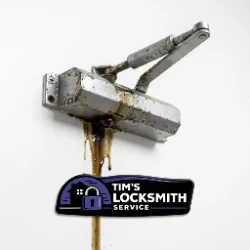
 Oil Leaks
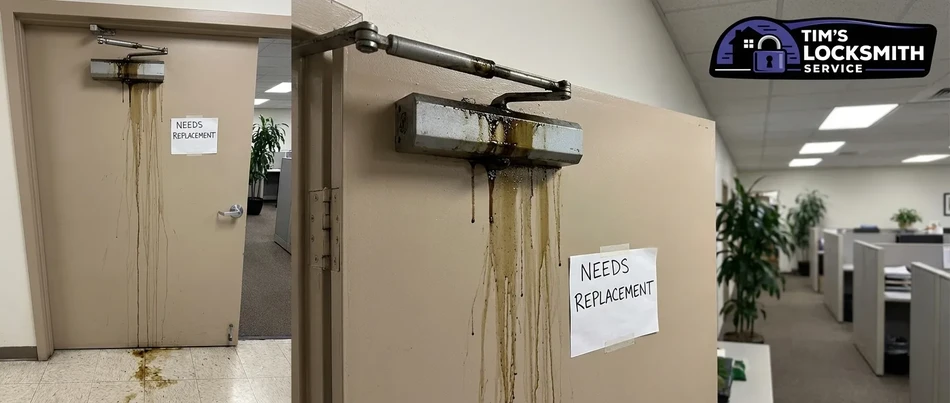
Any oil dripping from the closer body means the internal seals have failed. Once a closer leaks oil, it cannot maintain consistent closing force. Leaking closers get progressively worse and cannot be repaired, the body must be replaced. Oil on the floor is also a slip hazard that creates liability.
-
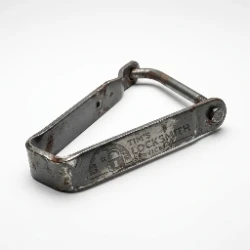
 Bent Arms
The closer arm is the weakest structural point. Arms bend from people pushing past the backcheck, propping doors open by jamming objects under the arm, or hanging things on the arm. A bent arm causes the closer to lose its mechanical advantage and the door will not close properly. Arms can usually be replaced without replacing the entire closer.
-
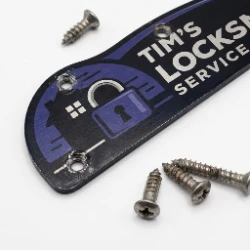
 Mounting Screws Pulling Out
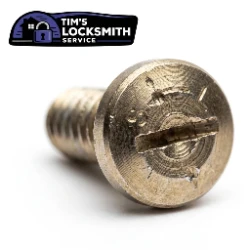
When the screws that hold the closer to the door or frame pull out of the material, the closer loses its anchor point and cannot control the door. This happens when closers are mounted with screws that are too short, when the door material is deteriorated, or when the closer is too small for the door and the repeated force pulls the screws loose. We drill out the old holes, use longer screws or through-bolts, and remount the closer securely.
-
 Seasonal Weirdness
Hydraulic fluid changes viscosity with temperature. A closer that works perfectly in summer may slam in winter (cold fluid moves slower through the valves, then releases suddenly) or drift open in summer (warm fluid flows too freely). Closers on exterior doors and doors in non-climate-controlled spaces need seasonal adjustment, once when it gets cold and once when it warms up.
 When to Adjust vs Replace
 Adjust when:
 Replace when:
How Long Do They Last?
A quality commercial door closer lasts 10 to 20 years depending on traffic volume, exposure to weather, and maintenance. High-traffic doors (50+ cycles per day) wear closers faster. Exterior doors exposed to coastal salt air in Coronado, Pacific Beach, and Imperial Beach may need replacement sooner due to corrosion.
ADA and Fire Code Compliance
 ADA Requirements for Door Closers
 Opening force
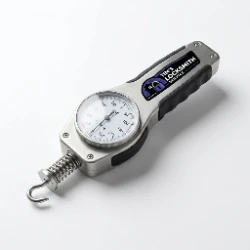
Interior doors must not require more than 5 pounds of force to open (California Building Code Chapter 11B). The door closer is the primary factor in opening force. If the closer spring tension is set too high, the door fails ADA. We measure with a force gauge on every job.
 5-second sweep rule
The door must take at least 5 seconds to move from full open (90 degrees) to 12 degrees from the latch. This prevents the door from closing too fast for someone using a wheelchair, walker, or cane to pass through safely. Most closers have a sweep speed valve that controls this.
 Latch speed is separate
The final few degrees of closing (from 12 degrees to fully latched) is controlled by the latch speed valve, not the sweep speed valve. The latch speed can be faster than the sweep speed, but it must not slam the door. We set the latch speed just fast enough to engage the strike reliably.
 Exterior doors are different
ADA allows higher opening force for exterior doors because wind and weather resistance are factors. However, many jurisdictions in San Diego still require accessible exterior doors to meet the 5-pound standard or to be equipped with power-assisted openers.
 Fire-rated doors are exempt from the force limit
Fire-rated doors are allowed to exceed 5 pounds of opening force because they must positively latch for fire containment. However, fire-rated doors on accessible routes still need to meet the 5-second sweep time requirement.
 Power-assisted closers
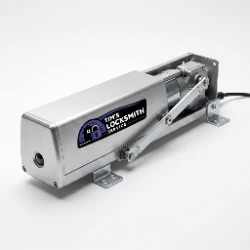
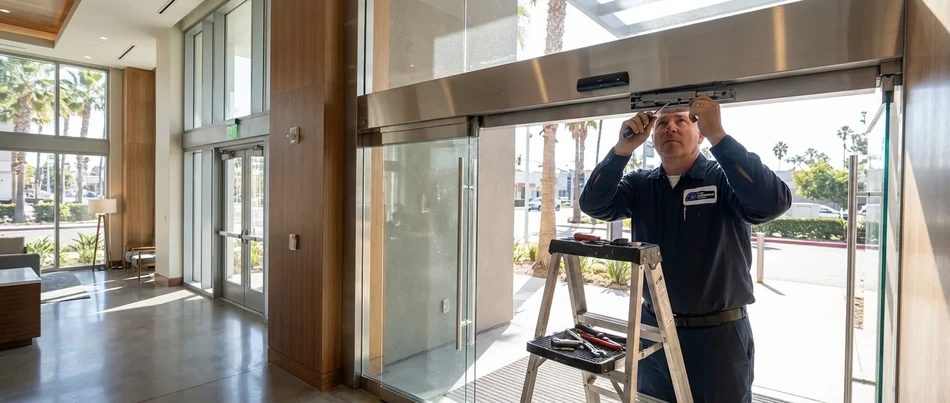
When a manual closer cannot meet both ADA force requirements and reliable latching (common on heavy exterior doors), a power-assisted closer or automatic door operator is the solution. We install and service these as well.
California Fire Code Requirements
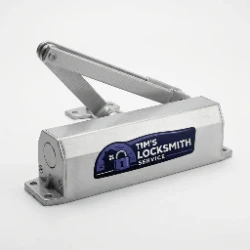
Which doors need closers
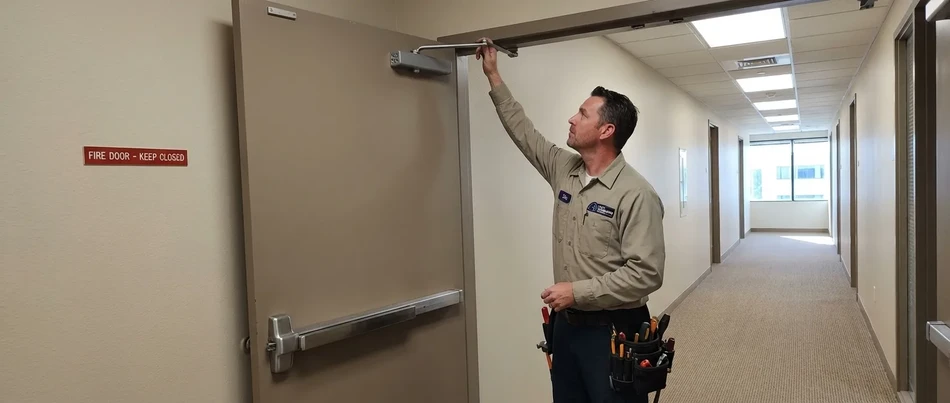
Every fire-rated door must have a closer that returns the door to the fully closed and latched position from any open angle. This includes corridor doors, stairwell doors, mechanical room doors, and any door in a fire-rated wall or smoke partition.
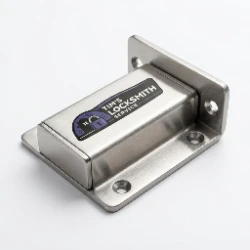
Hold-open closers must tie into the fire alarm
If a fire-rated door uses a hold-open closer or a magnetic hold-open device, it must release automatically when the building fire alarm activates. A hold-open device that only releases manually does not meet code on a fire-rated door. We wire hold-open devices to the fire alarm panel as part of every installation.
Annual inspections are mandatory
California Fire Code requires annual inspection of all fire door assemblies, including the door closer. The closer must return the door to the fully closed and latched position without assistance. A closer that does not latch the door is a fire code violation that will be cited in inspection.
Labeling matters
The closer on a fire-rated door must be appropriate for the fire rating of the door assembly. While closers themselves are not fire-rated, using an undersized closer that fails to latch a fire-rated door effectively voids the fire rating of the assembly. We match closer size to door weight, width, and fire rating requirements.
Penalties
A fire door that does not close and latch automatically is a fire code violation. In San Diego, fire marshal inspections happen annually for commercial properties. Violations can result in correction notices, fines, or orders to cease operations until the issue is fixed. A $150 closer adjustment now prevents a $5,000 fine later.
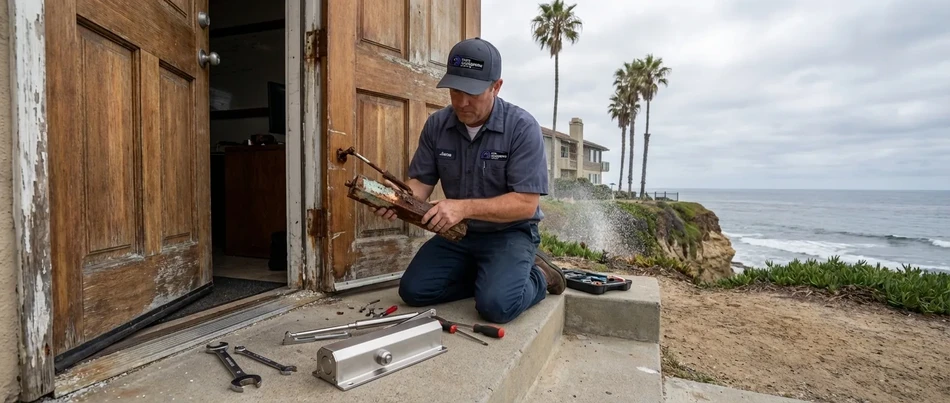
Coastal Hardware Guide
Commercial properties near the coast in San Diego face accelerated hardware failure from salt air. Door closers are particularly vulnerable because they combine hydraulic fluid, metal housings, spring steel, and articulating arms, all of which are affected by salt corrosion.
 What Salt Air Does
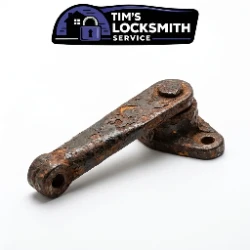
 Arms and brackets
The arm pivot points and bracket mounting surfaces corrode first. Salt buildup in the pivot creates friction that increases closing force and causes the arm to bind. Once the arm pivot seizes, the closer cannot control the door and the arm usually bends or breaks.
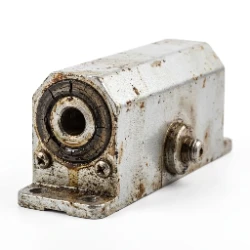
 Seals
Seals
Salt air degrades the rubber and synthetic seals inside the closer body. When seals fail, hydraulic fluid leaks out and the closer loses its damping ability. In coastal locations, seal failure happens 3 to 5 years sooner than inland.
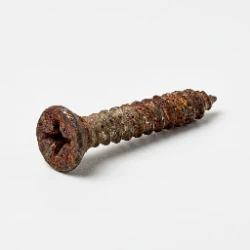
 Galvanic corrosion
When the closer body (usually aluminum) is mounted to a steel door with steel screws, salt moisture creates a galvanic cell between the dissimilar metals. This accelerates corrosion at the mounting points and can cause the screws to seize in the closer body, making future replacement much harder.
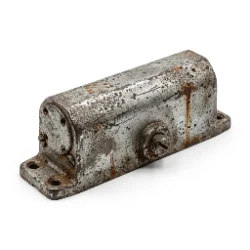
 Cylinder pitting
The hydraulic cylinder inside the closer body develops pitting from salt-contaminated fluid. Pitted cylinders cannot maintain consistent hydraulic pressure, which causes the closer to behave erratically, sometimes slamming, sometimes not latching.
 What We Recommend
- Stainless steel arms and brackets instead of standard plated steel
- Aluminum closer bodies with marine-grade anodized coating
- Stainless steel mounting screws and through-bolts
- Silicone-based lubricant on all pivot points every 6 months (not WD-40 or petroleum-based products)
 Coastal-Rated Product Lines
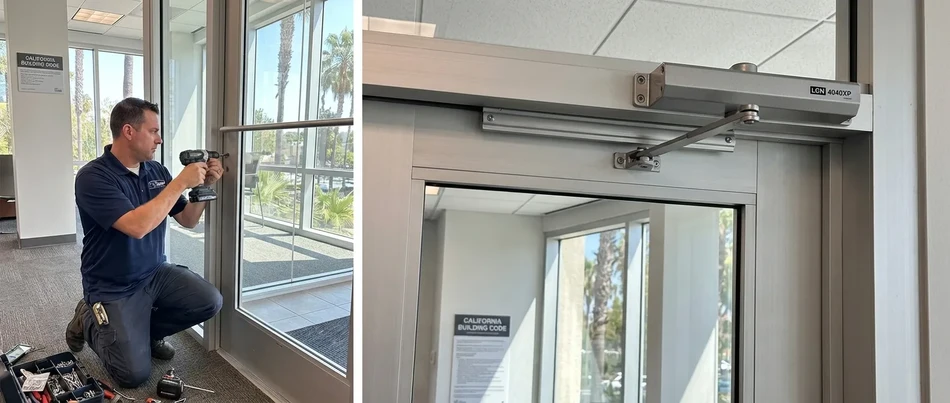
 LCN 4040XP SRI
Salt-resistant iron (SRI) finish on the body and arm. LCN's standard for coastal installations. Available in all sizes and with hold-open, delayed-action, and EDA options.
 Yale 4400S
Stainless steel arm and aluminum body with protective coating. Good mid-range option for coastal commercial doors that see moderate traffic.
Norton 7500SS
Full stainless steel arm assembly with anodized body. Norton's heavy-duty coastal closer for high-traffic exterior doors.
Cal-Royal 900
Budget-friendly option with stainless arm for interior coastal doors that do not face direct weather but are affected by salt air infiltration.
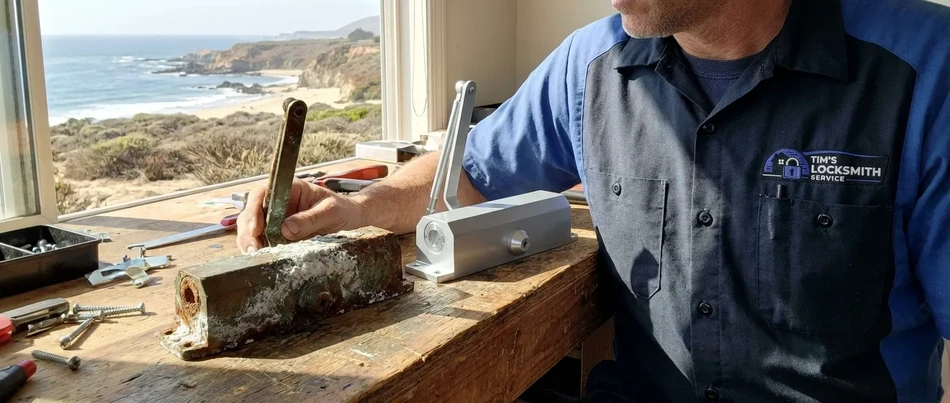
Maintenance still matters. Even marine-grade closers need periodic lubrication and adjustment in coastal environments. We recommend inspecting coastal door closers every 6 months, once before summer and once before winter. Catching corrosion early is the difference between a $75 lubrication visit and a $400 replacement.
Pro Tips for Door Closer Owners
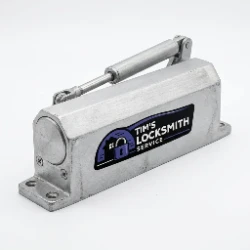
 Check Air Pressure Before Calling
If a door that previously closed fine suddenly will not latch, check whether nearby doors or windows are open. Air pressure differential (especially in tall buildings and buildings with rooftop HVAC) pushes against closing doors and can overpower the closer. Closing a window or adjusting HVAC dampers sometimes fixes the problem without touching the closer.
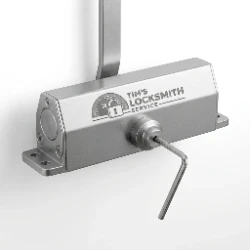
 Seasonal Adjustment
Hydraulic fluid changes viscosity with temperature. A closer tuned in July may slam in January, and a closer tuned in January may not latch in July. Exterior doors and doors in non-climate-controlled spaces (warehouses, parking garages, loading docks) need adjustment twice a year. Mark it on the building maintenance calendar.
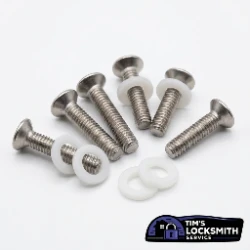
 Don't Mix Metals
Mounting an aluminum closer to a steel door with zinc-plated screws in a coastal environment is a recipe for galvanic corrosion. Use stainless steel mounting hardware with nylon isolation washers between dissimilar metals. This one detail extends closer life by years in salt air environments.
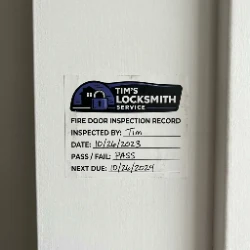
 Keep Fire Door Records
California requires annual fire door inspections. Keep a log of every closer repair, replacement, and adjustment on fire-rated doors. When the fire marshal inspects, having documentation that the closer was serviced within the last 12 months satisfies the inspection requirement and avoids correction notices.
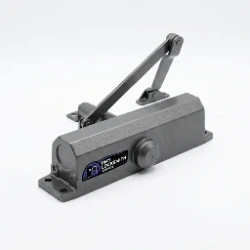
 Oversized Doors Need Oversized Closers
Closer sizing is based on door weight and width. A closer that is too small for the door will burn through its hydraulic fluid faster, bend its arm sooner, and fail to latch reliably. When we see a closer that keeps failing on the same door, the first thing we check is sizing. Upgrading from a size 3 to a size 5 closer often solves chronic problems for good.
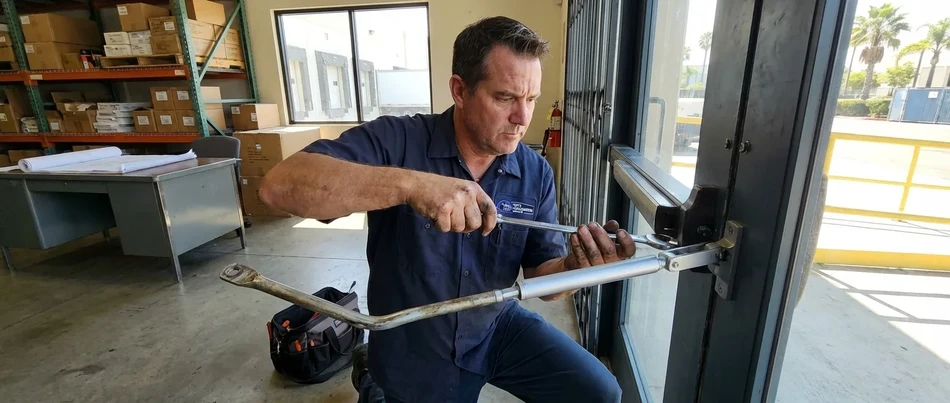
Brands We Install and Service
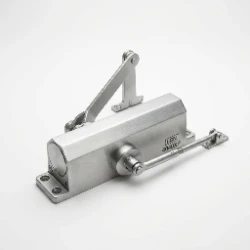
 LCN (Allegion)
The most widely specified commercial door closer brand. LCN makes the 4040XP (the industry workhorse), the 4110 concealed closer, and the SRI salt-resistant line. Parts availability is the best in the industry. If you are not sure what brand to choose, LCN is the safe bet for any commercial application.
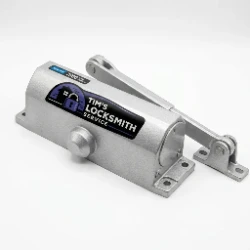
 Norton (ASSA ABLOY)
Norton closers are common in mid-range commercial properties. The 7500 series is their heavy-duty surface closer, and the 8000 series covers concealed overhead applications. Norton parts are widely available and the closers offer good performance at a moderate price point.
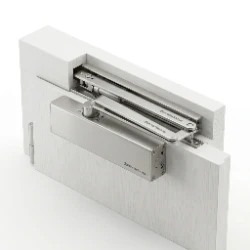
 Dormakaba
Dormakaba (formerly Dorma) is the standard for high-end architectural hardware. Their RTS concealed closer and BTS floor spring are specified in upscale office buildings, hotels, and retail. Dormakaba closers are premium-priced but built to last in high-traffic, high-visibility applications.
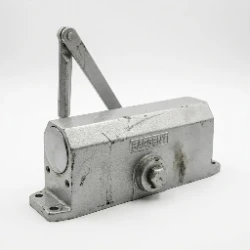
 Sargent (ASSA ABLOY)
Sargent closers are found in office buildings, schools, and government facilities. Their 281 series surface closer is a reliable mid-range option. Sargent also makes the 1431 concealed closer for applications where visible hardware is undesirable.
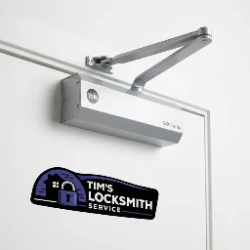
 Yale (ASSA ABLOY)
Yale commercial closers are used in retail, hospitality, and multi-tenant properties. The 4400 series is their main commercial surface closer. Yale is part of the ASSA ABLOY family and shares some component compatibility with Norton and Sargent.
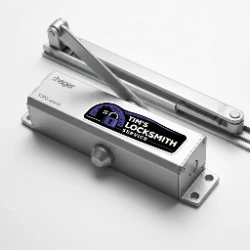
 Hager
Hager
Hager closers are a solid mid-market option for standard commercial applications. The 5300 series covers most door sizes and configurations. Good value for properties that need reliable closers without premium pricing.
 Global (Cal-Royal / PDQ)
Budget-tier closers for light commercial use. Adequate for interior doors with low traffic. We install these when the customer needs a working closer at the lowest possible cost, but we recommend upgrading to LCN or Norton for exterior doors, high-traffic doors, and fire-rated doors where reliability matters most.
What Does Door Closer Service Cost?
Door closers pricing in San Diego depends on the hardware, the door count, and how hard the access is; the table below shows typical ranges.
 Adjustment Only
Closing speed, latching speed, backcheck, and ADA compliance adjustment on an existing closer that is in good condition. Includes testing and verification.
 Standard Replacement
Remove old closer, install new surface-mounted closer, adjust all speeds, and test. Includes the closer, arm, and mounting hardware. Standard commercial brands.
 ADA / Specialty Install
Delayed-action closers, hold-open closers wired to fire alarm, concealed overhead closers, and any installation requiring door prep or frame modification.
 Coastal / Marine-Grade
Salt-resistant closers with stainless steel arms for coastal properties. Includes marine-grade mounting hardware and anti-corrosion treatment.
Call (619) 768-2745 for an exact quote
Why Choose Us
Six reasons San Diego customers call Tim's for door closers work: Licensed and Insured, Same-Day Service, Upfront Pricing, ADA and Fire Code Knowledge, Coastal Expertise, and All Major Brands.

Licensed and Insured
California BSIS licensed (LCO#7134) and insured through State Farm. Commercial door hardware work requires a licensed locksmith and we carry the credentials to prove it.

Same-Day Service
Most door closer adjustments and replacements are completed same-day. We carry common closers and arms in our mobile unit so there is no waiting for a special order on standard hardware.

Upfront Pricing
We quote the job before we start. The price includes the closer, installation, adjustment, and testing. No hourly billing, no surprise parts charges, no add-ons.

ADA and Fire Code Knowledge
Every closer job includes an ADA force check and fire code compliance verification. We do not just install the closer, we make sure the entire door assembly meets current code before we leave.
Coastal Expertise
We know what salt air does to door hardware. For coastal properties in Coronado, La Jolla, and Imperial Beach, we specify marine-grade closers and stainless steel arms by default because we have seen what happens when you do not.
All Major Brands
LCN, Norton, Dormakaba, Sargent, Yale, Hager. We install and service all of them and match the brand to your door, traffic level, and budget instead of pushing whatever we have on the van.
What Our Customers Say
Here is what a few San Diego customers said after we handled their door closers.
"Three door closers in our office building were slamming and one would not latch at all. Tim came out, adjusted two of them and replaced the third that was leaking oil. He also checked the fire-rated doors in the stairwell and adjusted those closers to meet code. Everything works perfectly now."
"The closers on our storefront doors were corroded from the salt air and one was dripping oil on the floor. Tim replaced both with LCN salt-resistant closers and stainless arms. He also replaced the mounting screws with stainless steel. Should have done this years ago instead of replacing cheap closers every two years."
"We needed a hold-open closer installed on a fire corridor door and wired to our fire alarm panel. Tim handled the closer installation and the fire alarm connection in one visit. Tested it multiple times and showed our facilities manager how the hold-open releases when the alarm triggers. Very thorough work."
Serving All of San Diego
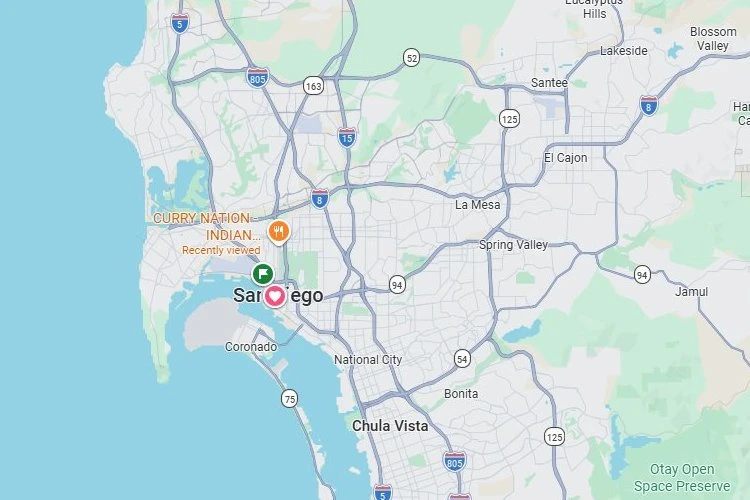
We bring door closers to every city we cover in San Diego, from San Diego to Otay Mesa.
Frequently Asked Questions
Related Commercial Services
If you need more than door closers, we also handle access control systems, master key systems, and panic bars and exit devices across San Diego.
Access Control Systems
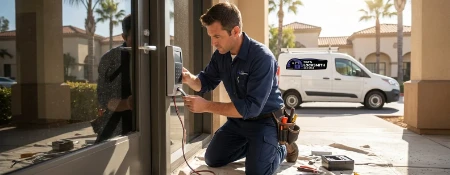
Electronic access control for businesses that need to manage who gets in and when. Card readers, keypads, fob systems, and cloud-managed access. We install, configure, and train your team on the system.
View Service
Master Key Systems
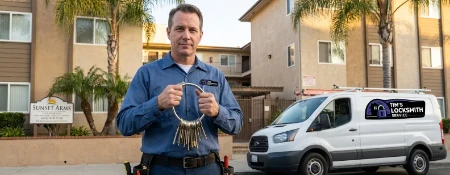
One key that opens every door, individual keys that only open assigned doors. We design and install master key systems for offices, apartment buildings, and commercial properties of any size.
View Service
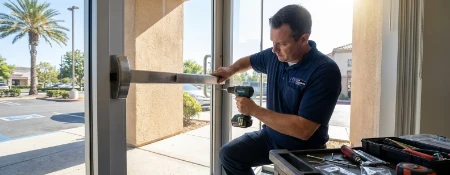
Panic Bars and Exit Devices
Fire code compliant panic bars and exit devices for commercial doors. We install, repair, and replace Von Duprin, Sargent, and other commercial-grade exit hardware. Keep your building up to code.
View Service
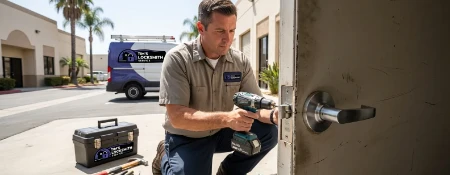
Commercial-Grade Lock Installation
Heavy-duty locks built for commercial use. We install Grade 1 and Grade 2 commercial locksets, mortise locks, and cylindrical locks for offices, retail, warehouses, and industrial doors.
View Service
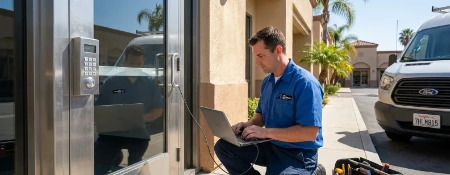
Keyless Entry Systems
Keypad locks, smart locks, and electronic entry systems for businesses. No keys to manage, no rekeying when employees leave. We install and program the system on-site.
View Service
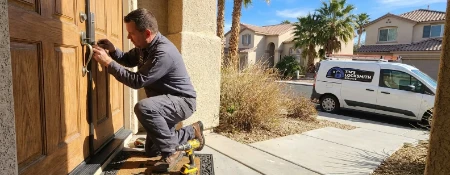
High-Security Locks
Medeco, Mul-T-Lock, Abloy, and other restricted-keyway locks for businesses that need key control. Keys cannot be duplicated without authorization. We install and service all high-security platforms.
View Service
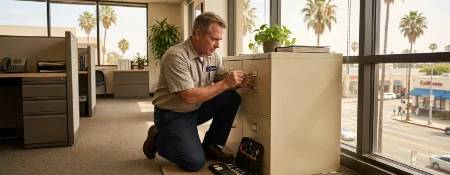
File Cabinet and Desk Locks
Locked out of a file cabinet or desk? Lost the key? We open, rekey, and replace locks on filing cabinets, desks, and office furniture. Most jobs done in minutes.
View Service
Explore Our Other Services
Residential Locksmith
Complete home locksmith services including lock installation, repair, rekeying, and smart lock setup, done at your door.
View Residential Services
Commercial Locksmith
Business locksmith services including access control, master key systems, high-security locks, and panic hardware.
View Commercial Services
Automotive Locksmith
Car key cutting, programming, fob replacement, and ignition repair for most makes and models. We come to your vehicle.
View Automotive Services
Safe Locksmith
Safe opening, combination changes, lock repair, and electronic safe programming for home and office safes. On-site service.
View Safe Services
Emergency Locksmith
Fast response for home, car, and business lockouts, break-in repairs, and urgent lock needs. We come to you, usually same day.
View Emergency Services
Need Help with Door Closers?
Need help with door closers? Call now for an upfront quote. We come to you anywhere in San Diego.
 Open Daily
 Mobile service across San Diego County