
Access Control Systems in Ventura County
Electronic access control for commercial properties across Ventura County. Card readers, keypads, fob systems, mobile credentials, biometric scanners, and cloud-managed platforms. We design, install, program, and maintain systems for offices, warehouses, medical buildings, retail centers, and multi-tenant properties. Call (805) 765-3717 for a site survey.
 Call (805) 765-3717
 Text for Quote
Professional Access Control Installation
Traditional keys fail when you have 20 employees, three shifts, and no way to know who unlocked the back door at 2 AM. Keys get copied at the hardware store.
They get loaned to friends. They disappear into couch cushions and never come back. Rekeying a building every time someone leaves costs time and money that most businesses cannot justify, so the locks stay the same and the key list grows until no one knows who has access to what.
Managed Credentials and Audit Trails
Access control replaces that guesswork with a managed system. Every credential is issued, tracked, and revoked from a single point. You see who entered, when, and through which door. You set schedules so the warehouse crew gets in at 6 AM but the office staff badge only works from 8 to 6. When someone leaves, you deactivate their card in 30 seconds instead of calling a locksmith to rekey the building.
Built for Local Business Realities
Ventura County businesses deal with this every day. Packing houses in Oxnard run three shifts with rotating seasonal crews. Medical offices in Camarillo need HIPAA-compliant access logs. Retail shops in Ventura want to let the morning manager open without handing out keys to every part-time employee. A properly designed access control system solves all of these problems with hardware that lasts 10-15 years and software that scales as the business grows.
Who Needs Access Control
 Office Parks and Professional Buildings
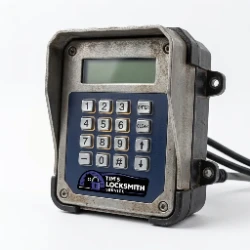
Multi-tenant office buildings need layered access: building entry for all tenants, suite doors for individual businesses, and server rooms or storage restricted to specific people. Card or fob readers at the main entrance with keypads on individual suites is the most common setup we install in Thousand Oaks and Camarillo office parks.
 Agricultural and Packing House Facilities
Oxnard and Santa Paula packing houses run multiple shifts with seasonal workers who may be on-site for three months and gone the next season. Access control lets managers issue credentials at hire and deactivate them on the last day without touching a single lock. Cold storage, chemical storage, and machinery areas can be restricted to trained personnel only.
 Industrial and Warehouse Operations
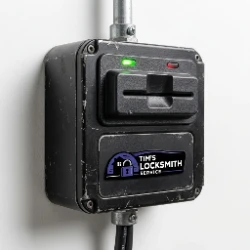
Warehouses and distribution centers in Ventura County have loading docks, offices, hazmat storage, and equipment rooms that all need different access levels. A forklift operator does not need access to the accounting office, and the bookkeeper does not need to open the chemical storage room. Zone-based access control handles this cleanly.
 Medical and Dental Offices
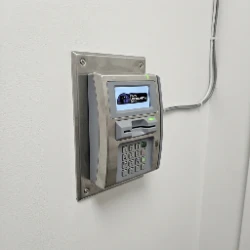
HIPAA requires that access to areas containing patient records be restricted and logged. Card access on records rooms, server closets, and pharmacy storage creates the audit trail that compliance officers look for. We install systems in medical offices across Camarillo, Thousand Oaks, and Ventura that produce the access logs needed for HIPAA audits.
 Retail and Multi-Tenant Spaces
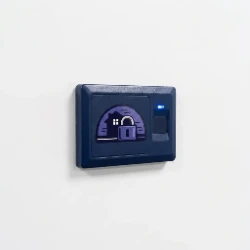
Strip malls and retail centers need shared access to common areas (restrooms, dumpster enclosures, utility rooms) while keeping individual storefronts private. A fob system on common doors with separate credentials per tenant eliminates the "who has the bathroom key" problem that every retail property manager in Ventura County knows too well.
 Marinas and Harbor Facilities
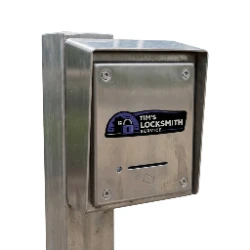
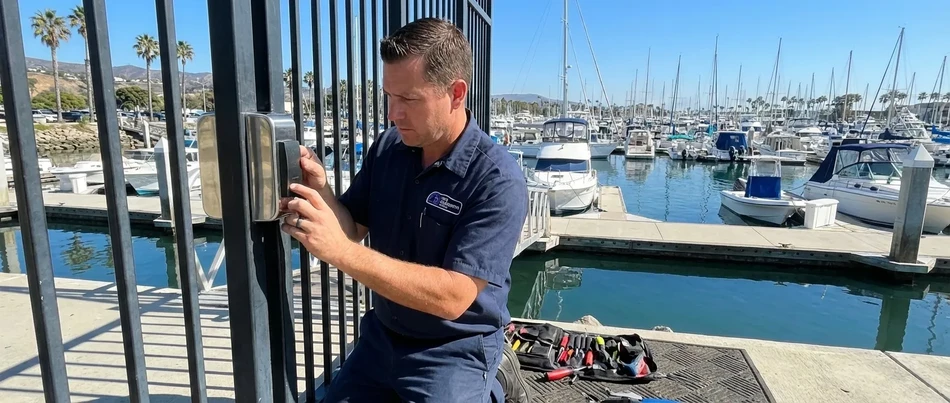
Channel Islands Harbor in Oxnard, Ventura Harbor, and Port Hueneme marina facilities need gate access that handles hundreds of slip holders, seasonal guests, and service vendors. Salt air destroys cheap hardware in months. We install marine-grade readers and stainless steel hardware that holds up to the coastal environment.
 Churches, Schools, and Community Buildings
These properties have complex scheduling: Sunday services, Tuesday night youth group, Wednesday choir practice, Saturday cleanup crew. Different groups need access at different times, and no one wants to hand out master keys to 15 volunteer leaders. Scheduled access control lets each group badge in during their assigned times and locks everyone else out automatically.
Types of Access Control Systems
Work on access control systems in Ventura County usually falls into a few categories, including card and fob reader systems, keypad entry systems, and biometric access control.
-
 Card and Fob Reader Systems
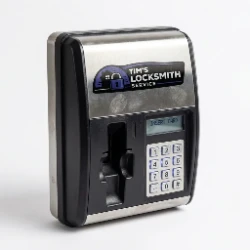
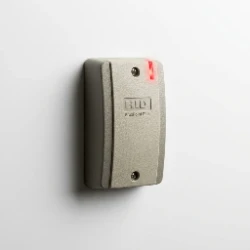
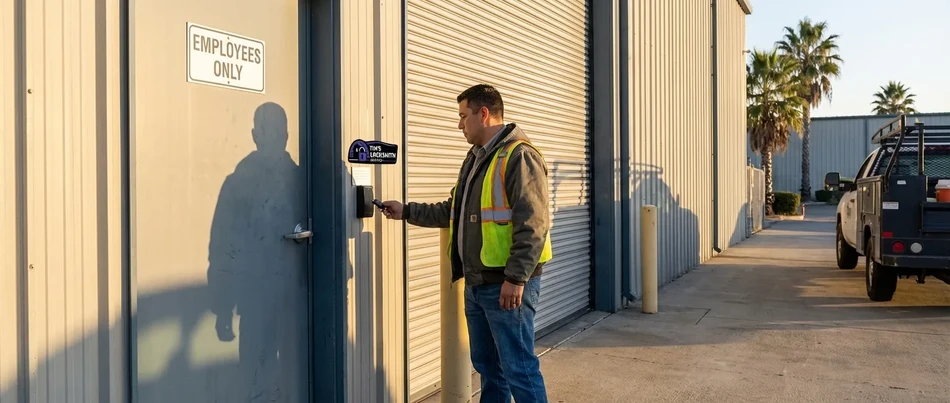
Proximity card readers or key fob readers mounted at the door. Users tap or wave their credential to unlock. The most common type of commercial access control. Cards and fobs are inexpensive to issue and easy to manage. Lost a fob? Deactivate it in the software and issue a new one. No rekeying, no lock changes.
-
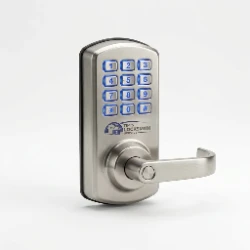
 Keypad Entry Systems
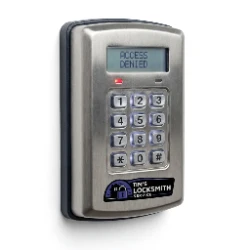
Users enter a PIN code to unlock the door. No credentials to carry, no cards to lose. Good for low-traffic doors where a small group of people need access. Codes can be changed anytime. Some systems support multiple unique codes so you can track which code was used and revoke individual codes without changing everyone else.
-
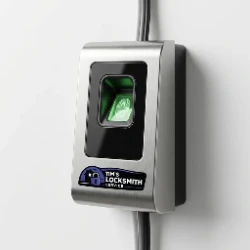
 Biometric Access Control
Fingerprint scanners, palm readers, or facial recognition. The credential is the person, nothing to carry, nothing to lose, nothing to share. Biometric systems are used in high-security environments where credential sharing cannot be tolerated: server rooms, pharmacies, evidence rooms, and cash vaults.
-
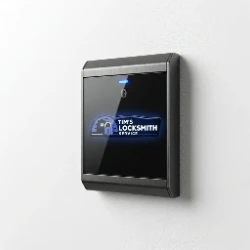
 Mobile Credential (Smartphone) Systems
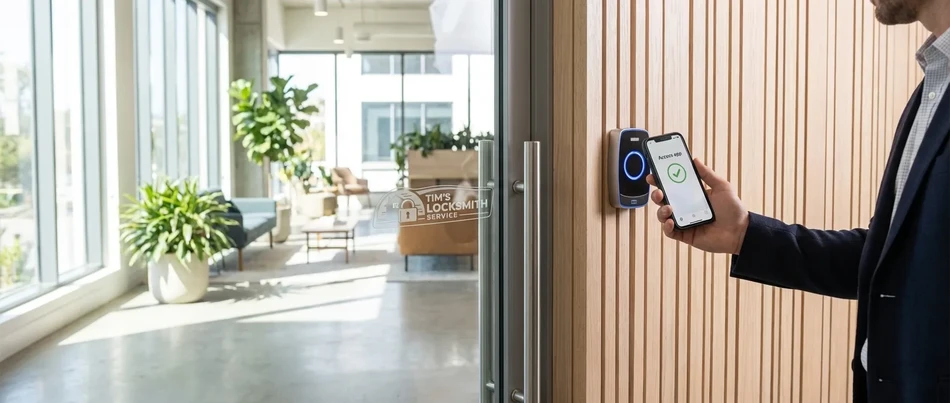
Users unlock doors with their smartphone via Bluetooth or NFC. No cards to print, no fobs to buy. Credentials are pushed to phones over the internet and revoked the same way. Cloud-managed platforms like Brivo, Openpath, and PDK all support mobile credentials. This is the fastest-growing segment of commercial access control.
-
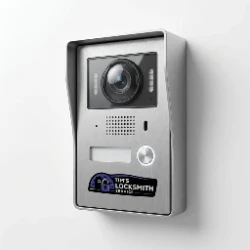
 Intercom and Video Entry Systems
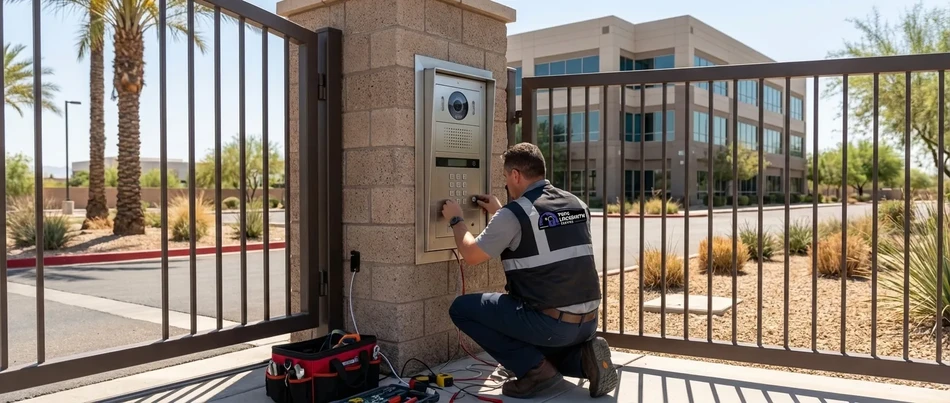
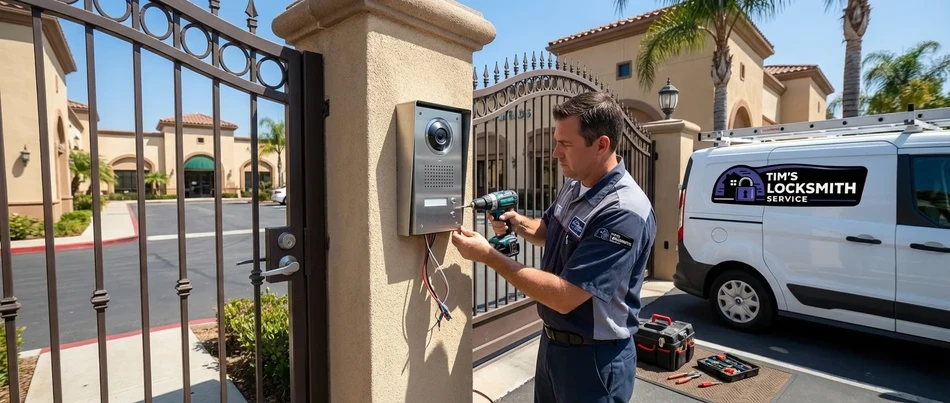
A visitor presses a button, speaks to someone inside (or remotely via phone/app), and is buzzed in. Video intercoms add a camera so you can see who is at the door before granting access. Used at main building entrances, gated parking lots, and delivery entrances where visitors need to be screened before entry.
-
 Multi-Door Networked Systems
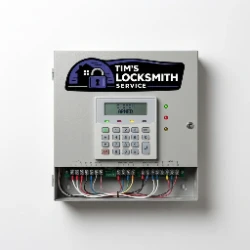
A central controller manages multiple doors from a single interface. All access events are logged, credentials are managed centrally, and doors can be locked or unlocked remotely. Networked systems are the standard for any building with more than 3-4 controlled doors. The controller connects to a head-end PC or cloud dashboard where the administrator manages everything.
Standalone vs. Cloud-Managed
 Standalone Systems
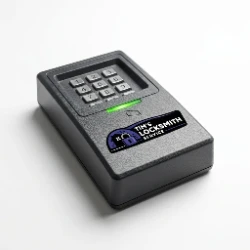
Each door has its own self-contained reader and controller. Programming is done at the door with a master card or handheld programmer.
There is no network connection, no software dashboard, and no subscription fees. Standalone systems are simple, affordable, and reliable. They work well for single doors and small buildings where centralized management is not needed. If you have 1-3 doors and fewer than 50 users, standalone is often the right call.
Best fit: small offices, single back doors, storage rooms, gates, churches with one or two controlled doors, and any property where the owner wants a simple system with no recurring costs.
 Networked and Cloud-Managed Systems
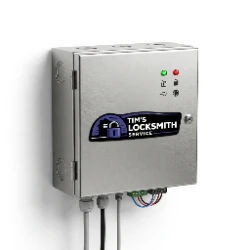
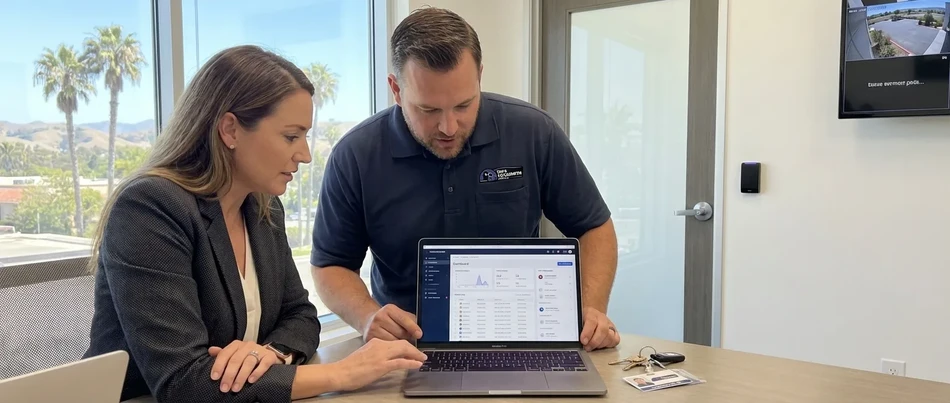
All doors connect to a central controller or cloud platform. Credentials, schedules, and access logs are managed from a web dashboard or mobile app. Changes take effect across all doors instantly. Cloud-managed systems are essential for buildings with multiple doors, multiple locations, or high user turnover. The ongoing subscription covers software updates, mobile app access, and cloud storage of access logs. Most cloud platforms also integrate with security cameras, alarm systems, and visitor management.
Best fit: multi-door commercial buildings, multi-location businesses, property management companies, any organization that needs centralized credential management, remote access control, or compliance-grade audit logs.
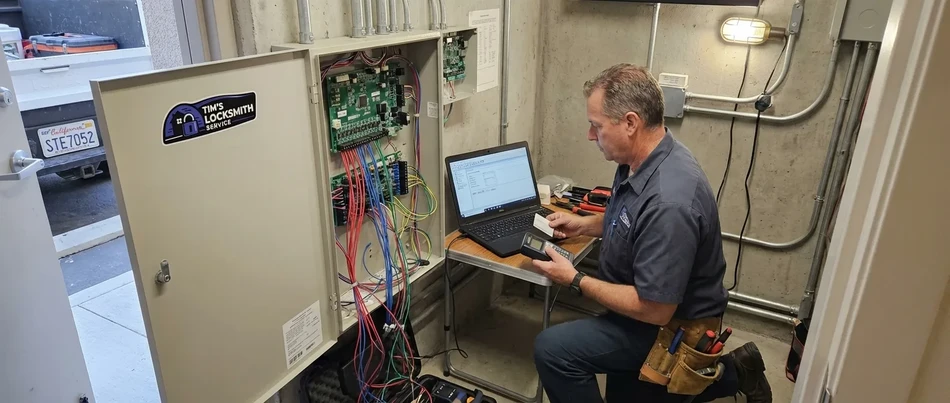
Brands We Install and Service
For access control systems in Ventura County we install and service HID Global, Honeywell, and Keri Systems, along with the other brands listed below.
 On-Premise and Legacy Systems
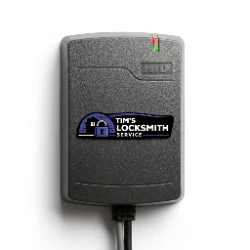
 HID Global
The industry standard for card readers and credentials. HID iCLASS and Seos readers are installed in more commercial buildings than any other brand. If your building already has HID readers, we service, expand, and upgrade them.
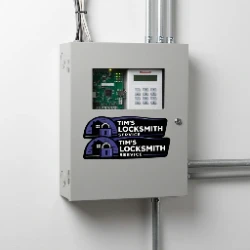
 Honeywell (Lenel/LenelS2)
Enterprise access control for large buildings and campuses. Honeywell panels and LenelS2 software are common in hospitals, universities, and government buildings across California. We install and maintain Honeywell/Lenel systems.
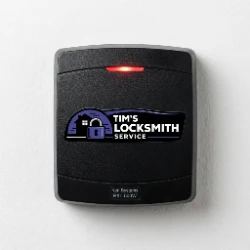
 Keri Systems
Mid-range access control made in California. Keri NXT and Borealis controllers are reliable, affordable, and well-supported. A good choice for Ventura County businesses that want a proven system without enterprise pricing.
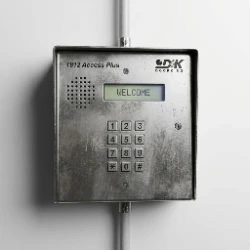
 DoorKing (DKS)
Gate and telephone entry systems. DoorKing intercoms and gate operators are the standard at gated communities, parking structures, and commercial properties throughout Ventura County. We install and program DoorKing entry systems.
 Cloud-Managed Platforms
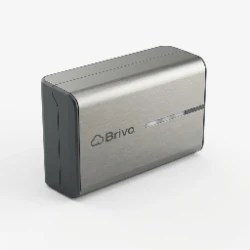
 Brivo
Brivo
One of the first cloud access control platforms. Brivo offers card, fob, and mobile credentials managed from a cloud dashboard. No on-site server needed. Good for multi-location businesses that need centralized management.
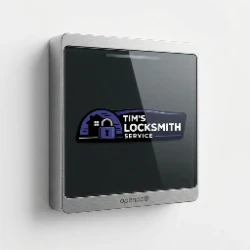
Openpath (Motorola)
Modern cloud access control with sleek hardware and strong mobile credential support. Openpath readers support Apple Wallet and Google Wallet integration. Popular in tech offices and co-working spaces.
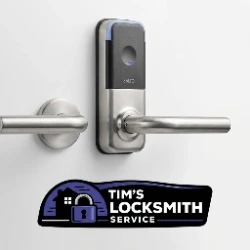
Salto
European-made access control with a strong wireless lock product line. Salto KS (Keys as a Service) is a cloud platform that works with their wireless lock hardware, eliminating the need for door wiring on interior doors.
Verkada
Combines access control with security cameras on a single cloud platform. Verkada readers and cameras share the same dashboard, which simplifies management for properties that need both. Growing fast in the California commercial market.
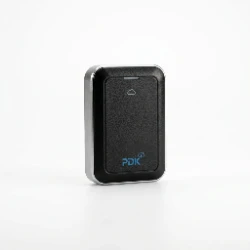
PDK (ProdataKey)
Cloud-native access control with a strong mobile credential app. PDK is gaining market share with property management companies and multi-tenant buildings because of its clean interface and flexible pricing.
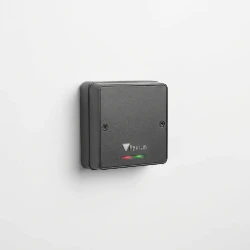
Paxton
UK-based manufacturer with a growing US presence. Paxton Net2 and Paxton10 systems are affordable, easy to install, and well-suited for small to mid-size commercial buildings. Good value for the price.
Coastal Hardware Guide
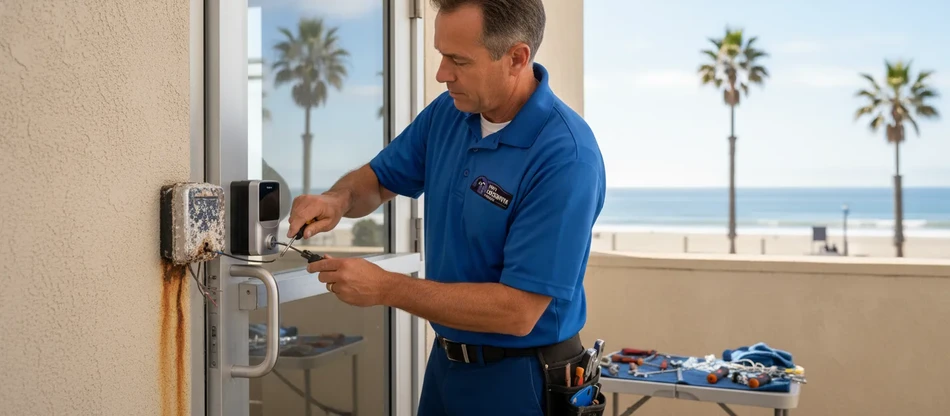
Ventura County businesses within 10 miles of the coast deal with salt air that corrodes standard access control hardware in 2-5 years. Readers with exposed metal contacts pit and fail. Mag-lock housings rust. Wiring connections corrode inside junction boxes. We have seen brand-new installations in Oxnard, Ventura, and Port Hueneme show corrosion within 18 months because the installer used standard indoor-rated hardware on an exterior door.
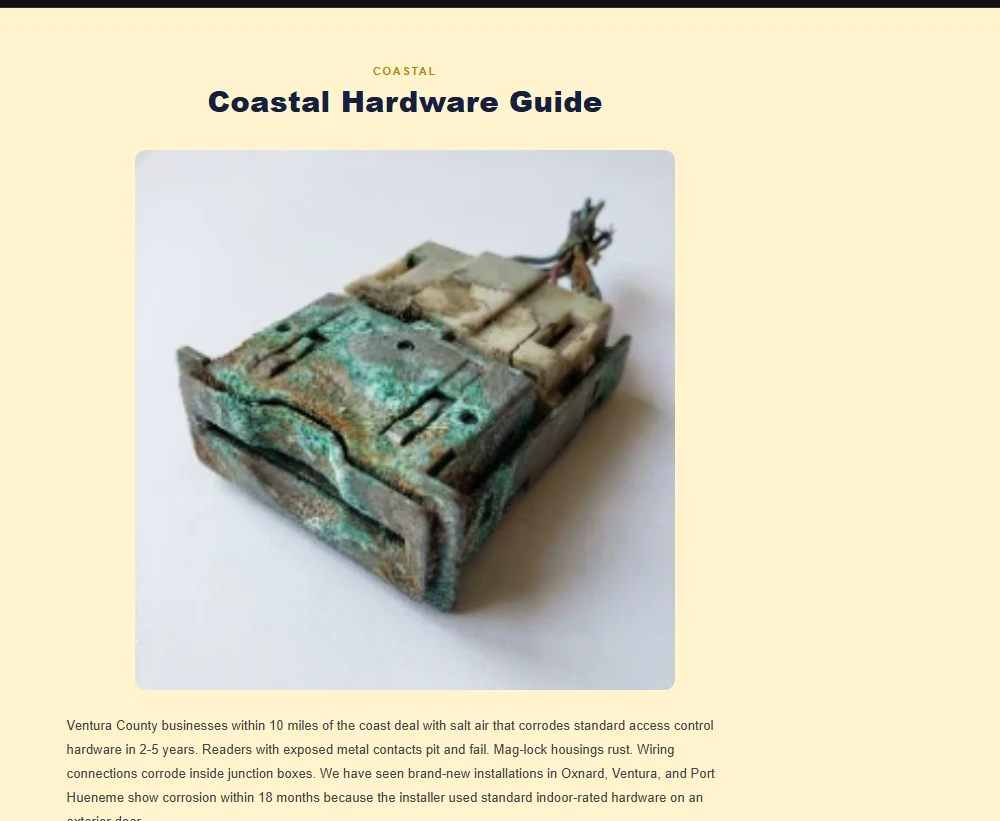
 What Salt Air Does to Access Control Equipment
 What We Recommend
- NEMA 4X-rated enclosures for all outdoor controllers and power supplies. NEMA 4X is specifically rated for corrosion resistance in salt spray environments. Standard NEMA 1 or NEMA 3R enclosures are not sufficient for coastal Ventura County installations.
- 304 or 316 stainless steel hardware on all exterior-facing mounting brackets, screws, and strike plates. Standard zinc-plated hardware corrodes within a year in coastal environments. We use 316 stainless (marine grade) on any installation within 5 miles of the water.
- Marine-grade gate operators for parking lots, perimeter gates, and dock access points. Standard residential or light-commercial gate operators fail quickly in coastal salt air. We install operators rated for marine environments.
- Moisture-resistant conduit and sealed junction boxes for all exterior wiring runs. Liquid-tight conduit and weatherproof junction boxes with dielectric grease on all connections. This prevents the corrosion-related wiring failures that cause intermittent access control problems in coastal buildings.
Every coastal installation we do in Ventura County uses these specifications by default. We do not wait for the customer to ask for marine-grade hardware, we specify it because we know what the salt air does to standard equipment.
Fire Code and ADA Compliance
 Fire Code Requirements
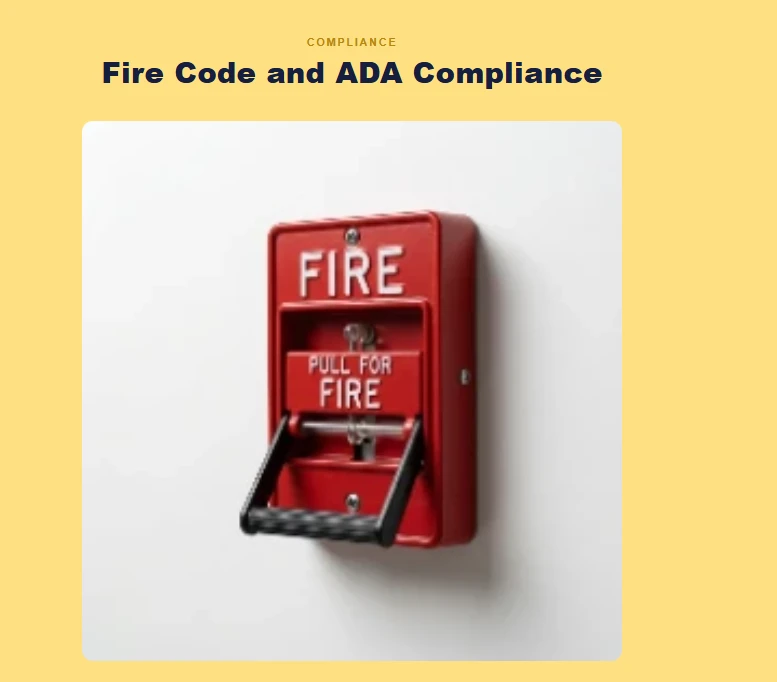
Access control on exit doors must fail safe, meaning the door unlocks automatically when power is lost. This is not optional. California Fire Code requires that all doors in the path of egress remain operable from the egress side without keys, special knowledge, or special effort during a fire or power failure.
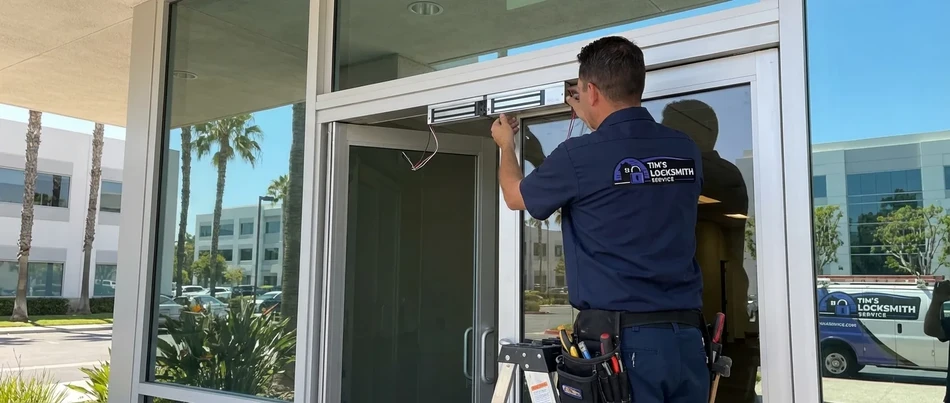
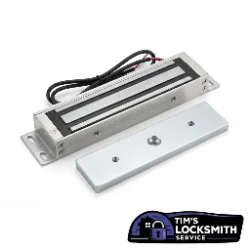
Mag-locks (electromagnetic locks) on exit doors must be connected to the fire alarm panel so they release immediately when the fire alarm activates. They must also release on power failure and when the panic hardware on the door is activated. A mag-lock that holds the door closed during a fire alarm is a code violation that can shut down your business.
Panic bars on access-controlled exit doors must still operate mechanically. The electronic access control manages entry from the outside, but the panic bar on the inside must open the door with a single push motion at all times, regardless of the access control system status.
Fire department key switches (Knox Box or fire department lockbox) may be required on main entrances so the fire department can enter the building without waiting for someone to badge them in. The fire marshal in your jurisdiction will specify this during plan review or annual inspection.
 ADA Requirements
- Operating force to open the door must not exceed 5 pounds once the latch is released (8.5 pounds for fire doors)
- Door closers must allow the door to swing from full open to the latch position in at least 5 seconds
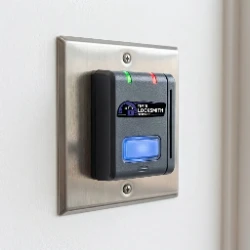
- Card readers and keypads must be mounted between 34 and 48 inches above the finished floor
- The system must not require tight grasping, pinching, or twisting of the wrist to operate
- If an access-controlled door is in an accessible route, the power-operated door opener (if present) must activate before the lock releases to prevent the user from pulling against a locked door
 Why This Matters
The fire marshal inspects commercial buildings in Ventura County annually. Access control that does not meet fire code or ADA requirements results in correction notices, fines, and potential closure orders. Every system we install includes fire alarm integration verification and ADA compliance as standard. We do not treat compliance as an add-on.
Signs You Have Outgrown Keys
You have more than 10 employees and no idea how many copies of the building key exist. You changed the locks after the last employee departure, then skipped the rekeying the next two times because of the cost.
You found the back door unlocked on a Monday morning and no one admits to being the last one out on Friday. Your insurance company is asking about access logs and you have nothing to show them. You keep a spare key under a rock by the HVAC unit, and at least six people know it is there.
If three or more of those sound familiar, the math on access control starts to work in your favor. A four-door card access system costs roughly the same as rekeying a commercial building twice.
Retrofitting Existing Doors
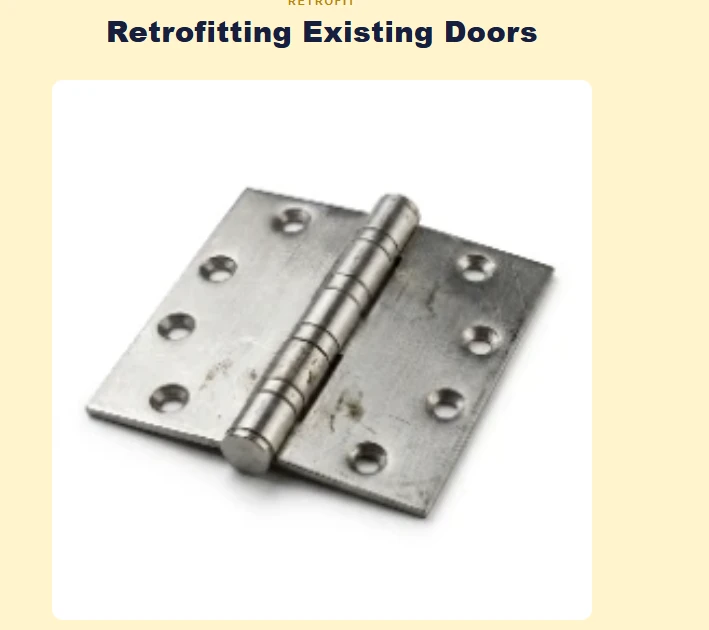
 Door and Frame Compatibility
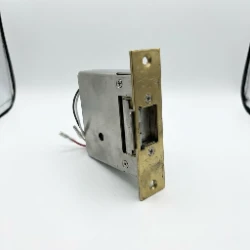
 Hollow Metal Frames
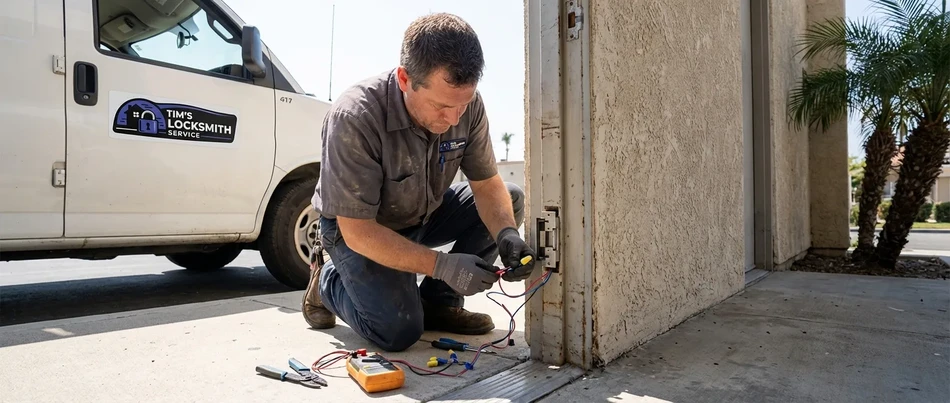
The easiest to retrofit. Hollow metal frames accept electric strikes with minimal modification. Most commercial buildings in Ventura County have hollow metal frames on exterior and corridor doors. We can install an electric strike in the existing frame cutout in most cases.
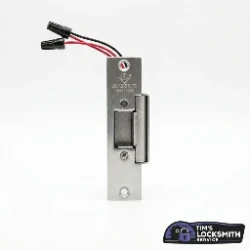
 Aluminum Storefront Frames
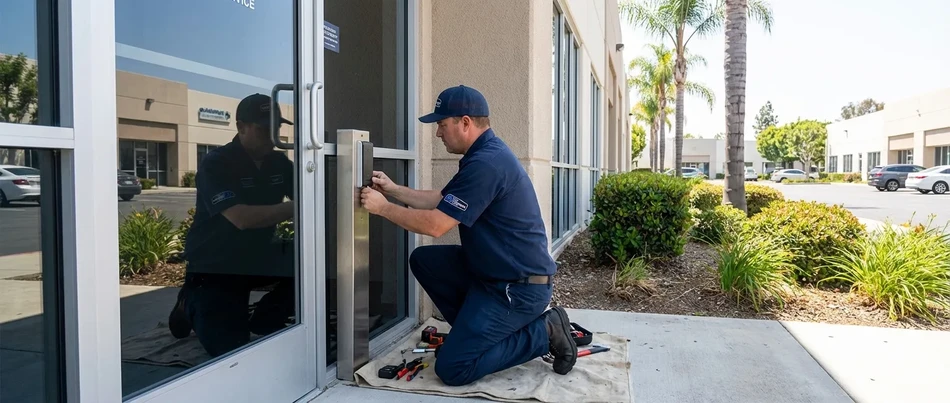
Aluminum storefront doors (the glass doors with narrow aluminum frames you see on retail shops and offices) require narrow-profile electric strikes designed for the narrow stile width. Standard electric strikes do not fit. We carry Adams Rite and HES strikes designed specifically for storefront applications.
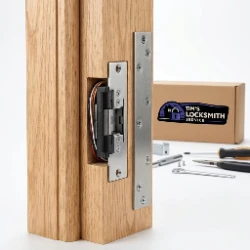
 Wood Frames
Wood frames can accept electric strikes but may need reinforcement depending on the condition and age of the frame. Older wood frames in some Ventura County commercial buildings have been painted over so many times that the frame dimensions are no longer standard. We assess the frame and reinforce if needed before installing the strike.
 What the Door Needs Before Installation
Wiring: Hardwired vs. Wireless
 Hardwired
Hardwired systems run low-voltage wire (typically 18/2 or 22/4) from the reader and strike back to a controller panel. This is the most reliable option and the standard for new construction and major retrofits. The downside is running wire through walls, above ceilings, and across doorways, which can be disruptive in an occupied building.
 Wireless
Wireless access control (like Salto or Allegion Schlage wireless) eliminates door wiring. The lock communicates with a gateway via wireless signal, and the gateway connects to the network. Wireless is ideal for retrofit projects where running wire is impractical or too expensive, historic buildings, multi-story buildings without accessible ceiling space, and doors on interior walls with no nearby power. Battery life on wireless locks is typically 2-3 years on standard AA or lithium cells.
What Does Access Control Cost?
Access control systems pricing in Ventura County depends on the hardware, the door count, and how hard the access is; the table below shows typical ranges.
 Single-Door Standalone Keypad
Keypad lock or standalone reader on one door. No network, no software. Program at the door.
 Single-Door Card/Fob Reader
Card or fob reader with electric strike or mag-lock. Includes controller and power supply.
 Two-Door System (Networked)
Two doors on a single controller with basic software. Entry-level networked system.
 Four-Door System (Networked)
Four doors, multi-door controller, full software suite. The most common small commercial system.
 Cloud-Managed System (per door)
Cloud platform with readers, controllers, and subscription. Price drops with door count.
 Intercom/Video Entry
Door station with camera, intercom, and electric release. Wired or IP.
 Biometric Reader (per door)
Fingerprint, palm, or facial recognition reader. Includes controller and enrollment.
 Ongoing Costs to Budget For
 Cloud/Software Subscriptions
$3 - $8 per door per month (cloud systems only; standalone and on-premise systems have no subscription)
 Replacement Credentials
$2 - $10 per card or fob (budget for 10-15% annual loss/replacement rate)
 Battery Replacement
$20 - $60 per door every 2-3 years (wireless locks and backup batteries on wired systems)
 Annual Maintenance
$150 - $400 per door per year for scheduled maintenance and support (optional but recommended)
How We Install
Getting access control systems done in Ventura County takes seven steps: site survey, hardware selection, installation, programming, fire alarm integration, and training.
Site Survey
We walk every door, assess the frames, check the existing wiring, and map the power locations. We identify which doors need access control, which doors need to remain free-egress, and where the controller panel will go. This visit is free.
Hardware Selection
Based on the survey, we recommend specific readers, controllers, electric strikes or mag-locks, and a software platform. We present options at different price points and explain the tradeoffs. You choose the system that fits your budget and needs.
Installation
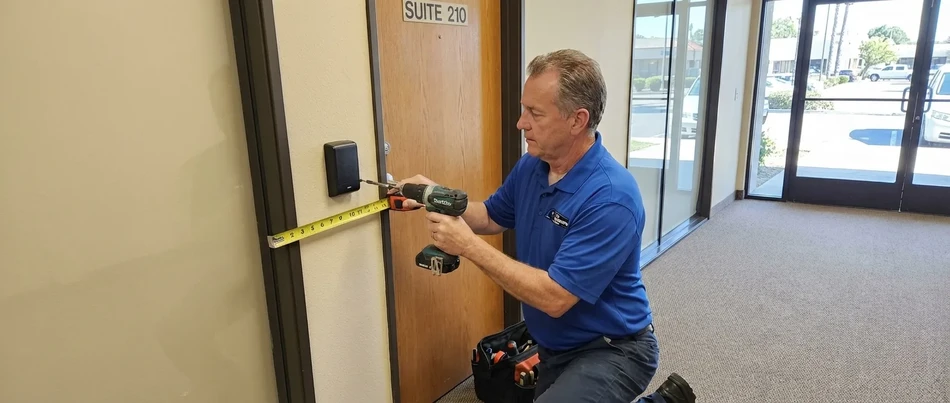
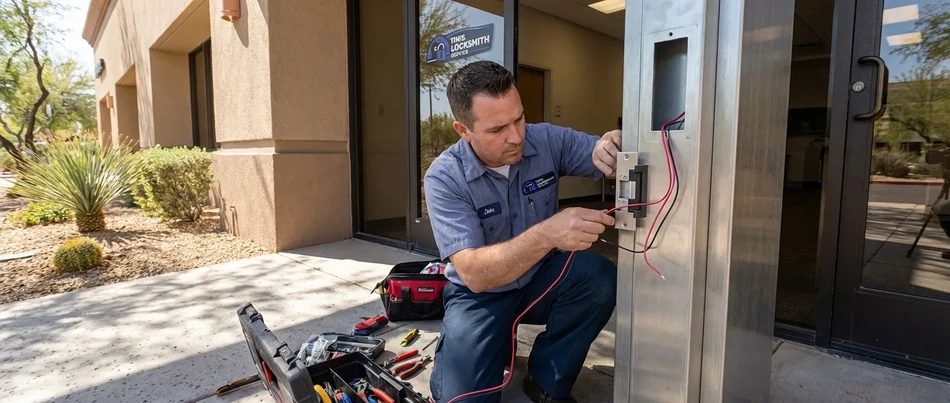
We mount readers, install electric strikes or mag-locks, run wiring, mount the controller panel, and connect everything. Most installations are completed in one day for systems up to four doors. Larger systems may take 2-3 days.
Programming
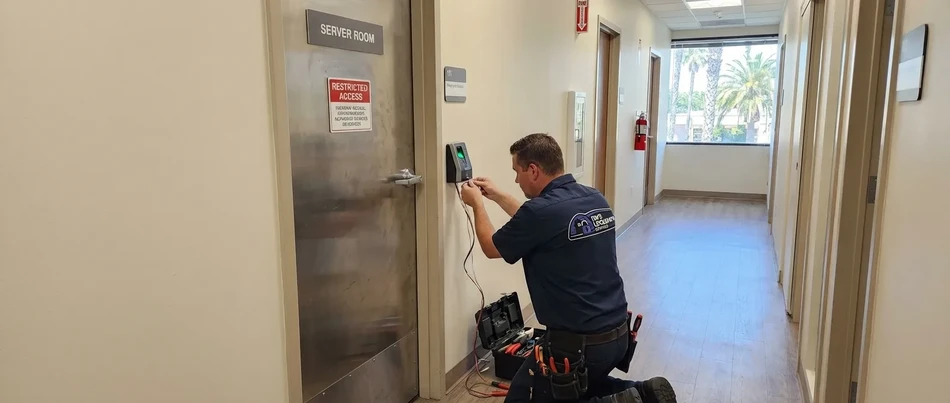
We enroll all credentials, set up access schedules, configure door groups, and program any special rules (first-person-in, anti-passback, lockdown). Every credential is tested at every door it should open.
Fire Alarm Integration
If mag-locks are used on any exit door, we verify the connection to the fire alarm panel. We test that mag-locks release when the fire alarm activates and when the panic hardware is pushed. This is a code requirement, not an option.
Training
We train your designated administrator on adding and removing users, changing schedules, pulling access reports, and basic troubleshooting. We do not leave until your person can manage the system independently.
Post-Install Support
We are available by phone for questions after installation. If something is not working right, we come back and fix it. We also offer optional annual maintenance contracts for ongoing support, battery replacement, and firmware updates.
What's Included
Every access control systems visit in Ventura County covers site survey and system design at no charge, all hardware, and credential enrollment and programming; the full checklist is below.
 Site survey and system design at no charge
- All hardware: readers, controllers, electric strikes or mag-locks, power supplies, wiring
- Credential enrollment and programming
- Fire alarm integration and verification (where applicable)
- ADA compliance check on every controlled door
- Administrator training on system management
- Post-install phone support
- 1-year warranty on all hardware and labor
Credential Security: What You Should Know
Not all access cards are created equal. The most common commercial access card in the US, the HID 26-bit proximity card operating at 125 kHz, can be cloned in seconds with a handheld device that costs $30 on Amazon.
An employee, a delivery driver, or anyone who holds the card for 5 seconds can copy it. If your building uses 125 kHz prox cards, your access control system has a credential security problem that no amount of software can fix.
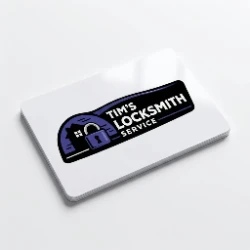
 13.56 MHz Smart Cards (iCLASS SE, SEOS, DESFire)
These cards use encrypted communication between the card and the reader. Cloning requires breaking the encryption, which is significantly harder than copying a 125 kHz prox card. Smart cards are the minimum we recommend for any new installation.
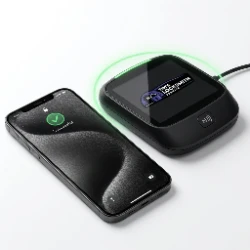
NFC Mobile Credentials (Apple Wallet, Google Wallet)
Mobile credentials stored in the secure element of a smartphone. The credential is unique to the device and cannot be transferred or copied. If the phone is lost, the credential is revoked remotely. No physical card to steal or clone.
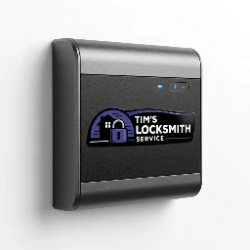
 BLE Mobile Credentials (Bluetooth)
Bluetooth-based mobile credentials work at slightly longer range than NFC and do not require the phone to touch the reader. Used by platforms like Openpath and Brivo. The credential is bound to the device and revocable remotely.
 Key Fobs (125 kHz and 13.56 MHz)
Key fobs work the same as cards but in a smaller form factor. The security depends on the frequency and encryption, 125 kHz fobs are clonable just like 125 kHz cards. 13.56 MHz encrypted fobs provide the same security as 13.56 MHz smart cards. We always specify encrypted fobs for new installations.
If you are installing a new system, there is no reason to use 125 kHz credentials. The price difference between a clonable prox card and an encrypted smart card is $2-4 per card. That is not a meaningful cost difference on a system that costs thousands of dollars per door. We default to encrypted credentials on every system we install.
Why Choose Us
Six reasons Ventura County customers call Tim's for access control systems work: Licensed and Insured, Compliance Built In, Coastal Hardware Expertise, Manufacturer Agnostic, Every Door Inspected, and Ongoing Support.

Licensed and Insured
BSIS licensed (LCO#7134) and insured through State Farm. We pull permits where required and carry liability coverage on every job.

Compliance Built In
Fire code, ADA, and HIPAA access logging requirements are part of every installation, not an afterthought. We do not install systems that create compliance problems.

Coastal Hardware Expertise
Ventura County is a coastal market. We specify marine-grade hardware, NEMA 4X enclosures, and stainless steel mounting on every installation within 10 miles of the water.

Manufacturer Agnostic
We install HID, Honeywell, Brivo, Openpath, Salto, Verkada, PDK, Paxton, DoorKing, and Keri. We recommend the system that fits your building, not the brand that pays us the highest margin.
Every Door Inspected
Before any hardware goes on, we check the door, frame, hinges, and closer. Access control on a bad door causes nothing but problems. We fix the door first if needed.
Ongoing Support
We answer the phone when your system has a problem. We offer annual maintenance contracts and respond to service calls across Ventura County. We do not install and disappear.
What Our Customers Say
Here is what a few Ventura County customers said after we handled their access control systems.
"Tim set up card access on our packing facility. Three shifts, 60+ employees, and he had the whole thing running in two days. Deactivating badges when seasonal workers leave is so much easier than rekeying."
"We needed HIPAA-compliant access logs for our medical office. Tim installed readers on the records room and server closet with full audit logging. Passed our compliance review with no findings."
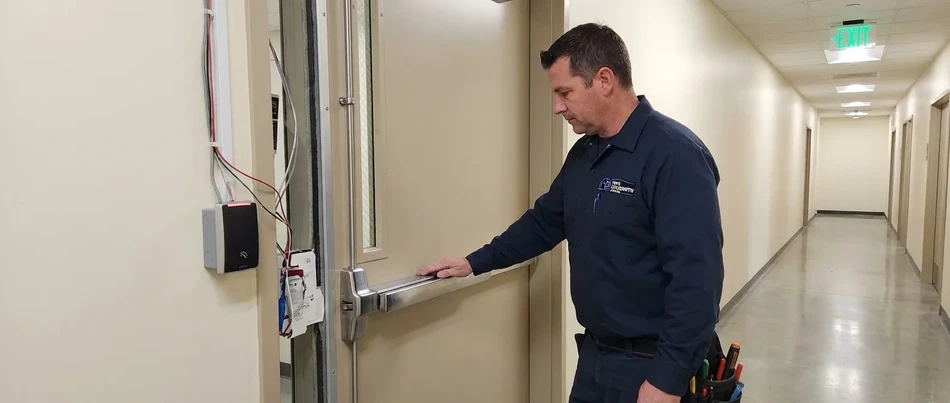
"The last installer put standard hardware on our exterior doors and everything corroded within a year. Tim replaced it all with marine-grade equipment. Two years in and zero corrosion issues."
 Serving All of Ventura County
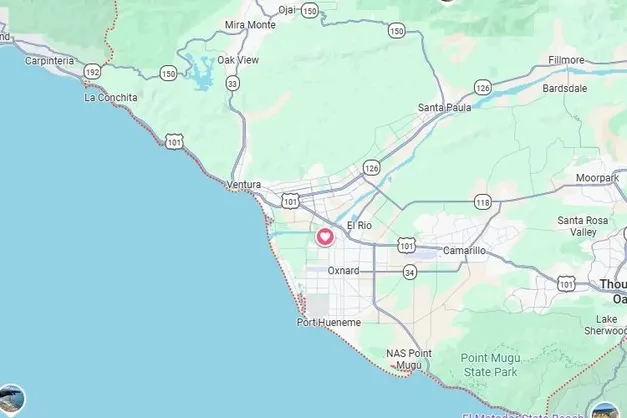
We bring access control systems to every city we cover in Ventura County, from Oxnard to Westlake Village.
Frequently Asked Questions
Related Commercial Services
If you need more than access control systems, we also handle master key systems, panic bars and exit devices, and commercial-grade lock installation across Ventura County.
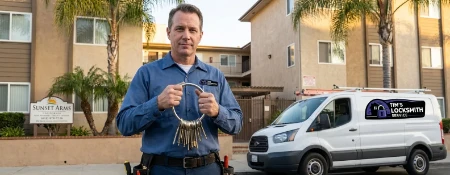
Master Key Systems
One key that opens every door, individual keys that only open assigned doors. We design and install master key systems for offices, apartment buildings, and commercial properties of any size.
View Service
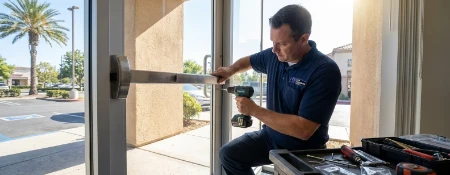
Panic Bars and Exit Devices
Fire code compliant panic bars and exit devices for commercial doors. We install, repair, and replace Von Duprin, Sargent, and other commercial-grade exit hardware. Keep your building up to code.
View Service
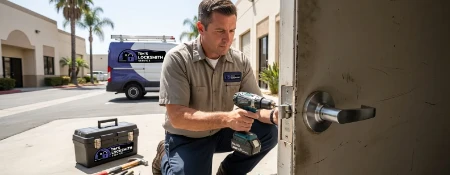
Commercial-Grade Lock Installation
Heavy-duty locks built for commercial use. We install Grade 1 and Grade 2 commercial locksets, mortise locks, and cylindrical locks for offices, retail, warehouses, and industrial doors.
View Service
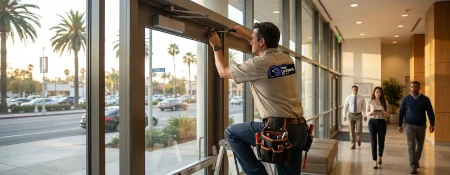
Door Closers
Commercial door closers installed, adjusted, and replaced. We work with LCN, Dorma, Norton, and other brands. Proper adjustment means the door closes at the right speed without slamming.
View Service
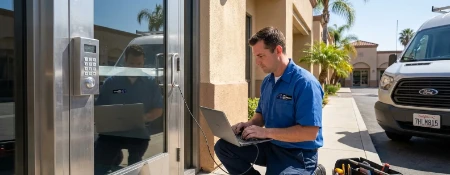
Keyless Entry Systems
Keypad locks, smart locks, and electronic entry systems for businesses. No keys to manage, no rekeying when employees leave. We install and program the system on-site.
View Service
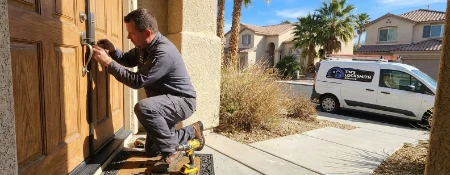
High-Security Locks
Medeco, Mul-T-Lock, Abloy, and other restricted-keyway locks for businesses that need key control. Keys cannot be duplicated without authorization. We install and service all high-security platforms.
View Service
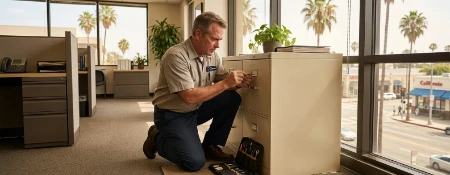
File Cabinet and Desk Locks
Locked out of a file cabinet or desk? Lost the key? We open, rekey, and replace locks on filing cabinets, desks, and office furniture. Most jobs done in minutes.
View Service
Explore Our Other Services
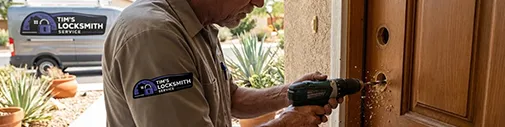
Residential Locksmith
Complete home locksmith services including lock installation, repair, rekeying, and smart lock setup, done at your door.
View Residential Services
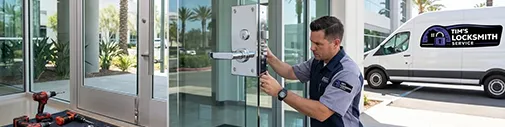
Commercial Locksmith
Business locksmith services including access control, master key systems, high-security locks, and panic hardware.
View Commercial Services
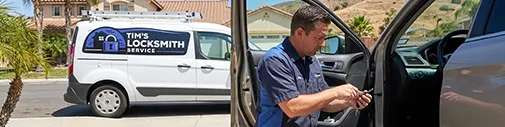
Automotive Locksmith
Car key cutting, programming, fob replacement, and ignition repair for most makes and models. We come to your vehicle.
View Automotive Services
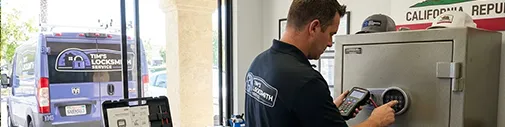
Safe Locksmith
Safe opening, combination changes, lock repair, and electronic safe programming for home and office safes. On-site service.
View Safe Services
Emergency Locksmith
Fast response for home, car, and business lockouts, break-in repairs, and urgent lock needs. We come to you, usually same day.
View Emergency Services
Need Access Control Help?
Whether you need a single keypad on a back door or a 20-door networked system with cloud management, we design and install it. Call (805) 765-3717 for a free site survey anywhere in Ventura County.
 Open Daily
 Mobile service across Ventura County