
Lock Rekeying in Ventura County
Just moved in? Lost a key? Rekeying changes your locks to work with a new key without replacing the hardware. Ventura County homes rekeyed on-site. Same lock, new key, old keys stop working immediately.
 Call (805) 765-3717
 Text for Quote
Professional Lock Rekeying Service
Rekeying is the process of changing the internal pin configuration inside your lock cylinder so that a new key operates it and the old key no longer works. The lock hardware stays on your door, we do not remove it, replace it, or modify it externally. What changes is the combination of pins inside the cylinder. This makes rekeying faster, less expensive, and less invasive than full lock replacement.
Brands We Rekey and Keying Options
We rekey all major residential lock brands including Schlage, Kwikset, Yale, Baldwin, Medeco, Mul-T-Lock, and Weiser. We can rekey every lock in your home to work with a single key, set up separate keys for different doors, or configure a master key system where one key opens everything and individual keys open only their assigned locks. The most common situations that bring people to call us are moving into a new home, losing a key, ending a roommate arrangement, or wanting to make sure an ex-partner or former contractor can no longer get in.

What's Included
Every lock rekeying visit in Ventura County covers on-site service at your door, disassembly and repinning of each lock cylinder, and old keys rendered completely inoperable; the full checklist is below.
 On-site service at your door, no need to remove locks or visit a shop
- Disassembly and repinning of each lock cylinder
- New keys cut and tested in every lock before we leave
- Option to rekey all locks to one convenient key
- Old keys rendered completely inoperable
- Lock function test and lubrication after rekeying

How It Works
Getting lock rekeying done in Ventura County takes three steps: call or text us, we come to you, and new keys.

Call or Text Us
Reach out at (805) 765-3717. Tell us how many locks need rekeying and whether you want them all on one key. We give you an upfront quote before heading your way.

We Come to You
Our mobile van arrives at your location anywhere in Ventura County with pinning kits, key blanks, and tools for every major lock brand. No need to remove your locks or bring them anywhere.

New Keys, Same Locks
We disassemble each cylinder, swap the pins, cut your new keys, test every lock from both sides, and hand you the keys. Old keys stop working the moment we finish.

How Rekeying Actually Works
Every pin tumbler lock, which includes the vast majority of residential deadbolts and knob locks, works on the same basic principle. Inside the cylinder, there are a series of spring-loaded pin stacks.
Each stack has a driver pin on top and a key pin on the bottom. When the correct key is inserted, it pushes each key pin to exactly the right height so that the gap between the key pin and the driver pin lines up with the shear line, the boundary between the cylinder plug and the outer shell. When all pin stacks align at the shear line simultaneously, the plug rotates and the lock opens.
When the wrong key is inserted, at least one pin stack is pushed too high or not high enough, and the gap between the key pin and driver pin does not align with the shear line. The plug cannot rotate and the lock stays locked. This is why a key that is even slightly off will not work.
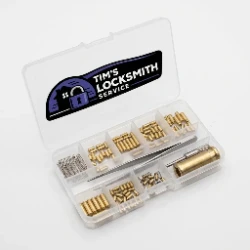
Rekeying changes the key pins, the bottom pins that the key actually touches. We remove the cylinder plug from the lock body, dump out the existing key pins, and insert new key pins of different lengths that match a new key. The driver pins and springs stay the same. Once the new key pins are installed, only a key cut to match those specific pin lengths will align the shear line and open the lock.
The old key no longer works because the pin lengths it was cut to match are no longer inside the cylinder. There is no way to "adjust" or "guess" the new combination from the old key. The old key is effectively useless for that lock from the moment we swap the pins.

Types of Lock Rekeying
Work on lock rekeying in Ventura County usually falls into a few categories, including single lock rekeying, whole-home rekeying, and keyed-alike rekeying.
-
 Single Lock Rekeying
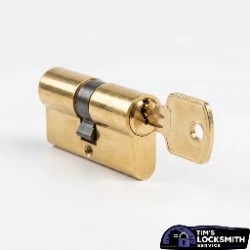
Rekeying one lock, typically after losing a key or wanting to restrict access through a specific door. We rekey the cylinder on-site quickly and hand you new keys before we leave.
-
 Whole-Home Rekeying
Rekeying every exterior lock in your home at once. This is the most common service we perform for new homeowners. We rekey all locks to work with one key so you only carry a single house key. Most homes with 3-5 exterior locks are done in under an hour.
-
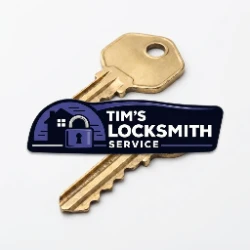
 Keyed-Alike Rekeying
Making all your locks work with the same key. If you have a front door, back door, side gate, and garage entry that all require different keys, we rekey them all to one key. This works across brands as long as the keyways are compatible, and most residential keyways are.
-
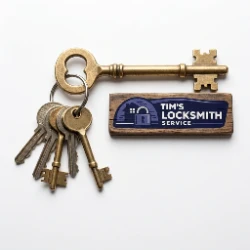
 Master Key Rekeying
Setting up a system where one master key opens all locks, but individual keys only open their assigned lock. Useful for landlords, property managers, or homeowners who want to give a housekeeper or caretaker access to specific doors but not others.
-
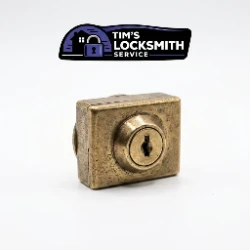
 Mailbox Lock Rekeying
Rekeying residential and cluster mailbox locks. If you have lost your mailbox key or moved into a home where the previous owner kept theirs, we rekey the mailbox lock on-site. We carry common USPS-compatible pins and key blanks.

Not All Locks Rekey the Same
Most residential locks use pin tumbler cylinders and rekey the same way. But a few common lock types have their own process, and knowing the difference helps you understand what to expect.
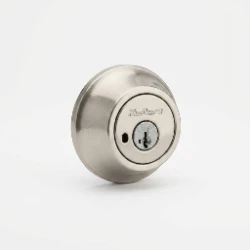
 Kwikset SmartKey
Kwikset SmartKey locks use a sidebar mechanism instead of traditional pin stacks. They are designed for homeowner rekeying using a special "SmartKey learn tool" and a functioning current key. You insert the current key, push the learn tool into a small hole, remove the current key, insert the new key, and pull out the learn tool. The lock is now rekeyed to the new key.
In practice, this works about 80% of the time. The other 20%, the mechanism jams mid-process, the learn tool breaks inside the lock, or the lock accepts the new key but then refuses to operate properly. We get several calls per month from homeowners who jammed their SmartKey lock during a rekey attempt. At that point, the lock usually needs to be replaced, not rekeyed.
If you have SmartKey locks and want them rekeyed reliably, we recommend having us do it. We have the tools to reset a jammed SmartKey mechanism without destroying the lock, and we verify full function before leaving.
 Medeco, Mul-T-Lock, and Other High-Security Cylinders
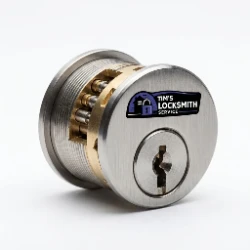
High-security locks from Medeco, Mul-T-Lock, Abloy, and ASSA use specialized pin configurations that include rotating pins, telescoping pins, or sidebar mechanisms in addition to standard pin stacks. Rekeying these locks requires brand-specific pinning kits and training.
We carry Medeco and Mul-T-Lock pinning kits and rekey these locks on-site. The process takes slightly longer than standard locks because of the additional pin elements that need to be matched. Keys for high-security locks must be cut on specialized machines and cannot be duplicated at a hardware store.
 Standard Pin Tumbler
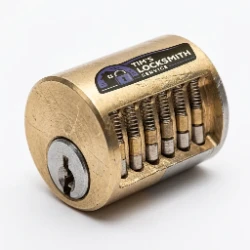
The majority of residential locks. Schlage, Kwikset (non-SmartKey), Yale, Baldwin, Defiant, Weiser, and Emtek, use standard 5 or 6-pin tumbler cylinders. These rekey quickly and predictably. We carry universal pinning kits that cover every standard residential keyway. A single lock rekey is fast, and a whole-home rekey is usually done in under an hour.

When to Rekey Your Locks
Rekeying is one of those services that most people only think about when something has already gone wrong. Here are the ten most common situations where rekeying is the right move.
Just Moved In
You have no idea how many copies of the key exist. The previous owner, their family, their housekeeper, their dog walker, their contractor, any of them could still have a working key. Rekeying every exterior lock the day you move in is the single most important security step for new homeowners. It takes less than an hour and costs a fraction of what you just spent on closing costs.
Lost or Stolen Key
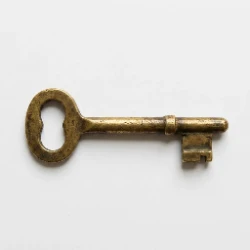
A lost key is an unknown risk. You do not know who found it or whether they know where you live. A stolen key is a known risk. Either way, rekeying eliminates the threat immediately. The lost or stolen key becomes a useless piece of metal the moment we swap the pins.
Divorce or Separation
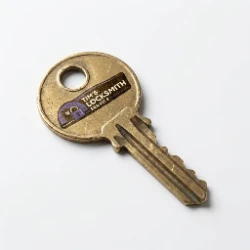
When a relationship ends and one partner moves out, the remaining partner needs to know that only they have access to the home. Rekeying is faster and less expensive than changing locks, and it removes any ambiguity about who can get in.
After a Break-In
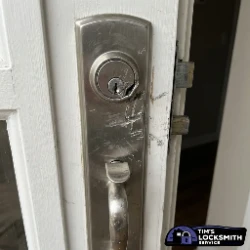
If someone broke in through a door, the lock may need replacement (if it was damaged) or rekeying (if entry was made with a copied or stolen key). If the lock hardware is intact, rekeying ensures the intruder cannot return with the same key. If the lock is damaged, we replace it and key the new lock to match your other doors.
Roommate Moved Out
Roommates come and go, and not all departures are friendly. If a roommate moved out and you are not 100% certain they returned every copy of their key, rekeying is cheap insurance. It is also a good practice between any tenant turnover in a shared living situation.
Fired a Contractor
Contractors, housekeepers, and caregivers often have keys to your home for legitimate reasons. When that working relationship ends, the key should come back. If it does not, or if you are not sure whether copies were made, rekeying closes that access permanently.
Inherited Property
Inherited homes often have keys floating around with neighbors, friends, former tenants, or service providers that the new owner has no way to track. Rekeying every lock is the clean starting point before moving in, renting the property, or listing it for sale.
Foreclosure Purchase
Foreclosed properties can have multiple previous occupants, and there is no reliable way to know how many key copies exist. Banks do not rekey before sale. The buyer inherits whatever key situation the previous owner left behind. Rekeying is the first step after closing.
Vacation Rental Turnover
Short-term rental properties go through dozens or hundreds of guests per year. Even with lockboxes and smart locks, some properties still use keyed entry for gates, storage areas, or secondary entrances. Periodic rekeying, or upgrading to keyless entry, keeps these access points secure.
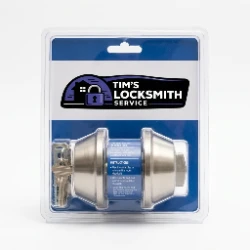
Domestic Violence Situations
California law (Civil Code 1941.5 and 1941.6) requires landlords to change or rekey locks within 24 hours of receiving a written request from a tenant who has a restraining order or police report related to domestic violence, stalking, or sexual assault. If you are in this situation, we can perform emergency rekeying the same day you call. Your safety comes first, and the law is on your side.

Rekey or Replace? How to Decide
Rekeying and replacing solve different problems. Choosing the wrong one either wastes money or leaves you less secure than you think. Here is the straightforward breakdown.
Rekey When:
- The lock hardware is in good condition and works smoothly
- You just need to invalidate old keys
- You want all locks on one key without buying new hardware
- You are on a budget and the locks are functional
- You like your current lock hardware and do not want to change the look
Replace When:
- The lock body is cracked, bent, or physically damaged
- Internal corrosion has reached the mechanism
- The lock is builder-grade and you want a security upgrade
- The lock has been forced or compromised in a break-in
- You want to switch from keyed entry to a smart lock
- The lock is more than 20 years old and showing signs of wear
Understanding Lock Grades
Grade 3
Basic residential. Builder minimum. Rekey is fine if the lock is relatively new, but consider replacing with Grade 2 when it wears out.
Grade 2
Standard residential. Solid security. Worth rekeying and maintaining. This is the sweet spot for most homes.
Grade 1
Commercial / maximum security. Definitely worth rekeying. These locks are expensive to replace and built to last decades.
Rekeying typically costs $20-50 per lock. A standard lock replacement (hardware plus labor) runs $85-180 per lock. For a home with 4 exterior locks, that is $80-200 for a full rekey versus $340-720 for full replacement. If your locks are in good shape, rekeying saves you $260-520 and gets the job done in under an hour.

Security Pin Upgrades
When we rekey your locks, we can upgrade the driver pins to security pins at minimal additional cost. Standard driver pins are simple cylinders. Security pins, spool pins, serrated pins, and mushroom pins, are shaped so that picking tools cause them to bind at the wrong position, giving false feedback to anyone trying to pick the lock.
Security pins do not make a lock pick-proof. No pin tumbler lock is pick-proof. What they do is make picking significantly harder and more time-consuming. A lock with standard driver pins can be picked quickly by someone with basic skills. The same lock with spool pins takes much longer, which is enough to deter most opportunistic attackers.
The cost difference is minimal, typically $5-10 per lock, because the pins themselves are inexpensive and we are already inside the cylinder during the rekey. If you are rekeying anyway, adding security pins is one of the most cost-effective security upgrades available.

Coastal Hardware and Rekeying
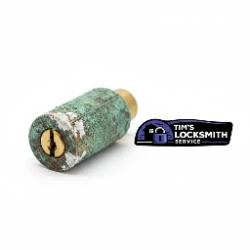
 What Salt Air Does to Your Cylinders
Salt-laden air from the Ventura County coastline gets into lock cylinders through the keyway. Over time, it corrodes the pins, springs, and cylinder walls.
You notice it first as a key that gets harder to turn, then as a key that requires jiggling, and eventually as a lock that seizes completely. The corrosion builds up between the pins and the cylinder bore, creating friction that no amount of key-wiggling can overcome.
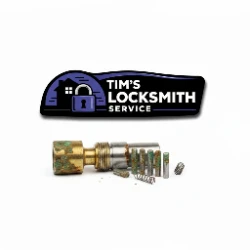
 What Shows Up Inside Corroded Cylinders
When we pull a coastal cylinder apart for rekeying, we commonly find white salt deposits on the pins, green verdigris on brass components, pitting on pin surfaces that should be smooth, and springs that have lost tension from corrosion weakening the wire. A cylinder in this condition can still be rekeyed if the bore is not too pitted, but we clean everything thoroughly and replace any pins or springs that are compromised.
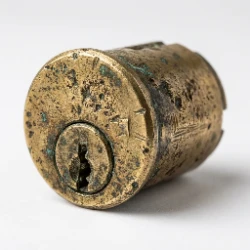
 When a Cylinder Is Too Far Gone
If the cylinder bore is deeply pitted, the pins will never sit properly no matter what we put in there. At that point, rekeying is not the right answer, cylinder replacement is. We swap out the corroded cylinder for a new one (same keyway, so it works with your other locks if they are keyed alike) and pin it fresh. The cost is slightly more than a straight rekey but significantly less than replacing the entire lock.
 What We Recommend for Coastal Homes
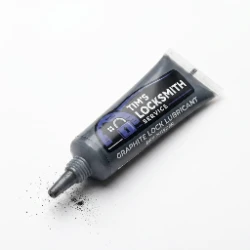
Use dry graphite lubricant in your keyways twice a year, never WD-40 or oil-based products, which attract salt particles and accelerate corrosion. If you are within a mile of the water, plan for cylinder service every 5-7 years regardless of how the key feels. Proactive maintenance is cheaper than emergency replacement when the lock seizes completely.

California Lock Laws You Should Know
California has specific laws about lock changes and rekeying that affect both tenants and landlords. Here is what applies in Ventura County.
 Domestic Violence, Stalking, and Sexual Assault Cases
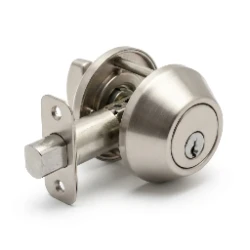
California Civil Code 1941.5 requires landlords to change or rekey locks within 24 hours of receiving a written request from a tenant who has obtained a court order (restraining order, protective order) related to domestic violence, sexual assault, stalking, human trafficking, or elder/dependent adult abuse.
Civil Code 1941.6 extends this protection to tenants who provide a copy of a police report (filed within the last 180 days) documenting that the tenant or a household member is a victim of domestic violence, sexual assault, stalking, human trafficking, or elder/dependent adult abuse. The landlord must change the locks within 24 hours of the written request.
If the landlord does not change the locks within 24 hours, the tenant may change the locks themselves and is not required to provide the landlord with a key. The tenant is responsible for the cost of the lock change, but the landlord cannot retaliate, raise rent, or evict the tenant for exercising this right.
We prioritize these calls. If you are in a domestic violence situation and need your locks changed immediately, call us. We understand the urgency and the law.
 Landlords Cannot Lock Tenants Out
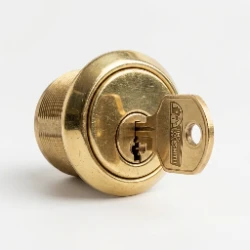
California Civil Code 789.3 prohibits landlords from changing locks, removing doors, or shutting off utilities to force a tenant out. This is called a "self-help" eviction and is illegal regardless of whether the tenant has paid rent. The only legal way to remove a tenant is through the court eviction process. A landlord who changes locks on an occupied unit can be sued for actual damages, $100 per day (minimum), and attorney fees.
 Between Tenants
California Civil Code 1941.3 requires landlords to change or rekey locks on all exterior doors of a unit between tenants. This is not optional, it is a legal requirement. The cost is the landlord's responsibility. We offer landlord rekeying packages with per-lock pricing that makes between-tenant turnover straightforward and affordable.
 Tenants Changing Their Own Locks
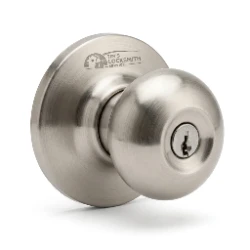
Unless covered by the domestic violence provisions above, California tenants generally cannot change locks without landlord permission. Most lease agreements explicitly prohibit lock changes. If a tenant changes locks without authorization, the landlord can require the tenant to restore the original locks at the tenant's expense. If you are a tenant who wants your locks changed, talk to your landlord first, most will agree if you provide them a copy of the new key.

Rekeying for Landlords and Property Managers
If you manage rental properties in Ventura County, rekeying is one of your most frequent locksmith needs. California law requires it between tenants, and smart property management demands it whenever key control is in question.
Between-Tenant Rekeying
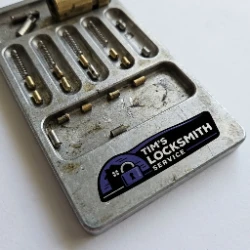
California Civil Code 1941.3 requires rekeying between tenants. This is a legal obligation, not a suggestion. We offer property manager pricing for recurring rekeys and can schedule turnover rekeying to align with your make-ready timeline. Most single-unit rekeys (3-4 locks) take under an hour and can be done while your cleaning crew is finishing up.
Master Key Systems
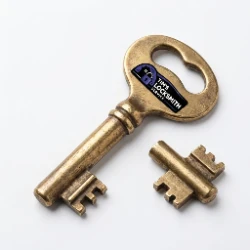
A master key system lets property managers carry one key that opens every unit while tenants have individual keys that only open their own door. This eliminates the need for a massive key ring and simplifies emergency access.
When it makes sense: multi-unit properties (4+ units), properties with shared common areas, any property where management needs regular access for maintenance or inspections.
The trade-offs are real: master key systems reduce the number of pin combinations available for each lock, which technically makes individual locks slightly easier to pick. For most residential rental properties, this trade-off is acceptable. For high-end or high-security properties, discuss the specifics with us before committing to a master key layout.
- Design the key hierarchy before rekeying, adding levels later means pulling every cylinder again
- Limit master key copies to as few people as possible
- Use restricted keyways (Medeco, Mul-T-Lock) for the master key so copies cannot be made at hardware stores
- Document which key opens which lock and keep the chart updated
- Rekey individual units at tenant turnover even within a master system
- Change the master key every 3-5 years or whenever a master copy is lost
- Keep a locksmith relationship so the same technician maintains your system over time, consistency prevents cross-keying errors
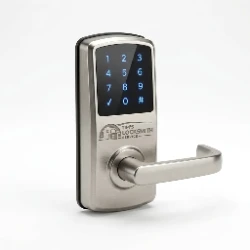
Vacation Rental Properties
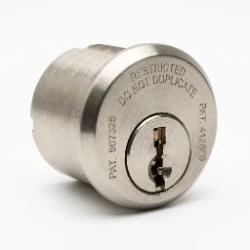
Short-term rentals present unique key control challenges. Guests come and go frequently, and key copies can float around indefinitely. The best solution for most vacation rentals is a keyless entry system with changeable codes. But for properties that still use keyed entry (gates, storage rooms, utility closets), periodic rekeying keeps those access points secure. We recommend rekeying keyed access points on vacation rentals at least once per year or whenever a key is reported lost.

Pro Tips for Lock Rekeying
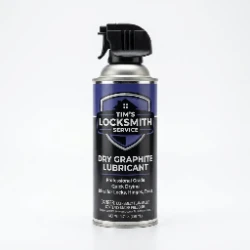
 Stop Using WD-40 on Your Locks
WD-40 is a solvent, not a lubricant. It displaces moisture temporarily but then evaporates, leaving a residue that attracts dust and grime. In coastal areas, it actually accelerates corrosion by trapping salt particles inside the cylinder. Use dry graphite powder or a PTFE-based spray lubricant instead. A quick squirt into the keyway twice a year keeps your locks operating smoothly.
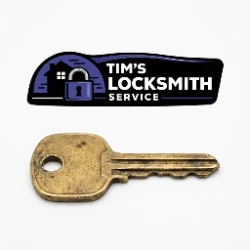
 Do Not Use a Worn Key as Your Rekey Sample
If your current key is visibly worn, rounded edges, thin spots, grooves that look shallow compared to a fresh copy, do not use it as the basis for rekeying. A worn key has lost dimensional precision, and pinning a cylinder to match a worn key means the new keys will also need to be slightly "off" to work. Start with a fresh, factory-cut key blank as the sample for best results.
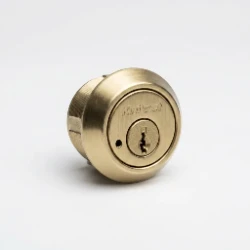
 SmartKey Shelf Life
Kwikset SmartKey locks can be rekeyed by the homeowner, but the mechanism has a limited number of reliable rekey cycles. After 5-8 rekeys, the sidebar mechanism starts to lose precision. If you have rekeyed your SmartKey lock multiple times and it is getting finicky, the lock may need replacement rather than another rekey.
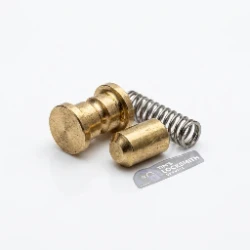
 Ask About Security Pin Upgrades
When we are already inside the cylinder for a rekey, upgrading to spool or serrated driver pins costs almost nothing extra and significantly increases pick resistance. Most people do not know this option exists. Ask us about it and we will show you the difference.
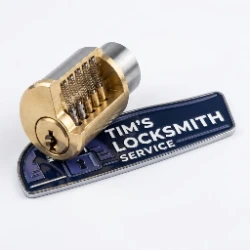
 Rekeying Reveals Hidden Problems
When we pull a cylinder for rekeying, we can see the condition of the pins, springs, and cylinder bore. This is the only time you get a look inside your lock without destructive disassembly. If we find corroded springs, pitted pins, or a worn bore, we will tell you before reassembling so you can decide whether to repair, rekey, or replace. Think of it as a lock health check that comes free with the rekey.

What Does Lock Rekeying Cost?
The per-lock cost depends on the lock type, brand, and whether security pin upgrades are included. Standard pin tumbler locks (Schlage, Kwikset, Yale) are at the lower end. High-security locks (Medeco, Mul-T-Lock) are at the higher end due to specialized pinning kits and restricted key blanks.
Whole-home rekeying (3-5 locks, keyed alike) typically runs $80-200 total. Multi-lock jobs get a per-lock discount.
No hidden fees. The price we quote on the phone is the price you pay. No trip charges, no emergency surcharges, no surprise add-ons.
Brands We Work With
For lock rekeying in Ventura County we install and service Schlage, Kwikset, and Yale, along with the other brands listed below.

Why Choose Us
Six reasons Ventura County customers call Tim's for lock rekeying work: Licensed and Insured, Same-Day Service, Upfront Pricing, Every Major Brand, Real Knowledge, Not Just Tools, and Mobile Workshop.

Licensed and Insured
BSIS licensed (LCO#7134) and insured through State Farm. Your property is protected on every job.

Same-Day Service
We arrive the same day you call, anywhere in Ventura County. Most rekeying jobs are completed in a single visit.

Upfront Pricing
We give you the full price before starting. No surprise fees, no hidden charges, no pressure.

Every Major Brand
We carry pinning kits, key blanks, and cylinders for Schlage, Kwikset, Yale, Baldwin, Medeco, Mul-T-Lock, and more.

Real Knowledge, Not Just Tools
We understand pin tumbler mechanics, high-security platforms, master key design, and California lock law. We explain what we are doing and why.

Mobile Workshop
Our van carries everything needed for rekeying, key cutting, cylinder replacement, and lock repair. No second trips, no waiting on parts.
Frequently Asked Questions
What Our Customers Say
Here is what a few Ventura County customers said after we handled their lock rekeying.

"Just moved into our new house and Tim rekeyed all five exterior locks in about 45 minutes. Everything works on one key now. He explained exactly what he was doing and even showed me the old pins versus the new ones. Super professional and way cheaper than what the hardware store quoted for new locks."
"Had a roommate move out on bad terms and needed the locks rekeyed that same day. Tim came out within an hour of my call, rekeyed three locks, and gave me four copies of the new key. Straightforward pricing, no surprises. Exactly the kind of locksmith you want when you need one fast."
"We manage 12 rental units and use Tim for all our between-tenant rekeying. He is reliable, reasonably priced, and understands the California law requiring rekeying between tenants. He keeps our master key system organized and has never crossed a key. Highly recommend for property managers."
Serving All of Ventura County
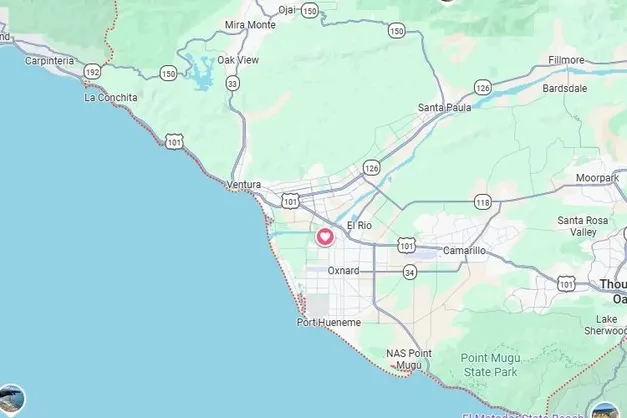
We bring lock rekeying to every city we cover in Ventura County, from Oxnard to Westlake Village.
Related Residential Services
If you need more than lock rekeying, we also handle lock installation, lock repair, and lock replacement across Ventura County.
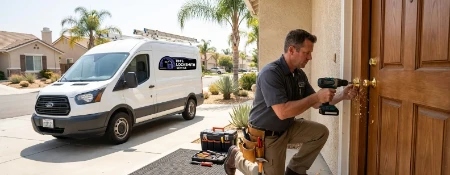
Lock Installation
Professional lock installation for homes across Ventura County. Deadbolts, knob locks, smart locks, and more. We assess your door, install the hardware, align everything, and test every key before we leave.
View Service
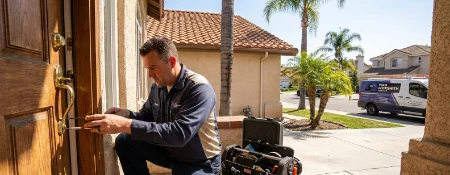
Lock Repair
Lock not turning right? Deadbolt sticking? We diagnose and repair all types of residential locks on-site. Most repairs take under an hour, and we carry common replacement parts in the van so there is no second trip.
View Service
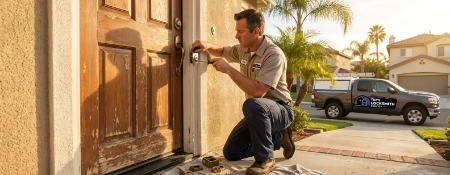
Lock Replacement
Old locks, damaged hardware, or a security upgrade. We remove your existing locks and install new ones with fresh keys. We work with every major brand and match the right lock grade to your door and security needs.
View Service
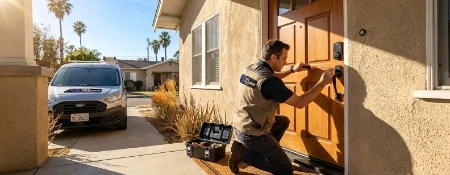
Smart Lock Installation
Upgrade to keyless entry with professional smart lock installation. We handle the hardware swap, WiFi or Bluetooth setup, app configuration, and make sure the lock works with your phone before we leave.
View Service
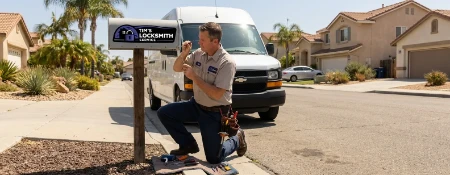
Mailbox Lock Services
Mailbox lock broken or missing a key? We repair, replace, and rekey mailbox locks for residential mailboxes, cluster boxes, and community mailbox units. Protect your mail and packages with a working lock.
View Service
Explore Our Other Services
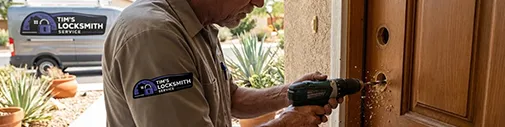
Residential Locksmith
Complete home locksmith services including lock installation, repair, rekeying, and smart lock setup, done at your door.
View Residential Services
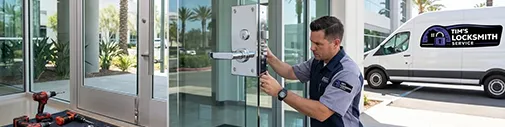
Commercial Locksmith
Business locksmith services including access control, master key systems, high-security locks, and panic hardware.
View Commercial Services
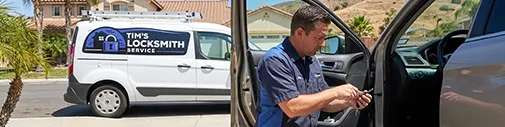
Automotive Locksmith
Car key cutting, programming, fob replacement, and ignition repair for most makes and models. We come to your vehicle.
View Automotive Services
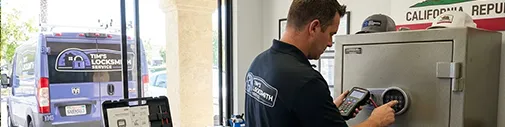
Safe Locksmith
Safe opening, combination changes, lock repair, and electronic safe programming for home and office safes. On-site service.
View Safe Services
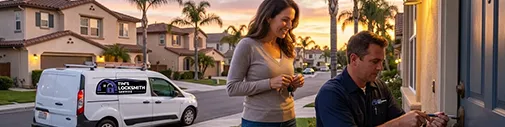
Emergency Locksmith
Fast response for home, car, and business lockouts, break-in repairs, and urgent lock needs. We come to you, usually same day.
View Emergency Services
Need Lock Rekeying Help?
Call (805) 765-3717 for a free rekeying estimate. We come to you anywhere in Ventura County and give you an upfront price before starting any work. Same-day service, no hidden fees.
 Open Daily
 Mobile service across Ventura County