Keyless Entry Systems in Ventura County
Commercial keyless entry systems designed for offices, retail, and multi-tenant buildings. No more lost keys.
 Call (805) 765-3717
 Text for Quote
Professional Keyless Entry Systems
Every time an employee leaves, the rekeying cycle starts again. Change the locks, cut new keys, hand them out, update the list, hope nobody made copies before they turned theirs in.
For a business with 10 or more employees and any kind of turnover, that cycle costs hundreds of dollars per event and days of coordination. Multiply that by a few departures per year and the locksmith bills alone justify switching to keyless entry.
Tailored to Your Business and Doors
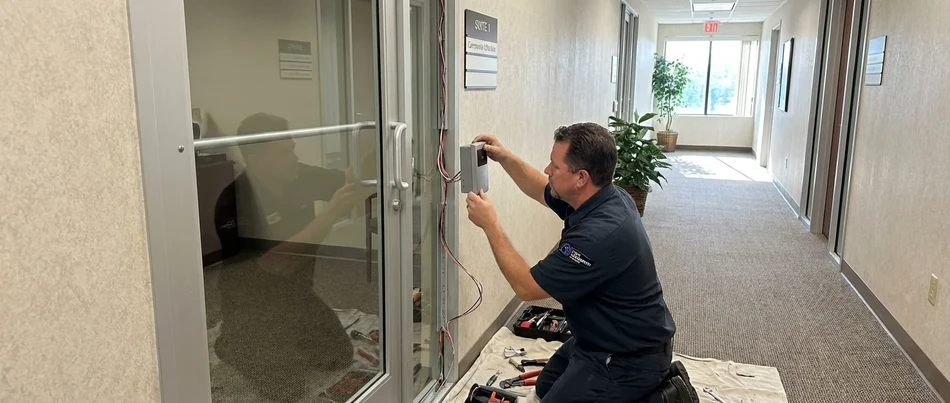
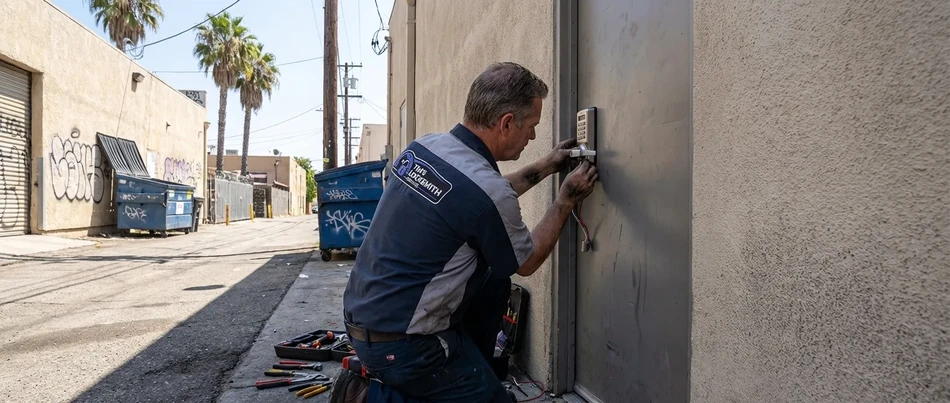
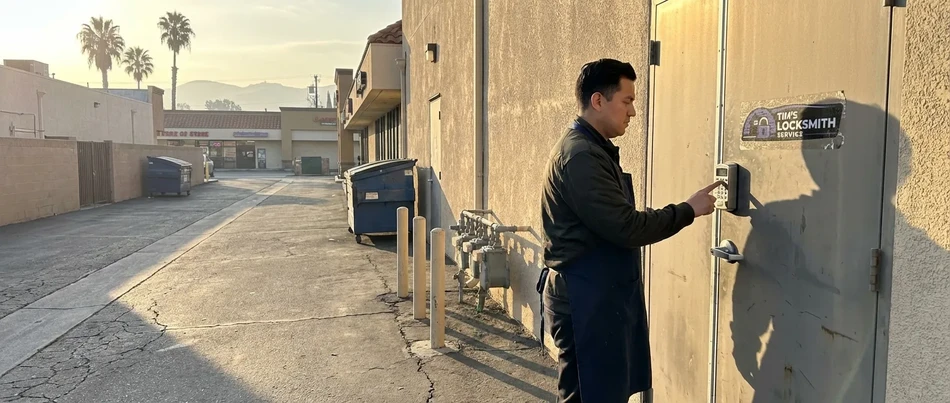
Tim handles keyless entry installations for businesses across Ventura County, from single-door retail shops in Oxnard to multi-suite office buildings in Thousand Oaks and warehouse facilities in Camarillo. Every installation starts with a site visit to understand your doors, your traffic patterns, your budget, and your management needs. There is no one-size-fits-all keyless system, and the wrong recommendation wastes money and creates headaches.
One Vendor, One Visit, One Invoice
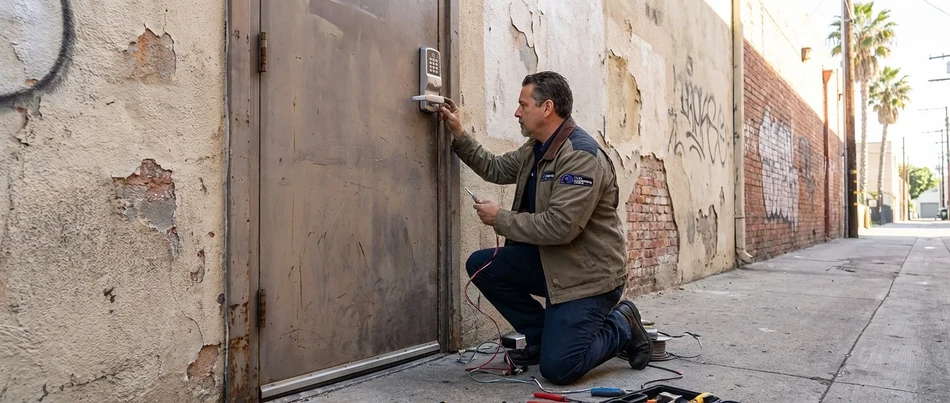
Everything is handled in-house: system selection, hardware sourcing, physical installation, wiring, programming, user enrollment, and staff training. You do not need to coordinate between a locksmith, an electrician, and an IT vendor. One call to (805) 765-3717, one installer, one visit, one invoice. The system is tested at every door, every user credential is verified, and you get a walkthrough before we leave.
Types of Keyless Entry Systems
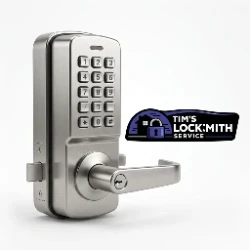
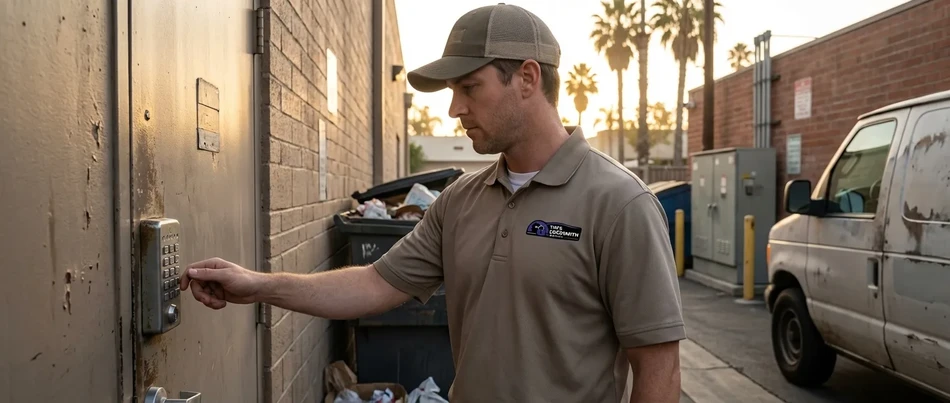
 Standalone Keypad Lock
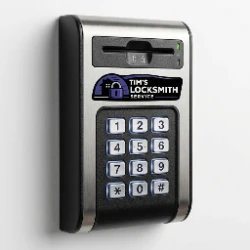
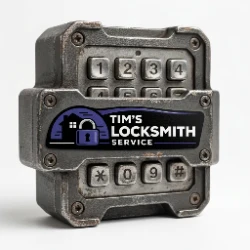
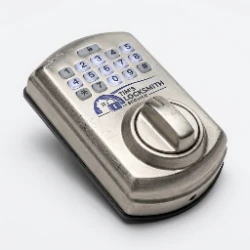
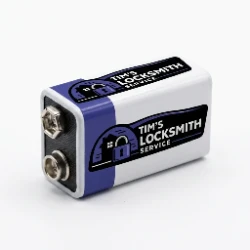
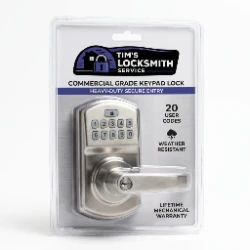
A self-contained lock with a built-in keypad. Users enter a PIN code to unlock the door. No wiring, no network connection, no software. The lock runs on batteries (typically AA or 9V) and stores codes internally. Programming is done at the keypad itself using a master code. This is the simplest and most affordable form of keyless entry.
Best for: Back doors, storage rooms, break rooms, single-door offices, gates, and any door where a small group (under 30 people) needs access without carrying a key.
Top brands: Schlage (BE365, BE489), Alarm Lock Trilogy (DL2700, DL3000), Kaba/Dormakaba (E-Plex 2000), Lockey (2835DC), Codelocks (CL5510)
Typical cost installed: $350 - $1,200 installed (lock + labor + programming)
 What to know:
- Most standalone keypads support 20-100 unique user codes, which is enough for a single door but not for managing a building
- Shared codes (everyone uses the same PIN) eliminate accountability, you cannot tell who entered, only that someone did
- Battery life is typically 1-3 years depending on traffic volume. Low-battery warnings (flashing LED or beeping) give you 2-4 weeks to replace
- No audit trail on basic models. If you need to know who entered and when, step up to a networked system or a standalone with audit capability (Alarm Lock Trilogy has this)
- Mechanical backup key override is included on most models. Keep the backup key in a secure location in case of dead batteries or lockout
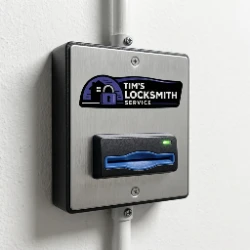
 Networked Card and Fob System
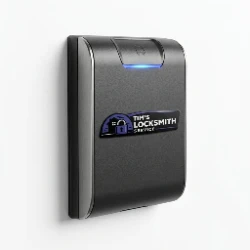
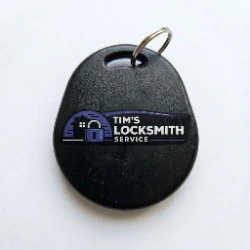
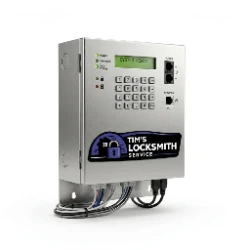
Card readers or fob readers mounted at each door, connected to a central controller. Users tap a card or fob to unlock. All credentials are managed from a software dashboard, add users, revoke access, set schedules, and pull access logs from one screen. This is the standard commercial keyless entry system for multi-door buildings with more than a handful of users.
Best for: Multi-door offices, multi-tenant buildings, warehouses with zone access, medical offices needing HIPAA-compliant access logs, any building with 10+ users or 3+ controlled doors.
Top brands: HID Global (iCLASS SE, Seos), Brivo, PDK (ProdataKey), SALTO KS, Paxton (Net2, Paxton10)
Typical cost installed: $800 - $3,500 per door installed (reader + controller + electric strike or mag-lock + wiring)
 What to know:
- Requires low-voltage wiring from each door to the controller panel (or wireless locks to a gateway for wireless systems)
- Cloud-managed systems (Brivo, PDK, SALTO KS) have monthly subscription fees of $3-8 per door per month. On-premise systems have no subscription but require a local PC for management
- Lost or stolen cards are deactivated in software in seconds, no rekeying, no lock changes, no cost beyond a replacement card ($2-10 each)
- Specify 13.56 MHz encrypted credentials (iCLASS SE, SEOS, DESFire). Standard 125 kHz proximity cards can be cloned with a $30 device from Amazon
- Audit trails log every access event with user ID, door, date, and time. Essential for HIPAA, insurance, and employee dispute resolution
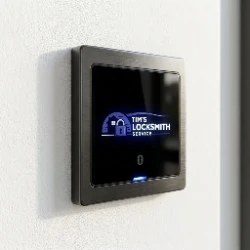
 Smartphone Entry System
Users unlock doors with their phone via Bluetooth or NFC. No cards to print, no fobs to buy, no physical credentials to manage. Credentials are pushed to phones over the internet and revoked the same way. The reader at the door communicates with the phone, verifies the credential, and releases the lock. Cloud-managed platforms handle all user administration from a web dashboard or mobile app.
Best for: Modern offices, co-working spaces, property management companies with multiple buildings, any organization with tech-comfortable staff who always have their phones.
Top brands: Brivo (Mobile Pass), Openpath/Motorola (Alta), SALTO KS (JustIN Mobile), PDK (touchless), Kisi
Typical cost installed: $1,000 - $3,000 per door installed (reader + cloud subscription setup + enrollment)
 What to know:
- Requires a cloud subscription for the management platform. No way around it, smartphone credentials need a cloud backend to issue and revoke
- Employees without smartphones or with dead phone batteries need a backup method. Always pair smartphone entry with a keypad code or card reader on critical doors
- Bluetooth range varies by reader and phone model. Some readers unlock at 3 feet, others at 15 feet. Configurable range is available on most platforms to prevent accidental unlocks
- Apple Wallet and Google Wallet integration is available on select platforms (Openpath, HID Seos). This stores the credential in the phone secure element for highest security
- Internet outage at the building does not lock people out, most readers cache credentials locally and sync when connectivity returns
 Card + Keypad Combo (Dual Credential)
A reader that requires both a card/fob tap AND a PIN code to unlock. Two-factor authentication for doors. The user taps their card and then enters their PIN, both must be valid for the door to open. A stolen card alone will not grant access. A shoulder-surfed PIN alone will not grant access. This is the standard for high-security commercial doors where single-factor access is not sufficient.
Best for: Server rooms, pharmacy storage, cash handling areas, evidence rooms, any door where the consequences of unauthorized access are severe.
Top brands: HID Global (Signo + keypad), Alarm Lock Trilogy (DL6100), Schlage (AD-400 multi-technology), SALTO (XS4 Mini)
Typical cost installed: $1,500 - $4,000 per door installed (dual-credential reader + controller + electric strike or mag-lock + wiring)
 What to know:
- Slower throughput than single-factor, each entry takes 5-8 seconds instead of 1-2 seconds. Not ideal for high-traffic doors where people queue up
- Users must remember both their card and their PIN. Expect more lockout calls in the first month as people adjust
- Can be configured for single-factor during business hours and dual-factor after hours if the system supports scheduling
- Some insurance policies and compliance frameworks (PCI-DSS for payment card data, HIPAA for certain areas) specifically require two-factor physical access control
- Cost per door is higher because the reader hardware is more complex, but the security improvement is significant for appropriate applications
What's Included
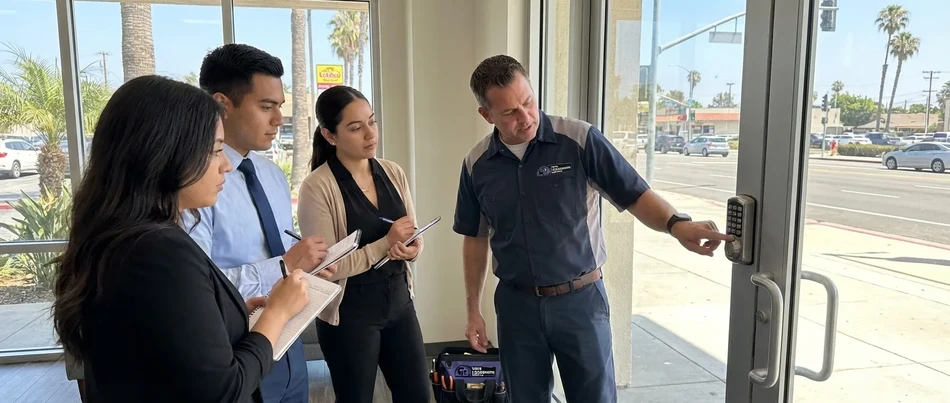
Every keyless entry systems visit in Ventura County covers site visit and door assessment at no charge, system recommendation matched to your building, and all hardware; the full checklist is below.
 Site visit and door assessment at no charge
- System recommendation matched to your building, traffic, and budget
- All hardware: locks, readers, controllers, strikes, power supplies, wiring
- User credential enrollment and programming
- Staff training on adding users, removing users, and basic troubleshooting
- Testing at every door with every credential before we leave
- 1-year warranty on all hardware and labor
How It Works
Getting keyless entry systems done in Ventura County takes three steps: call or text, site visit and proposal, and install.

Call or Text (805) 765-3717
Tell us about your building, how many doors, how many users, what you need the system to do. We give you a ballpark range on the phone and schedule a free site visit if the numbers work.
Site Visit and Proposal
We walk every door, check frames and wiring paths, and discuss your workflow. You get a written proposal with hardware specs, total cost, and timeline. No surprises on install day.
Install, Program, Train
We mount hardware, run wiring, program every credential, test every door, and train your team. The system is fully operational before we leave. Ongoing support is a phone call away.
Coastal Hardware Guide
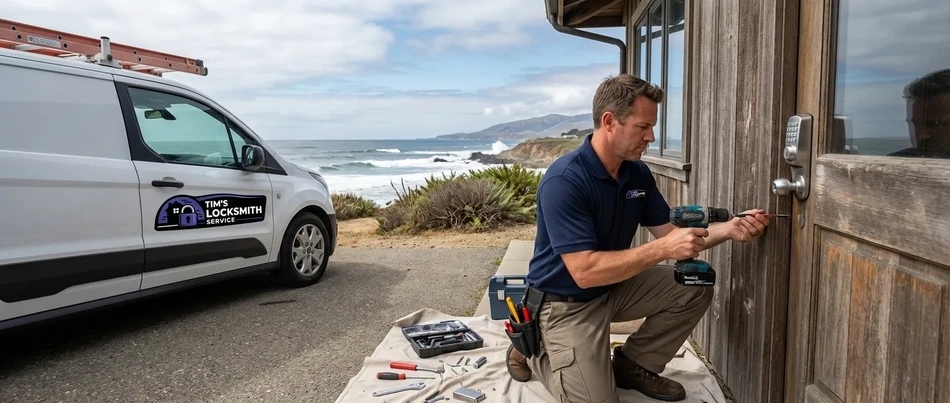
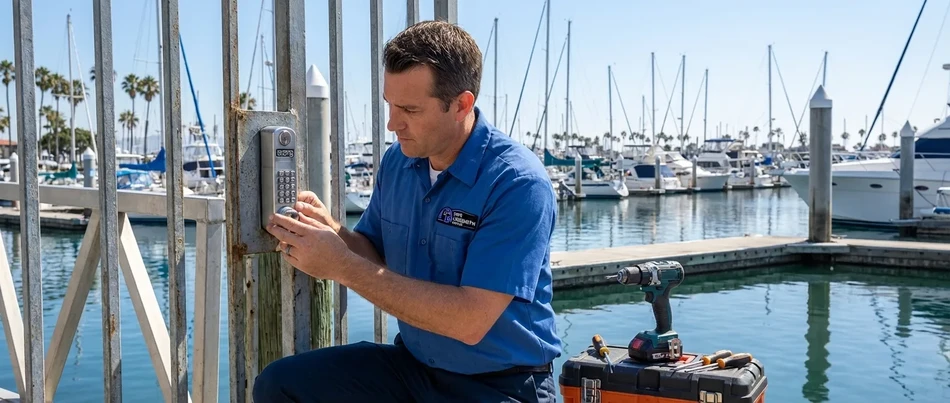
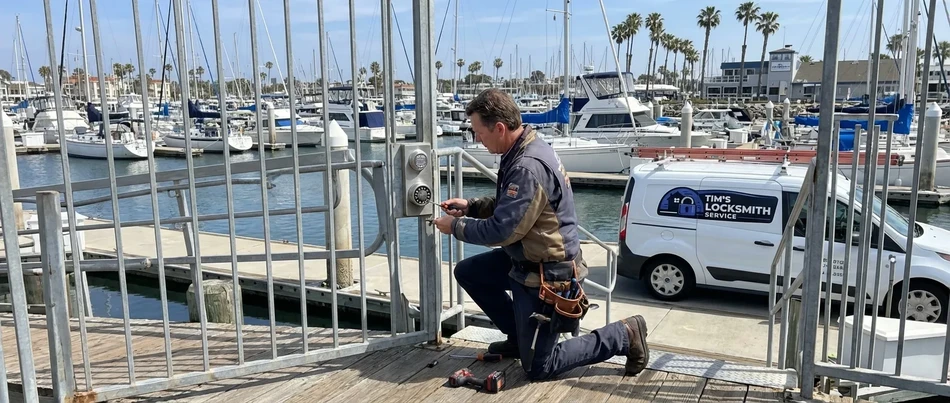
Ventura County businesses within 10 miles of the coast deal with salt air that eats standard electronic lock hardware from the inside out. We have replaced keypads in Oxnard that corroded through in under two years because the original installer used indoor-rated hardware on an exterior door. Ventura, Port Hueneme, Channel Islands Beach, and Camarillo south of the 101 are all in the salt zone.
 What Salt Air Does to Electronic Locks
Salt air does not just rust visible metal surfaces. It corrodes the circuit boards inside electronic locks, causing intermittent failures that are maddening to diagnose. A keypad that works on Monday, fails on Wednesday, and works again on Friday is almost always a corrosion issue on the internal contacts.
Keypads with membrane buttons are particularly vulnerable because salt moisture seeps under the button overlay and sits on the PCB. Within 12-18 months of coastal exposure, the copper traces start to green and the keypad starts missing button presses.
 What Fails First
- Keypad membrane buttons, salt moisture penetrates the overlay adhesive and corrodes the contact pads underneath. Buttons become intermittent, then dead.
- Battery terminals, corrosion on battery contacts causes voltage drop and premature low-battery warnings. The batteries are fine, but the corroded terminals cannot deliver full voltage.
- Electric strike solenoids, the solenoid plunger corrodes and starts sticking. The lock buzzes but does not release, or releases but does not re-lock.
 What We Recommend
- Materials: All exterior-facing keyless hardware should be 316 stainless steel or marine-coated aluminum. Standard zinc-plated or chrome hardware corrodes within 12 months in coastal Ventura County. If the manufacturer does not list a marine or coastal rating, it is not rated for it.
- IP Ratings: Look for IP65 or higher on any keypad or reader mounted outdoors. IP65 means dust-tight and protected against water jets. IP54 is not enough for coastal environments where wind-driven salt spray hits the lock face directly.
- Sealing: Every mounting screw hole, wiring entry point, and gasket edge on an exterior keyless lock should be sealed with marine-grade silicone at installation. Factory gaskets alone are not sufficient for coastal use, they are designed for standard weather, not persistent salt exposure.
 Coastal-Rated Brands We Install
 Codelocks Marine Series
Purpose-built for coastal and marine environments. 316 stainless steel body, sealed electronics, corrosion-tested to ASTM B117 (salt spray test). The CL5510-BS is our go-to for standalone keypad installations within 5 miles of the coast.
 Borg Marine Grade Pro
Mechanical keypad lock (no electronics, no batteries) in marine-grade stainless steel. The BL5408 series is completely mechanical and uses no circuit boards, which eliminates electronic corrosion entirely. Best for environments where electronic reliability is a concern.
 PDQ W-Finish Series
PDQ offers a specific "W" finish (weather-resistant) on several commercial lock series that uses a sealed, coated housing designed for exterior and coastal applications. Good for keypad + card combo readers in coastal Ventura County.
 Battery Advice for Coastal Installations
- Use lithium batteries (Energizer Ultimate Lithium) in all coastal keyless locks. Lithium cells resist corrosion better than alkaline and maintain voltage in humid, salt-air environments.
- Apply dielectric grease (available at any auto parts store) to battery terminals at every battery change. This prevents corrosion buildup between changes.
- Replace batteries on a calendar schedule (every 12 months for coastal installations) rather than waiting for low-battery warnings. By the time a coastal lock shows low-battery, the terminals may already be corroding.
- Keep a spare set of batteries and a tube of dielectric grease at the property. When a lock dies on a Saturday, you do not want to wait until Monday to get in.
 Installation Best Practices
- Apply marine-grade silicone sealant around all mounting screw holes, wiring penetrations, and gasket edges at installation time.
- Use 316 stainless steel screws for all exterior mounting, not the zinc-plated screws that ship in the box.
- Position keypads under an overhang or awning whenever possible to reduce direct salt spray exposure.
- Include a 6-month post-install inspection on all coastal keyless entry installations to catch early corrosion before it causes failures.
Compliance and Code Requirements
Keyless entry on commercial doors must meet the same fire code and ADA requirements as any other commercial lock. The electronics do not exempt you from the building code. Every system we install is checked against these standards before we leave.
 ADA Requirements
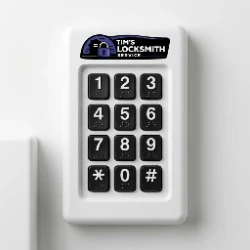
- Keypads must be mounted between 34 and 48 inches above the finished floor (ADA reach range)
- The system must be operable with one hand and without tight grasping, pinching, or twisting of the wrist
- Card and fob readers must not require fine motor manipulation, tap and go is compliant, insert-and-twist is not
- If the door is on an accessible route and has a power operator, the lock must release before or simultaneously with the door operator activation
- Visual and audible feedback must be provided when access is granted or denied (LED and beep/tone)
Keypads with raised, tactile buttons that can be distinguished by touch are preferred on accessible routes. Flat, featureless touchscreens without tactile markers may not meet accessibility requirements for visually impaired users.
 California Fire Code
Fail-safe requirement: Keyless locks on exit doors must fail safe, the door unlocks automatically when power is lost or batteries die. This is not optional. California Fire Code requires that all doors in the path of egress remain operable from the egress side without keys, special knowledge, or special effort during a fire or power failure.
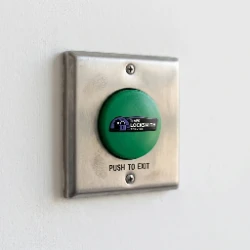
Push-to-exit: If the keyless entry system controls an exit door, a push-to-exit button or request-to-exit sensor must be installed on the interior side. The button must release the lock immediately, without delay, without a code, and without any credential. One push, door opens. Period. The button must be mounted between 34 and 48 inches AFF and clearly labeled.
Panic hardware clearance: Panic hardware (crash bars) on exit doors must still operate mechanically regardless of the keyless entry system status. The electronic lock manages entry from the outside. The panic bar on the inside opens the door with a single push motion at all times. No exceptions. If your keyless entry system interferes with panic bar operation, the system is installed wrong.
 Fire-Rated Door Rules
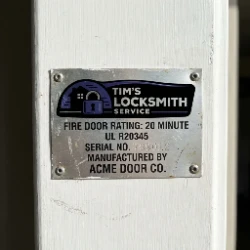
Fire-rated doors have specific hardware requirements. Not every keyless lock is listed for use on fire-rated doors. If the door has a fire rating (check the label on the hinge edge), the keyless entry hardware must be listed for that fire rating. We verify fire-rated door compatibility on every installation and will not install unlisted hardware on a rated door.
 Delayed Egress
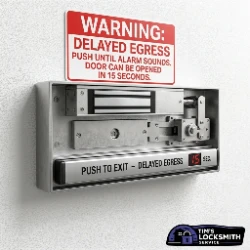
Delayed egress locks (locks that hold the door closed for 15-30 seconds before releasing to allow time for staff response) are permitted on certain doors under specific conditions in the California Building Code. They require connection to the fire alarm system, audible alarm activation during the delay period, and immediate release when the fire alarm activates. These are specialized installations that require fire marshal approval before installation. We handle the permit coordination.
Who Needs Keyless Entry
 Retail Stores and Strip Mall Tenants
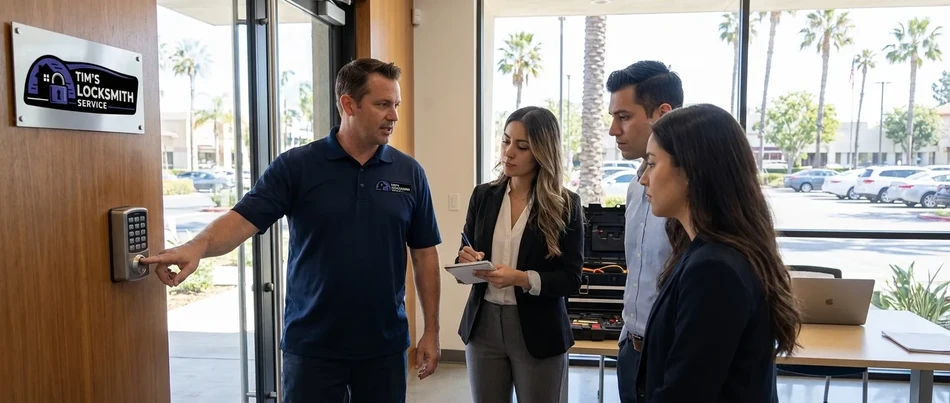
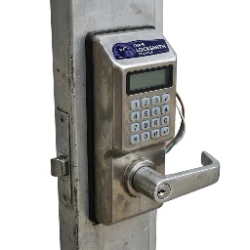
Retail shops in Ventura County have constant employee turnover, seasonal hires in summer, holiday staff in winter, part-timers who come and go. A keypad on the back door with individual codes means you delete a code when someone leaves instead of rekeying the lock. For strip malls with shared common areas, a fob system gives each tenant their own credentials for restrooms, dumpster enclosures, and utility rooms.
 Restaurants and Food Service
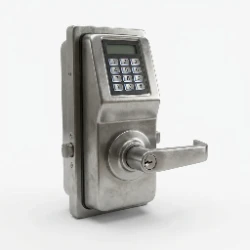
Restaurant kitchens and walk-in coolers see staff changes weekly. A keypad lock on the back door and walk-in eliminates the key management nightmare. Managers get a master code, line cooks get their own code, and the closing manager changes codes when someone is let go. For restaurants in Oxnard, Ventura, and Camarillo, the coastal-rated hardware matters because that back door faces the salt air every day.
 Medical and Dental Offices
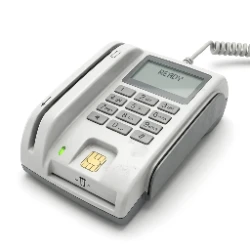
HIPAA requires access controls on areas containing patient records, and those controls need audit trails. A card reader on the records room door with logged access events gives you the documentation compliance officers look for. Medical offices in Thousand Oaks, Camarillo, and Ventura use keyless entry to separate patient areas from records storage, medication rooms, and staff-only zones.
 Multi-Tenant Office Buildings
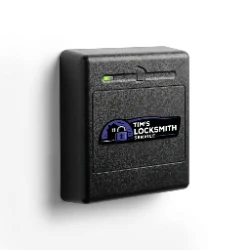
Property managers in Ventura County deal with tenant turnover, after-hours access requests, and the constant question of who has keys to what. A networked keyless system lets you issue and revoke credentials from a dashboard. New tenant moves in, activate their credentials. Tenant moves out, deactivate them. No locksmith visit, no rekeying, no waiting.
 Property Management Companies
If you manage multiple properties across Ventura County, a cloud-based keyless entry system lets you manage access to all buildings from one dashboard. Grant a maintenance worker access to Building A on Tuesday and Building C on Thursday without handing out keys to either one. Pull access reports when a tenant claims something went missing. Revoke a contractor credential the moment the job is done.
 Industrial, Warehouse, and Agricultural Facilities
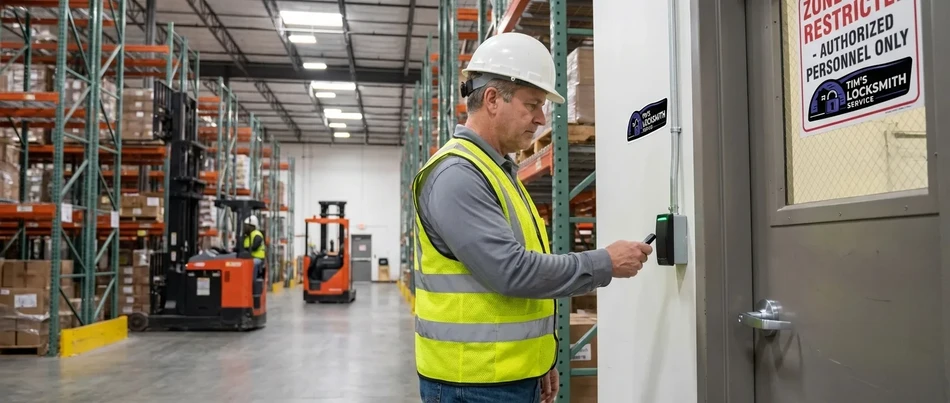
Warehouses in Oxnard and Camarillo run multiple shifts with seasonal crews. Ag packing facilities have workers who are on-site for three months and gone the next season. Keyless entry lets managers issue credentials at hire and deactivate them on the last day. Chemical storage, cold storage, machinery areas, and hazmat rooms can be restricted to trained and authorized personnel only, no shared keys floating around.
Questions to Ask Before You Choose
 How many doors need keyless entry, today and in the next 3 years?
A single back door needs a standalone keypad. Four or more doors need a networked system. Start with the right architecture and you can expand without replacing everything.
 How will you manage credentials when employees come and go?
Standalone keypads require you to change codes at the door. Networked systems let you add and remove users from a dashboard in seconds. If you have more than 10 users, dashboard management saves significant time.
 Does the system need to integrate with security cameras or alarms?
If you want to see video of who entered when the access log shows an event, you need an integrated or API-compatible platform. Standalone keypads do not integrate with anything. Networked and cloud systems integrate with most major camera and alarm brands.
 Cloud-managed or on-premise, which is right for you?
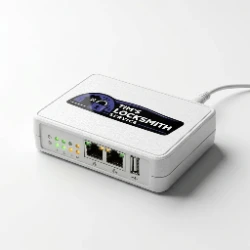
Cloud means no local server, remote management from anywhere, and automatic updates. It also means monthly subscription fees and dependence on internet connectivity. On-premise means no recurring fees and no internet dependency, but requires a local PC and on-site management. Most small businesses do fine with cloud. Businesses with strict data policies may prefer on-premise.
 How many users will the system need to support, and will it scale?
A standalone keypad maxes out at 50-100 codes. A networked system handles thousands. If you are at 15 users today and growing, start with a system that scales. Replacing a maxed-out standalone system costs more than starting with the right networked system.
 What is the backup plan when batteries die or the network goes down?
Every keyless door should have a mechanical backup, a key override on standalone locks, a manual release on mag-locks, or cached credentials on network readers. Ask about battery life, low-battery warnings, and offline credential caching before you buy.
 What is the total cost of ownership over 5 years?
Include the upfront hardware and installation, monthly cloud subscriptions (if applicable), annual battery replacements, credential replacement costs (assume 10-15% loss rate per year), and optional maintenance contracts. A $400 standalone keypad has near-zero ongoing costs. A $3,000/door cloud system with $5/door/month subscription costs $3,300 per door over 5 years.
 Who provides support after installation, and what does it cost?
Some installers disappear after the job. We provide phone support, respond to service calls across Ventura County, and offer annual maintenance contracts. Know your support plan before the system goes live.
Pro Tips for Keyless Entry
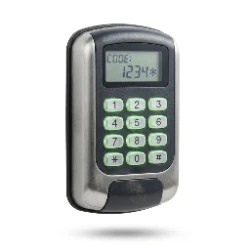
Change the default master code immediately
Every keyless lock ships with a factory default master code (often 0-0-0-0 or 1-2-3-4). Change it at installation. If you do not, anyone who reads the manual for your lock model has full administrative access.
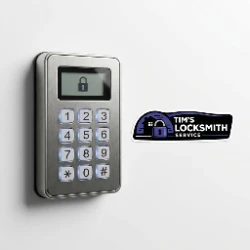
Do not share PIN codes between employees
Shared codes eliminate accountability. If everyone uses 1234 and something goes wrong, you cannot identify who entered. Assign individual codes to every user, even if it takes an extra 10 minutes at setup.
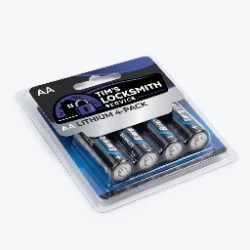
 Put battery replacement on a calendar
Do not wait for the low-battery warning. Schedule replacement every 12 months for high-traffic doors and coastal installations, every 18 months for interior low-traffic doors. A dead lock at 6 AM on a Monday morning is preventable.
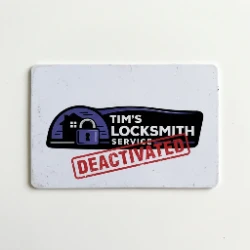
Remove former employees the same day they leave
The most common keyless entry security failure is credentials that stay active after an employee departs. Make credential revocation part of your termination checklist. It takes 30 seconds on a networked system. Do it before the exit interview is over.
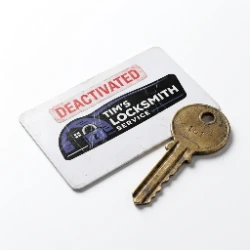
 Keep one mechanical backup key in a secure location
Every standalone keypad lock has a key override. Every networked system should have a mechanical backup on the main entrance. Store the backup key in a locked safe, a lockbox on-site, or with the property owner, not under the doormat, not in the planter, and not taped to the underside of the reader.
Avoid cheap keyless locks from Amazon or big-box stores
Residential-grade smart locks marketed for home use are not built for commercial traffic volumes, outdoor exposure, or multi-user management. They fail faster, lack audit trails, and void commercial insurance requirements. Spend the money on commercial-grade hardware.
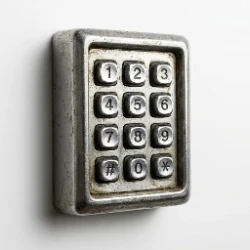
Watch for keypad wear patterns
If your code is 2-4-6-8 and those four buttons are visibly more worn than the rest, anyone standing behind a user can narrow the code to 24 possible combinations. Change codes periodically and use codes that distribute button wear across the keypad.
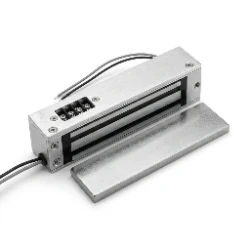
Get fire alarm integration right the first time
If any keyless lock uses a mag-lock on an exit door, it must release when the fire alarm activates. This is not optional, not configurable, and not something you fix later. The fire marshal will shut you down if a mag-lock holds an exit door closed during a fire alarm. We verify this integration on every installation.
What Does Keyless Entry Cost?
Keyless entry systems pricing in Ventura County depends on the hardware, the door count, and how hard the access is; the table below shows typical ranges.
| System Type | Cost Per Door | Monthly Fees |
|---|---|---|
| Standalone Keypad Lock | $350 - $1,200 | None |
| Networked Card/Fob System | $800 - $3,500 | $0 - $8/door (cloud only) |
| Smartphone Entry System | $1,000 - $3,000 | $3 - $8/door |
| Dual Credential (Card + PIN) | $1,500 - $4,000 | $0 - $8/door |
| Intercom + Keyless Release | $1,500 - $4,000 | Varies by platform |
| Full Building System (per door, 4+ doors) | $600 - $2,500 | $3 - $8/door (cloud only) |
Prices include hardware, installation, and basic programming. Wiring runs, door prep, and electric strikes are included in the per-door price. Cloud subscriptions are billed separately by the platform provider. Call (805) 765-3717 for an exact quote based on your building.
Brands We Install and Service
For keyless entry systems in Ventura County we install and service Schlage / Allegion, Alarm Lock Trilogy, and Yale, along with the other brands listed below.
-
 Schlage / Allegion
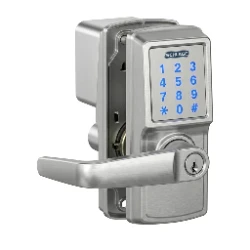
The largest commercial lock manufacturer in North America. Schlage AD-series and NDE-series wireless locks are widely used in networked keyless entry. The Schlage Encode and BE-series standalone keypads are reliable for single-door applications. Allegion (parent company) also makes Von Duprin, LCN, and Falcon.
-
 Alarm Lock Trilogy
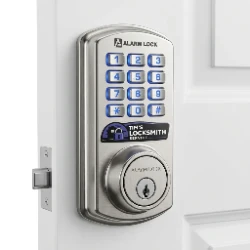
The Trilogy DL2700 and DL3000 are the most-installed standalone keypad locks in commercial buildings in the US. Audit trail capable, battery operated, and built for heavy commercial use. The DL6100 adds card + keypad dual credential. Trilogy locks are a workhorse product that we install more than any other brand.
-
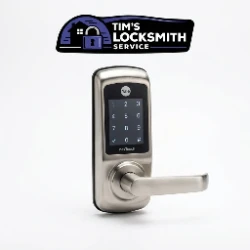
 Yale
YaleYale commercial keyless locks include the nexTouch series (keypad + card) and integration with the ASSA ABLOY ecosystem. Solid hardware for offices and multi-tenant buildings. Yale residential smart locks are also available for lighter commercial use.
-
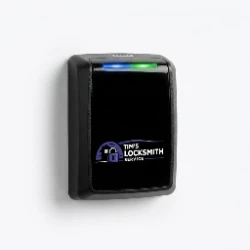
 HID Global
The industry standard for card readers and credentials. HID Signo readers support multiple credential types (card, fob, mobile) on a single reader. If your building already uses HID cards, we can add keyless readers that work with your existing credentials.
-
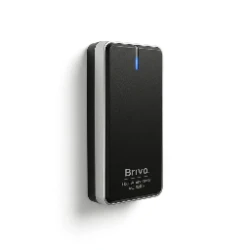
 Brivo
BrivoCloud-managed access control with card, fob, and smartphone credentials. Brivo is one of the oldest cloud access platforms and has strong multi-site management. Good for property management companies that need to manage multiple buildings from one dashboard.
-
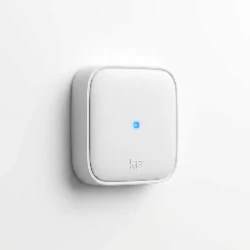
 Kisi
KisiModern cloud-native access control with a clean interface and strong smartphone credential support. Kisi readers are compact and install quickly. Popular with tech companies, co-working spaces, and businesses that want a sleek, modern look at the door.
-
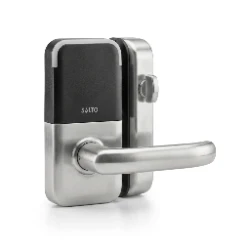
 SALTO KS
SALTO Keys as a Service is a cloud platform paired with SALTO wireless lock hardware. The locks communicate with a gateway wirelessly, eliminating the need for door wiring on interior doors. Excellent for retrofit projects where running wire is impractical or too expensive.
-
Codelocks Marine Series
Purpose-built for coastal and marine environments. 316 stainless steel body, sealed electronics, salt-spray tested. Our go-to recommendation for standalone keypad locks within 5 miles of the Ventura County coast.
-
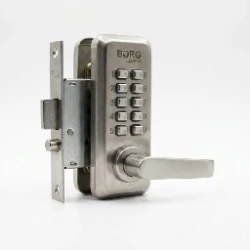 Borg Marine Grade
Mechanical keypad locks in marine-grade stainless steel. No electronics, no batteries, no circuit boards to corrode. Purely mechanical push-button combination locks for the harshest coastal environments.
-
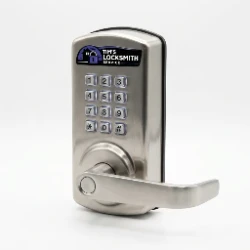 PDQ
PDQPDQ offers commercial-grade keyless entry hardware with a weather-resistant "W" finish designed for exterior and coastal applications. Good value for businesses that need durable hardware without premium brand pricing.
-
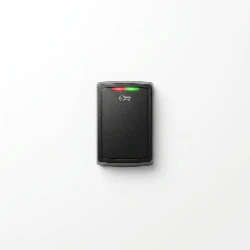 Paxton
UK-based manufacturer with a growing US presence. Paxton Net2 and Paxton10 systems are affordable, easy to install, and well-suited for small to mid-size commercial buildings. Clean interface, straightforward pricing, and good technical support.
Why Choose Us
Six reasons Ventura County customers call Tim's for keyless entry systems work: Licensed and Insured, Code-Compliant Installation, Coastal Hardware Expertise, Same-Day Service Available, Upfront Pricing, and All System Types.
Licensed and Insured
BSIS licensed (LCO#7134) and insured through State Farm. We pull permits where required and carry liability coverage on every job.

Code-Compliant Installation
Every keyless entry system we install meets California Fire Code and ADA requirements. We verify fire alarm integration, fail-safe operation, and accessibility before we leave.

Coastal Hardware Expertise
Ventura County is a coastal market. We specify marine-grade hardware, sealed electronics, and stainless steel mounting on every exterior installation. Standard indoor hardware corrodes in months here.

Same-Day Service Available
Many standalone keypad installations are completed the same day you call. Networked systems are typically installed within 3-5 business days of the site visit.
Upfront Pricing
You get a written quote before any work starts. The price includes hardware, installation, programming, and training. No hidden fees, no change orders, no surprise invoices.
All System Types
We install standalone keypads, networked card systems, smartphone entry, dual-credential setups, and everything in between. We recommend the system that fits your building, not the brand that pays the highest margin.
What Our Customers Say
"Tim installed keypad locks on our records room and medication storage. Set up individual codes for each nurse and kept a log of who accessed what. Our compliance officer was thrilled with the audit trail."
"We had been rekeying our restaurant every time a cook quit, which was about every three months. Tim put in a Trilogy keypad on the back door and showed us how to add and delete codes ourselves. Have not called a locksmith since."
"Needed card access for a 6-suite office building. Tim walked every door, recommended the right system, and had it running in a day and a half. Tenants love the fob system and I manage everything from my laptop."
Serving All of Ventura County
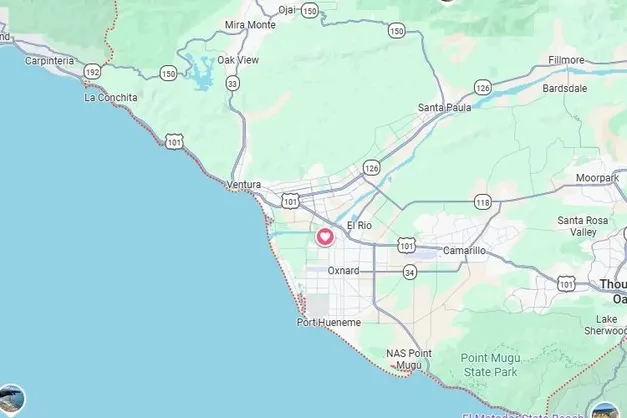
We bring keyless entry systems to every city we cover in Ventura County, from Oxnard to Westlake Village.
Frequently Asked Questions
Related Commercial Services
If you need more than keyless entry systems, we also handle access control systems, master key systems, and panic bars and exit devices across Ventura County.
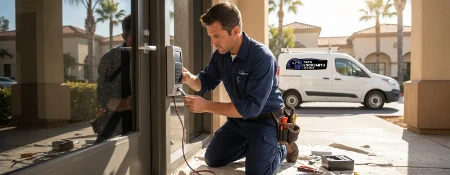
Access Control Systems
Electronic access control for businesses that need to manage who gets in and when. Card readers, keypads, fob systems, and cloud-managed access. We install, configure, and train your team on the system.
View Service
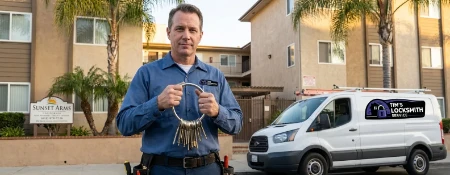
Master Key Systems
One key that opens every door, individual keys that only open assigned doors. We design and install master key systems for offices, apartment buildings, and commercial properties of any size.
View Service
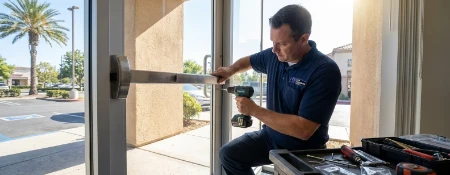
Panic Bars and Exit Devices
Fire code compliant panic bars and exit devices for commercial doors. We install, repair, and replace Von Duprin, Sargent, and other commercial-grade exit hardware. Keep your building up to code.
View Service
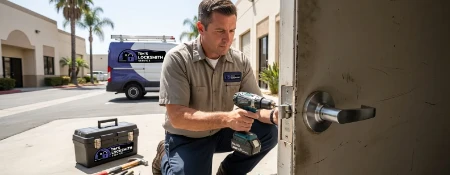
Commercial-Grade Lock Installation
Heavy-duty locks built for commercial use. We install Grade 1 and Grade 2 commercial locksets, mortise locks, and cylindrical locks for offices, retail, warehouses, and industrial doors.
View Service
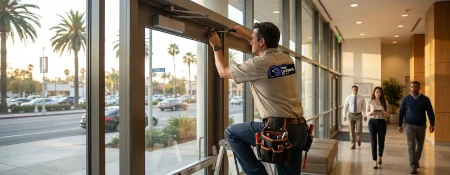
Door Closers
Commercial door closers installed, adjusted, and replaced. We work with LCN, Dorma, Norton, and other brands. Proper adjustment means the door closes at the right speed without slamming.
View Service
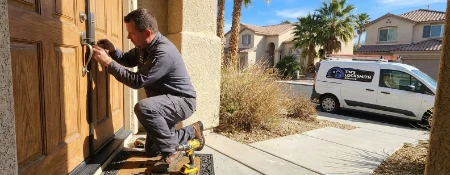
High-Security Locks
Medeco, Mul-T-Lock, Abloy, and other restricted-keyway locks for businesses that need key control. Keys cannot be duplicated without authorization. We install and service all high-security platforms.
View Service

File Cabinet and Desk Locks
Locked out of a file cabinet or desk? Lost the key? We open, rekey, and replace locks on filing cabinets, desks, and office furniture. Most jobs done in minutes.
View Service
Explore Our Other Services
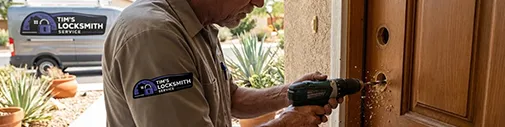
Residential Locksmith
Complete home locksmith services including lock installation, repair, rekeying, and smart lock setup, done at your door.
View Residential Services
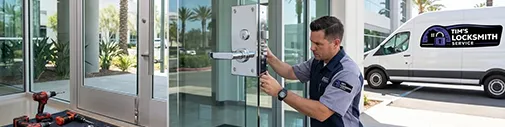
Commercial Locksmith
Business locksmith services including access control, master key systems, high-security locks, and panic hardware.
View Commercial Services
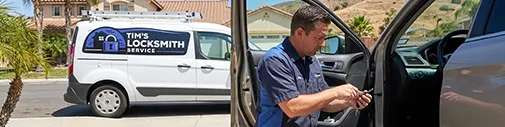
Automotive Locksmith
Car key cutting, programming, fob replacement, and ignition repair for most makes and models. We come to your vehicle.
View Automotive Services
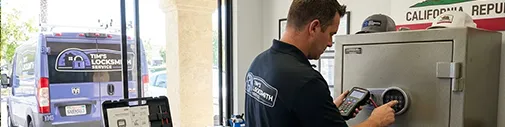
Safe Locksmith
Safe opening, combination changes, lock repair, and electronic safe programming for home and office safes. On-site service.
View Safe Services
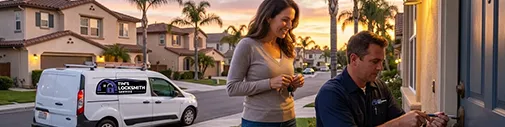
Emergency Locksmith
Fast response for home, car, and business lockouts, break-in repairs, and urgent lock needs. We come to you, usually same day.
View Emergency Services
Need Keyless Entry Help?
Whether you need a single keypad on a back door or a full building card access system, we design and install it. Call (805) 765-3717 for a free site visit anywhere in Ventura County.
 Open Daily
 Mobile service across Ventura County