Electronic Safe Programming in Ventura County
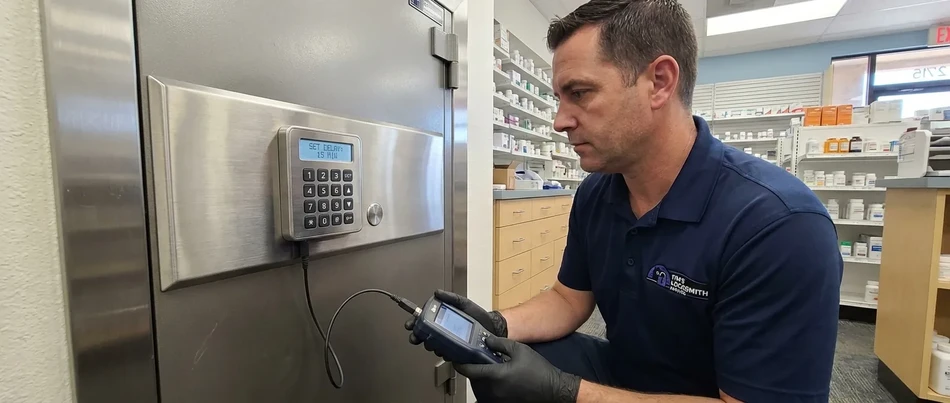
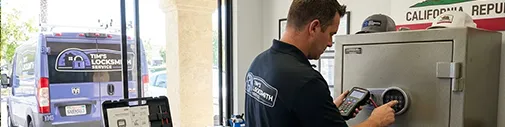
Professional electronic safe programming for homes and businesses across Ventura County. User codes, time delays, audit trails, dual-control mode, if your electronic safe lock has a feature, we program it. Just bought a new safe and need the factory codes changed? Lost your master code? Need to revoke access after an employee leaves? We show up with the right tools and the training to work on every major lock brand.
 Call (805) 765-3717
 Text for Quote
When Do You Need Electronic Safe Programming?
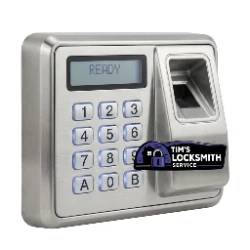
 New Safe with Factory Codes
Every electronic safe ships with a factory default code. Leaving the factory code active is a security risk because those defaults are published in owner manuals and online forums. We change the master code and set up your personal user codes during the first visit so the safe is secured from day one.
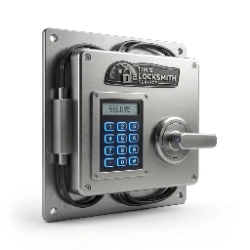
 Employee Left the Company
When someone with safe access leaves your business, their code needs to be deleted immediately. We remove departed employee codes, add replacement employee codes, and verify the audit trail shows the change. If you are not sure which codes are still active, we can reset the entire user table and start fresh.
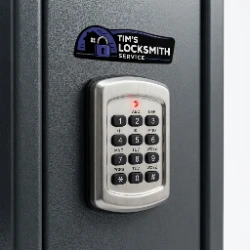
 Forgot the Master Code
The master code (also called the manager code or supervisor code) controls all other user codes. If you lose the master code, you cannot add or remove users. We can perform a master code reset on most electronic safe locks. On some models this requires the factory reset procedure with the lock in a specific state. We handle it on-site.
 Insurance or Auditor Requirements
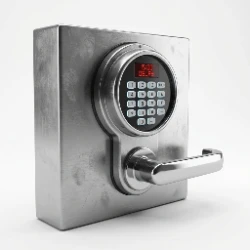
Your insurance carrier or a compliance auditor may require specific programming: time delay before opening, dual-control (two people must enter codes), audit trail logging, or wrong-try penalty lockout. We configure all of these features and provide documentation showing the settings.
 Upgrading from a Dial to Electronic
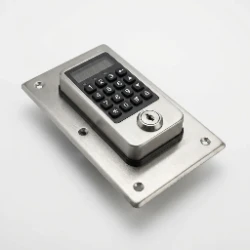
If you just upgraded from a mechanical dial to an electronic keypad, the new lock needs to be programmed from scratch. Factory defaults must be changed, user codes assigned, and any advanced features (time delay, audit, dual control) configured. We handle the full setup after the lock swap.
 Locked Out from Too Many Wrong Tries
Most electronic safe locks impose a penalty lockout after 3-5 wrong code entries. The lockout period ranges from 5 minutes to 30 minutes depending on the lock brand. If you are locked out from wrong tries, wait for the penalty period to expire, then call us. We can recover access, reset the lockout counter, and reprogram if needed.
What's Included
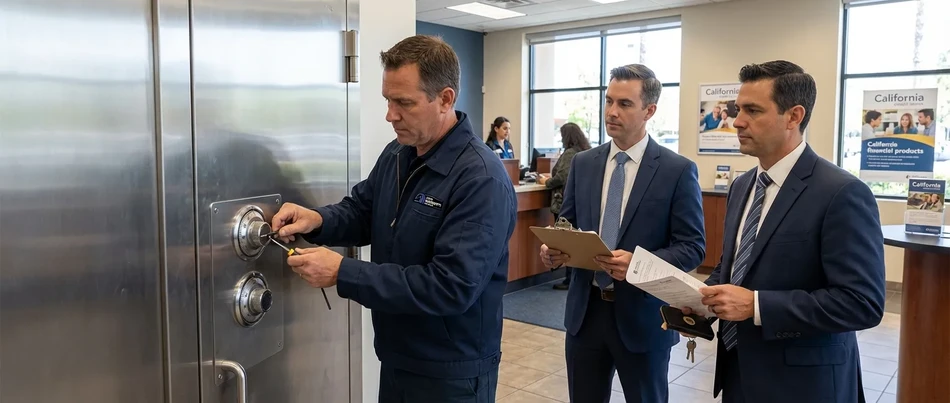
Every electronic safe programming visit in Ventura County covers master code reset and programming, user code setup, and time delay configuration to meet insurance requirements; the full checklist is below.
 Master code reset and programming
- User code setup (add, change, or delete individual codes)
- Time delay configuration to meet insurance requirements
- Wrong-try penalty lockout programming
- Audit trail activation and retrieval
- Dual-control (two-person) mode setup
- Battery check and replacement if needed
- Full open/close testing with every programmed code before we leave
Types of Programming
 User Code Management
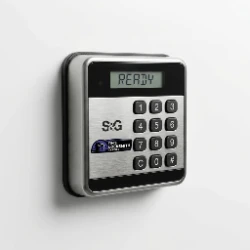
Electronic safe locks store multiple user codes, each identified by a position number. S&G locks typically support 1 master + 9 user codes.
SecuRam SafeLogic supports 1 master + 8 users. AMSEC ESL locks support 1 master + 5 users. We add, change, and delete user codes, assign position numbers, and test every code with the door open before closing up. On S&G and SecuRam models, each code position can be individually enabled or disabled without deleting the code, which is useful for temporarily suspending access.
 Time Delay Configuration
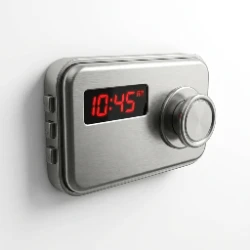
A time delay forces a waiting period between entering a valid code and the lock opening. The delay is programmable in 1-minute increments, typically from 1 to 99 minutes. Most insurance carriers that require time delay specify a 10-minute or 15-minute delay. During the delay period, a second valid code entry (the "override window") can be programmed to allow opening after a shorter wait. We configure the delay period, the override window, and verify the timing with a stopwatch before we leave.
 Audit Trail Setup
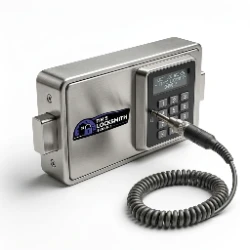
Audit trail locks record every access event: which code position opened the lock, the date and time, and whether the attempt succeeded or failed. S&G Titan and Spartan locks use a Touch Memory probe and the S&G software to download the log. LaGard/dormakaba Auditcon locks display the log on-screen or via a PC connection. SecuRam ProLogic uses the SecuRam app and a Bluetooth adapter. We activate audit trail recording, verify the clock is set correctly, and demonstrate how to download and review the log.
 Dual-Control Mode
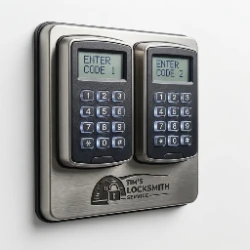
Dual-control (also called two-person mode or split-knowledge) requires two different user codes entered in sequence to open the safe. Neither person can open the safe alone. This is required by some insurance policies, DEA regulations for pharmacy safes, and internal controls for cash-handling businesses. Kaba Mas X-10 locks have built-in dual-control. S&G Titan D-Drive supports dual-control through its programming menu. AMSEC ESL20XL and ESL10XL support a two-code opening sequence. We configure dual-control, assign the two code positions, and test the sequence with both users present.
Dial-to-Electronic Upgrade
 What It Involves
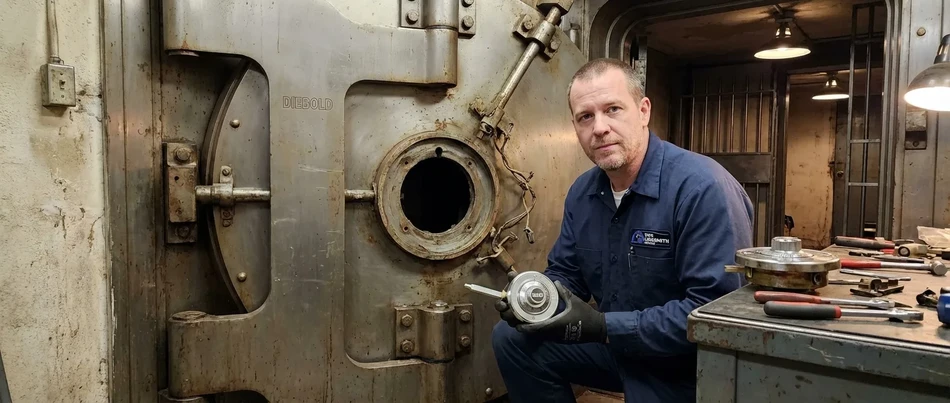
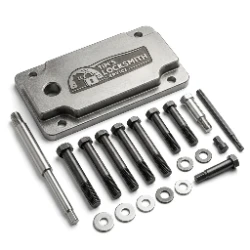
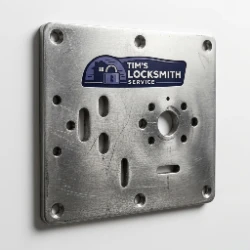
Upgrading from a mechanical dial to an electronic keypad is the most common safe lock change we do. The electronic lock mounts in the same footprint as the old dial using an adapter plate (called a "swap-top" or "direct-replacement" kit).
The mechanical bolt work stays the same. Only the lock head changes. After the physical swap, the lock needs full programming: master code, user codes, and any advanced features your business or insurance requires.
 What You Should Know
Not all electronic locks fit all safes without modification. Most S&G and SecuRam locks are designed as drop-in replacements for standard Group 2 dial locks. Kaba Mas locks require a specific mounting pattern. Some older safes have non-standard bolt work linkages that need an adapter. We assess fit before ordering the lock so there are no surprises at install time.
 Swing-Bolt vs Direct-Drive
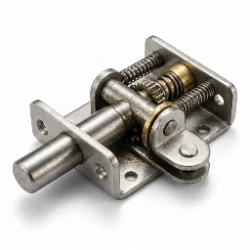
Electronic safe locks use two bolt retraction methods. A swing-bolt lock has a small bolt that swings out of the way when the code is entered, allowing the handle to turn. A direct-drive lock uses a motor to physically retract the main bolt. Direct-drive locks are more secure because there is no separate swing bolt to manipulate, but they draw more battery power and are slightly louder. S&G Titan D-Drive is the most common direct-drive model. Most other electronic locks are swing-bolt designs.
Commercial Safe Programming
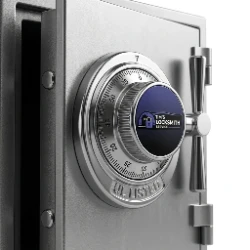
 Restaurants and Retail Stores
Cash-handling businesses need reliable safe access for shift changes, nightly drops, and manager overrides. We program user codes for each shift manager, set up time delay if your insurance requires it, and configure the wrong-try penalty to prevent guessing. Drop safe locks get heavy daily use and need reliable programming that does not lock out employees during a rush.
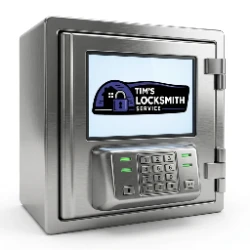
 Pharmacies (DEA Compliance)
Pharmacies storing Schedule II-V controlled substances under DEA 21 CFR 1301.72 need safe locks that provide access control and accountability. We configure user codes for authorized pharmacists and technicians, set up dual-control if your compliance officer requires it, and activate audit trail logging so every access event is recorded with date, time, and code position.
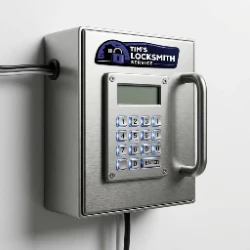
 Cannabis Dispensaries (DCC Regulations)
California Department of Cannabis Control regulations require that cannabis products be stored in a locked safe or vault when the business is closed. The lock must be UL-listed. We program user codes for authorized personnel, configure time delay if required by your local jurisdiction or insurance carrier, and set up audit trails for compliance documentation. When an employee with access leaves, we delete their code the same day.
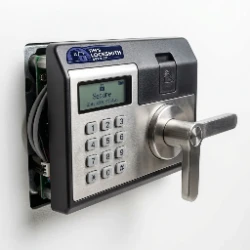
 Jewelry Stores (Jewelers Mutual)
Jewelers Mutual and other jewelry insurance carriers often require specific lock features: UL Type 1 rating, time delay, audit trail, and in some cases dual-control. We program locks to match your policy requirements and provide written documentation of the settings. If your policy specifies a particular lock model or feature set, we verify compliance before leaving.
 Banks and Credit Unions
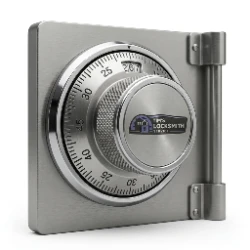
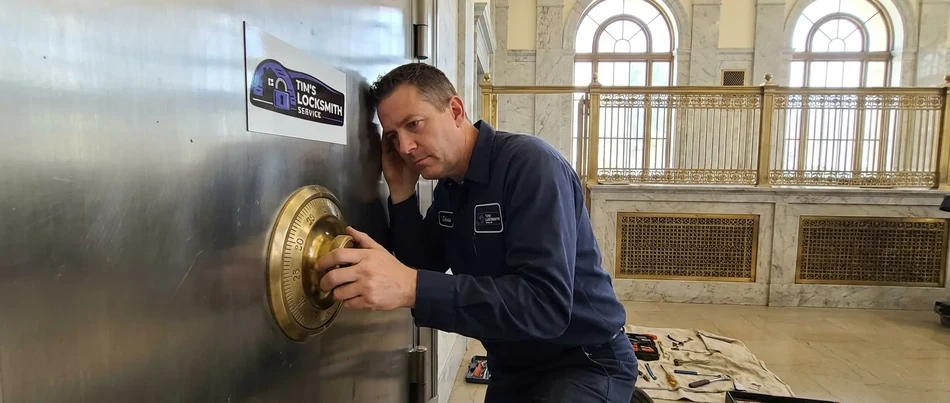
Financial institutions are subject to the Federal Bank Protection Act, which requires specific security measures including vault and safe lock standards. We program time locks, time delay locks, dual-control locks, and audit trail locks for bank vaults, teller safes, and ATM safes. We also service Kaba Mas Cencon locks commonly used on ATM safes, including the Cencon S2000 network-managed lock system.
UL Electronic Lock Ratings
 UL Type 1
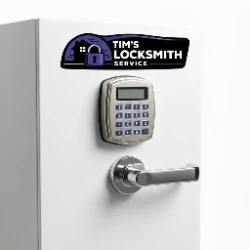
UL Type 1 electronic safe locks are tested and listed by Underwriters Laboratories under UL 2058. They meet higher standards for attack resistance, environmental tolerance, and reliability.
Most commercial insurance policies that mention electronic safe locks require UL Type 1. S&G Titan, S&G Spartan, LaGard Auditcon, and Kaba Mas X-10 are examples of UL Type 1 locks. If your insurance policy says "UL-listed electronic lock" without specifying a type, UL Type 1 is the safe choice.
UL Type 2
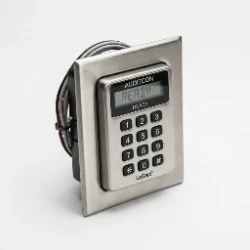
UL Type 2 electronic safe locks meet a lower standard under UL 2058. They are adequate for residential safes and light commercial use where insurance does not specify Type 1. Most residential electronic safe locks (including SentrySafe, budget SecuRam models, and many AMSEC ESL models) are UL Type 2 or not UL-rated at all. If your insurance requires a UL-listed lock, check whether it specifies Type 1. Installing a Type 2 lock when Type 1 is required could void your coverage.
Electronic Lock Brands We Program
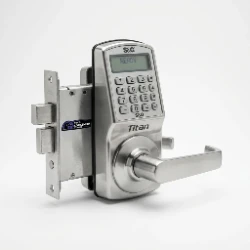
 Sargent & Greenleaf (S&G)
The dominant electronic safe lock brand in the US. The Titan D-Drive is their flagship direct-drive lock with audit trail and time delay. The Spartan series is a swing-bolt lock with similar features at a lower price. The Titan PivotBolt is their compact model for smaller safes. All S&G electronic locks support master + multiple user codes, wrong-try penalty, and time delay.
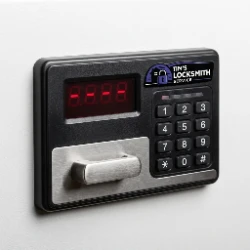
LaGard / dormakaba
LaGard mechanical locks and dormakaba electronic locks share the same mounting pattern. The Auditcon 2 Series is their top electronic lock with built-in audit trail, time delay, and an LCD display for on-lock log review. The ComboGard Pro is their mid-range model. LaGard/dormakaba locks are common on Gardall, Hollon, and some AMSEC safes.
Kaba Mas
Kaba Mas makes the Cencon and X-10 series locks used primarily on ATMs, government containers (GSA-approved), and high-security commercial safes. The X-10 is a dead-bolt electronic lock with audit trail, dual control, time delay, and battery-free operation (powered by the dial spin). The Cencon S2000 is a network-managed lock system for ATM fleets. These are specialty locks that require manufacturer training to program.
 SecuRam
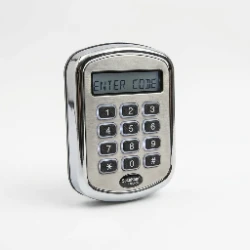
SecuRam has grown rapidly with models like the ProLogic (Bluetooth-enabled audit trail lock), SafeLogic (reliable mid-range), and EcoLock (budget). The ProLogic connects to a smartphone app for audit log download and remote management. SecuRam locks are known for reliable solenoids and straightforward keypad programming. They are standard on many Liberty and Fort Knox safes.
 AMSEC ESL Series
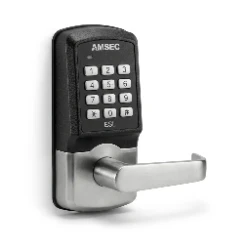
AMSEC (American Security) ships their own ESL-branded electronic locks on many of their safes. The ESL20XL is their top model with audit trail and time delay. The ESL10XL is a mid-range model. The ESL5 is their basic model. AMSEC ESL locks use a proprietary mounting system on AMSEC safes but can be replaced with S&G or SecuRam locks using an adapter plate.
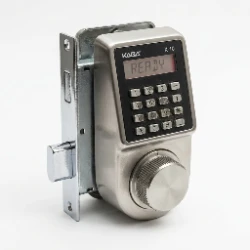
 SentrySafe
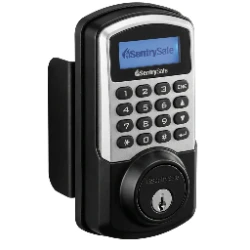
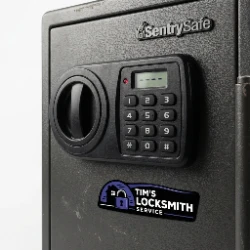
SentrySafe uses proprietary electronic locks on their consumer-grade fire safes and file safes. These locks are simpler than commercial-grade models, typically supporting 1-2 user codes with no audit trail or time delay. Programming is done through a basic keypad sequence. If the SentrySafe lock fails or you need features it does not support, we can sometimes retrofit a SecuRam or S&G lock depending on the safe model and door thickness.
Safe Brands We Service
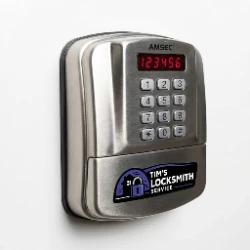
AMSEC (American Security)
Ships with AMSEC ESL electronic locks or S&G mechanical dials. ESL locks can be upgraded to S&G or SecuRam.
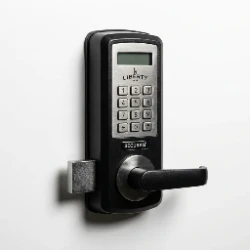
 Liberty Safe
Ships with SecuRam electronic locks on most models. S&G optional on higher-end models.
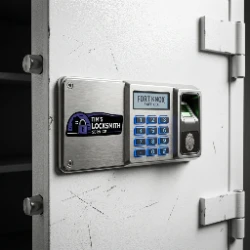
 Fort Knox
Ships with SecuRam electronic locks or S&G mechanical dials. S&G Titan available as upgrade.
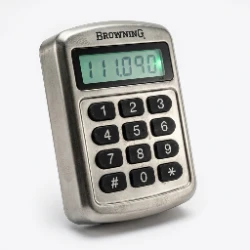
 Browning
Ships with SecuRam or S&G electronic locks depending on the model line. Most use SecuRam SafeLogic.
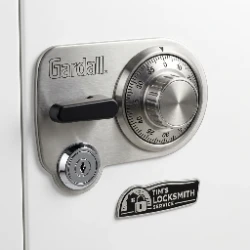
 Gardall
Ships with LaGard mechanical dials or dormakaba electronic locks. S&G and SecuRam compatible as replacements.
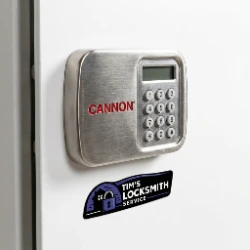
 Cannon
Ships with basic electronic locks on consumer models. Can be upgraded to SecuRam or S&G.
 SentrySafe
Ships with proprietary SentrySafe electronic locks. Retrofit options depend on door thickness and mounting pattern.
Coastal Hardware Guide
Salt air accelerates corrosion on electronic safe lock components, especially battery contacts, keypad membrane traces, and solenoid plungers. Safes in coastal homes across Ventura County are exposed to salt-laden air even when kept indoors. The corrosion is gradual and often invisible until the lock starts behaving erratically.
 Warning Signs of Salt Air Damage
 Our Recommendations
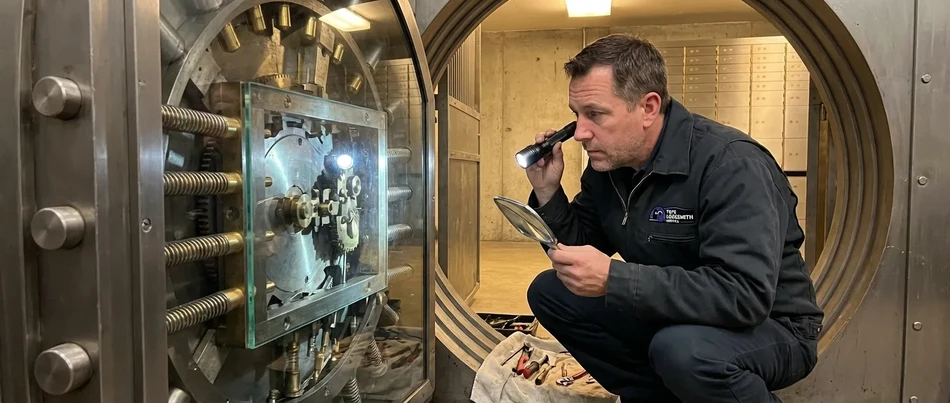
Electronic Safe Programming Tips
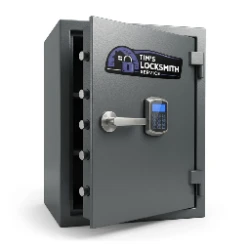
 Test every code with the door open
After programming a new code, test it with the safe door open. If the code does not work, you can still access the lock to fix it. If you test with the door closed and the code fails, you may lock yourself out.
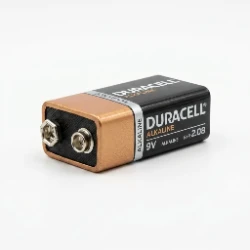
 Do not panic-guess the code
Most electronic safe locks impose a penalty lockout after 3-5 wrong entries. The lockout lasts 5-30 minutes depending on the brand. Guessing repeatedly can escalate the penalty on some models. If you are not sure of the code, stop after 2 attempts and call us.
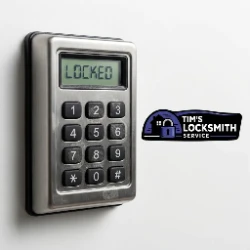
Replace the 9V battery before it dies
A weak battery causes the most common electronic safe "failure" we see. The lock beeps and appears to accept the code, but the solenoid does not get enough voltage to retract the bolt. Replace the battery once a year, or every 6 months if the safe is in a garage or hot environment. Do not wait for the low-battery warning.
 Store the management reset code separately
The master/manager code should be written down and stored in a separate secure location, not inside the safe it opens. If you lose the master code and it is stored inside the safe, you need a locksmith to open the safe before the code can be recovered.
 Do not turn the handle during programming
When entering programming sequences on most electronic safe locks, the handle must be in the locked (neutral) position. Turning the handle during a programming sequence can corrupt the code being stored or cause the lock to exit programming mode without saving.
 Manager reset vs factory reset
A manager reset changes the master code using the existing master code or a reset procedure. A factory reset wipes all codes and returns the lock to factory defaults. A factory reset is a last resort, it deletes all user codes, time delay settings, and audit logs. We use manager resets whenever possible to preserve your existing user code table and settings.
Electronic Safe Programming Pricing
Price depends on several factors:
 Number of Codes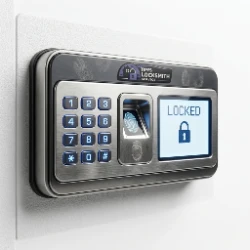
 Advanced Features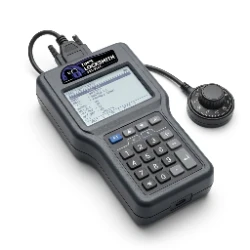
 Lock Brand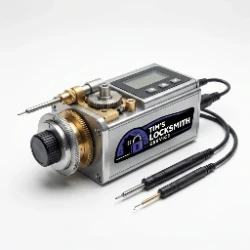
 Lockout Recovery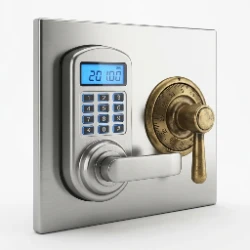
 Dial-to-Electronic Upgrade
Every quote includes labor, programming, and testing. Call (805) 765-3717 for an exact price based on your lock brand and the features you need.
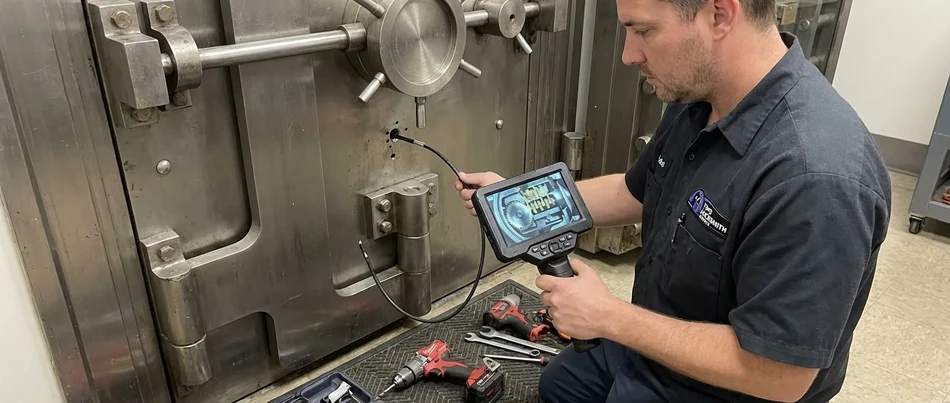
Why Choose Us
Four reasons Ventura County customers call Tim's for electronic safe programming work: Licensed and Insured, Same-Day Service, Every Major Lock Brand, and Upfront Pricing.

Licensed and Insured
California BSIS licensed (LCO#7134) and insured through State Farm. Your safe and its contents are protected during every service call.

Same-Day Service
We arrive the same day you call with the tools and knowledge to program any electronic safe lock brand on-site.

Every Major Lock Brand
S&G, LaGard/dormakaba, SecuRam, Kaba Mas, AMSEC ESL, SentrySafe, we program them all.

Upfront Pricing
We quote the full cost before we start. No add-ons, no surprises. The price we quote is the price you pay.
What Our Customers Say
Here is what a few Ventura County customers said after we handled their electronic safe programming.
"We bought a new AMSEC safe for the restaurant and needed the factory codes changed and time delay set up for our insurance. Tim came out the next morning, programmed everything, tested every code with us, and left us a cheat sheet for adding and removing users. Exactly what we needed."
"Our office safe had 5 user codes and we could not remember which ones were still active after several employee changes. Tim reset the master code, wiped the old user table, and set up 3 new codes from scratch. Also showed us how to pull the audit log. Very thorough."
"I forgot the master code on my home gun safe and could not add a code for my husband. Tim came out, performed a master code reset, and set up two user codes for us. He tested both codes with the door open and closed. Fast and professional."
 Serving All of Ventura County
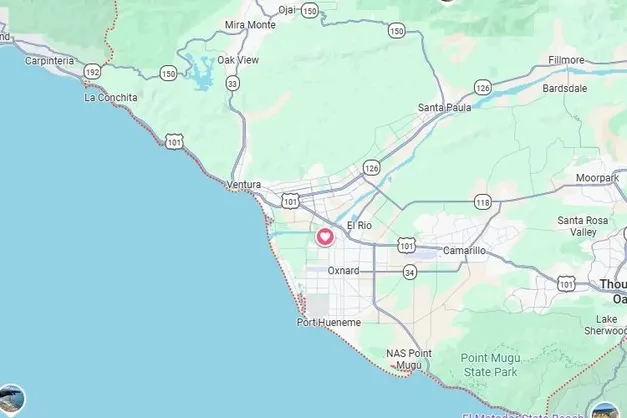
We bring electronic safe programming to every city we cover in Ventura County, from Oxnard to Westlake Village.
Frequently Asked Questions
Related Safe Services
If you need more than electronic safe programming, we also handle safe opening, combination changes, and safe lock repair and replacement across Ventura County.
Safe Opening
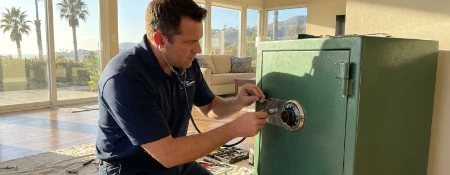
Locked out of your safe? We open safes using non-destructive methods whenever possible. Dial safes, electronic safes, gun safes, fire safes, and floor safes. If drilling is needed, we repair the safe after entry.
View Service
Combination Changes
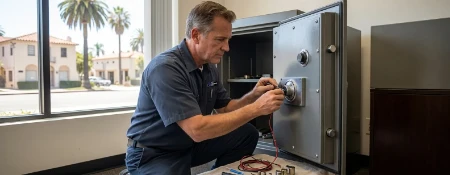
Changed employees? New owner? We change dial combinations and reset electronic keypad codes on-site. Your old combination stops working immediately and the new one is set to whatever you choose.
View Service
Safe Lock Repair and Replacement
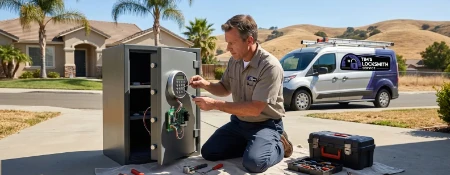
Safe lock not responding? Dial feels loose? Keypad buttons failing? We diagnose and repair safe locks on-site. If the lock is beyond repair, we replace it with a new unit and test everything before we leave.
View Service
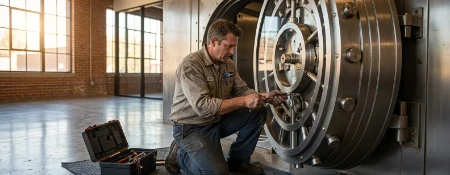
Vault Lock Services
Vault doors, vault rooms, and bank-grade safes serviced on-site. We handle vault lock maintenance, combination changes, lock upgrades, and emergency vault openings for businesses across Ventura County.
View Service
Explore Our Other Services
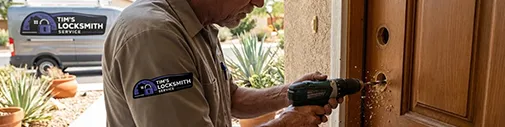
Residential Locksmith
Complete home locksmith services including lock installation, repair, rekeying, and smart lock setup, done at your door.
View Residential Services
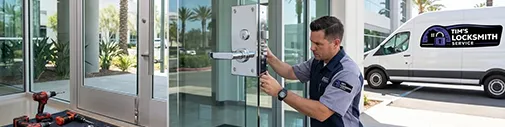
Commercial Locksmith
Business locksmith services including access control, master key systems, high-security locks, and panic hardware.
View Commercial Services
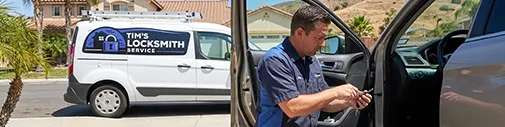
Automotive Locksmith
Car key cutting, programming, fob replacement, and ignition repair for most makes and models. We come to your vehicle.
View Automotive Services
Safe Locksmith
Safe opening, combination changes, lock repair, and electronic safe programming for home and office safes. On-site service.
View Safe Services
Emergency Locksmith
Fast response for home, car, and business lockouts, break-in repairs, and urgent lock needs. We come to you, usually same day.
View Emergency Services
Need Electronic Safe Programming Help?
Need electronic safe programming help? Call (805) 765-3717 for a free estimate. We come to you anywhere in Ventura County with the right tools for every electronic safe lock brand.
 Open Daily
 Mobile service across Ventura County